
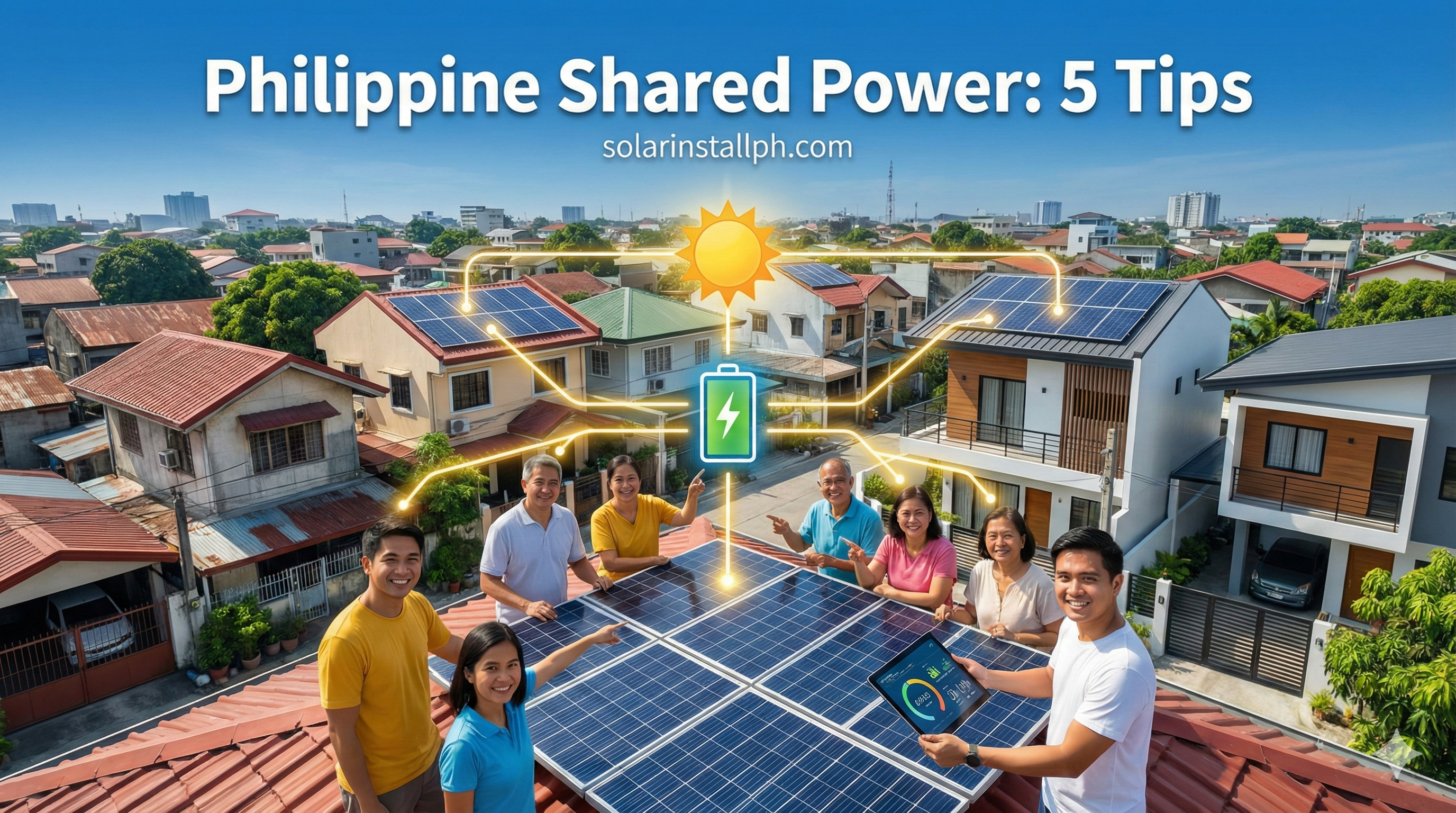
Philippine Shared Power: 5 Tips
The idea of "shared power" is incredibly appealing in the Philippines. With electricity rates from Meralco and local cooperatives hovering among the highest in Asia, the thought of splitting a solar investment with a neighbor or subscribing to a "solar garden" sounds like a financial no-brainer.
You might be thinking: “My roof is huge, but my consumption is low. My neighbor has a small roof but uses high AC. Why don’t I fill my roof with panels and run a wire to their house?”
In many other countries, this is called Community Solar or Peer-to-Peer Trading. In the Philippines, however, the reality is much more rigid. What looks like "sharing" to you often looks like an "illegal flying connection" to the Energy Regulatory Commission (ERC) and your Distribution Utility (DU).
Before you try to split a solar bill with someone else, here are 5 critical tips to understand how shared power actually works—and doesn’t work—in the Philippine context.
1. Avoid the "Flying Connection" Trap
This is the most common misconception. You and your neighbor cannot simply run a cable over the fence to share a solar inverter.
Under the Anti-Pilferage of Electricity and Theft of Electric Transmission Lines/Materials Act of 1994 (RA 7832) and various DU franchises, supplying electricity to a premise other than the one registered to the meter is generally prohibited without a specific license.
In local electrician slang, this is a "flying connection." Even if your intentions are noble (saving money, using renewable energy), the utility company sees it as a safety hazard and a franchise violation.
Why is it dangerous?
Safety: Your neighbor’s house load is not calculated in your circuit breakers or wire gauging. This is a fire risk.
Line Maintenance: If linemen cut power to fix a transformer, but your "shared" solar system is backfeeding into your neighbor’s grid connection, you could electrocute the worker.
Legal Penalties: If caught, you risk disconnection, heavy fines, and being blacklisted by the utility.
If you want to do DIY solar, keep it strictly within your own property lines. For a deeper dive on what you can and cannot do safely, read our guide on DIY solar safety precautions.
2. Understand What "Shared Solar" Means in the PH
If you can’t run a wire to your neighbor, does "Shared Solar" exist here? Yes, but it is currently more of a policy concept than a widely available product for residential users.
In the US or Europe, "Community Solar" often means you subscribe to a solar farm 50km away and get credits on your bill. In the Philippines, we don't have a direct "subscription" model for households yet where you see a deduction on your Meralco bill for a remote solar share.
However, the term is evolving. There are pilot projects and new regulations under the Microgrid Systems Act that allow third-party providers to power unserved or underserved areas (like remote islands or off-grid subdivisions). In these setups, the "shared" aspect is that the community shares a central solar-battery plant rather than having panels on every roof.
For a clearer picture of how this model is developing locally, check out our overview of shared solar concepts.
3. The Only Legal Way to "Share" (Right Now) is Net Metering
If you have excess power, you cannot sell it to your neighbor, but you can sell it to the grid. This is the closest working mechanism we have to "sharing."
Through the Net Metering program, your surplus solar energy is exported to the utility grid. The utility then credits this value against your bill. While you aren't choosing who gets those electrons (your neighbor might physically consume them), you are effectively sharing your green energy with the community grid and getting paid for it.
Why this is better than a flying connection:
It’s Legal: Fully sanctioned by the ERC and RA 9513.
It’s Safe: The bi-directional meter and proper engineering ensure no linemen get hurt.
It’s Profitable: You save money without the legal headache of managing a private power agreement with a neighbor.
If you haven't applied yet, review the ERC net metering guidelines to understand the credits you can earn.
4. Multi-Tenant Buildings and Condos are Different
"Shared power" gets interesting if you live in a condo or manage a commercial building. Here, the "sharing" happens via Common Area usage.
Most condos in Metro Manila cannot easily assign roof space to individual unit owners—there simply isn't enough roof for 30 floors of residents. Instead, the "shared" benefit comes from offsetting the building's common loads:
Elevators
Hallway lighting
Water pumps
Pool filtration
When the condo association installs solar to power these common areas, the association dues (which every resident pays) should theoretically decrease. This is the most practical form of shared solar for high-rise living.
However, strict rules apply regarding roof ownership and condo corporation approvals. Before pitching this to your PMO, read our article on condo solar realities.
5. The "Green Energy Option" for Big Users
If "sharing" to you means "accessing solar energy without installing it," and you run a large business, you might be eligible for the Green Energy Option Program (GEOP).
This isn't sharing wires with a neighbor; it's using the open market to buy 100% renewable energy from a licensed supplier.
Who is it for? Consumers with a monthly average peak demand of 100kW or higher.
How it works: You sign a contract with a Renewable Energy Supplier (RES). They generate solar/wind power elsewhere and feed it into the grid matching your consumption.
The Benefit: You get the environmental bragging rights and often competitive rates without drilling a single hole in your roof.
This is the corporate version of "shared power"—utilizing the grid to share the output of a massive solar farm. If you run a manufacturing plant or a large office, this is your best route. Learn more about how the GEOP program works here.
Summary
In 2025 Philippines, "Shared Power" is not yet as simple as plugging into your friend's solar setup next door. The regulatory environment protects the franchise of distribution utilities, making informal sharing illegal and risky.
Your Action Plan:
Don't DIY share: Never run cables across property lines.
Maximize Net Metering: Use the grid as your battery and trading partner.
Lobby your HOA/Condo Corp: Push for common area solar to lower shared dues.
Check GEOP: If you are a big business, switch suppliers legally.
If you are confused about whether your specific setup counts as "illegal sharing" or a "microgrid," it is vital to consult a professional. You can start by checking our directory of nationwide solar companies to find an installer who knows the local code and can keep you compliant.