
Understanding Photovoltaic (PV) Technology: A Simple Guide for Filipinos
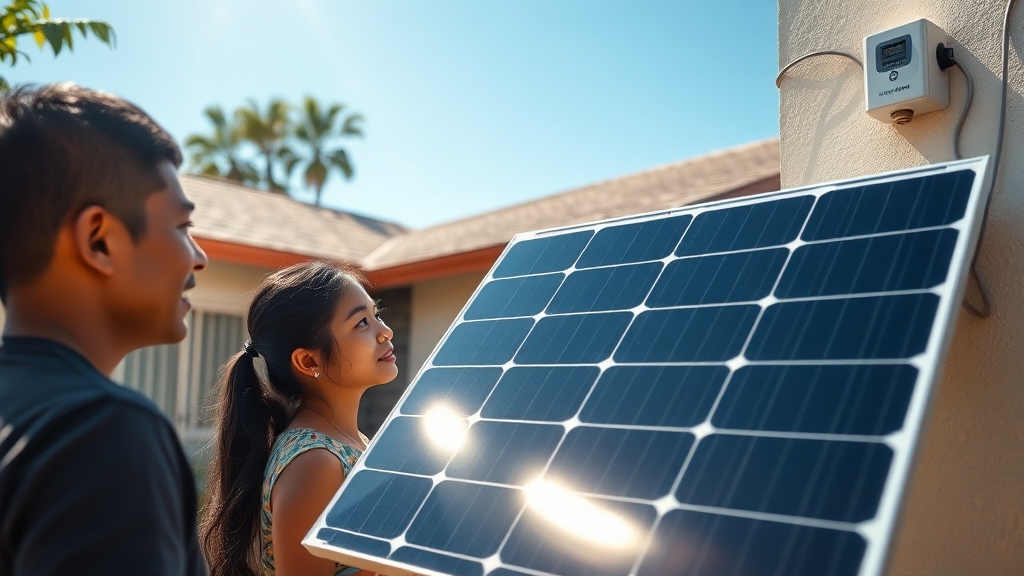
In conversations about solar power, you’ll often hear the term "Photovoltaic" or "PV" technology. It sounds technical, intimidating, and like something you’d need an engineering degree to understand. But what if we told you that the core idea behind it is actually simple, elegant, and something every Filipino can grasp?
Understanding PV technology is the key to unlocking the true potential of solar energy. It's the "how" behind the "wow" of slashing your Meralco bill, the science behind the security of having power during a brownout, and the foundation of the clean energy revolution happening on rooftops across the Philippines.
This guide is designed to demystify photovoltaic technology. We'll break down the jargon, explain the science with simple analogies, and show you exactly how that unassuming panel on a roof transforms the brilliant Philippine sun into usable electricity for your home. Welcome to your simple guide to the amazing world of PV.
What Does "Photovoltaic" Even Mean?
Let's start by breaking down the word itself. It’s much simpler than it sounds.
- Photo: Comes from the Greek word phōs, which means "light."
- Voltaic: Named after Alessandro Volta, a pioneer of electricity, and it refers to producing a voltage or electric current.
So, "Photovoltaic" literally means "light-electricity." A photovoltaic (PV) device is anything that can convert light directly into electricity. The most common PV device in the world is the solar cell, the small, building block of a solar panel.
The Heart of the Matter: The Solar Cell
The hero of our story is the humble solar cell. These are the small, usually square-shaped units that are assembled together to create a full-sized solar panel. While they look futuristic, they are made from one of the most common materials on Earth: silicon.
Yes, the same basic element found in sand (buhangin) is the primary ingredient. Through a highly sophisticated manufacturing process, silicon is purified, melted down, and formed into crystals that are then sliced into paper-thin wafers. These wafers are treated with other chemicals and fitted with a grid of metal conductors on top, transforming them from simple silicon into high-tech solar cells. This is the core of a comprehensive PV tech guide.
There are two main "flavors" of silicon cells you’ll encounter in the Philippines:
- Monocrystalline: Made from a single, pure silicon crystal. They look uniformly black and are the most efficient type, meaning they produce the most power for a given area. They are the premium, higher-performance option.
- Polycrystalline: Made from multiple silicon fragments melted together. They have a characteristic blue, speckled, or mosaic-like appearance. They are slightly less efficient than monocrystalline cells but are also less expensive to produce, making them a popular budget-friendly choice.
The difference between mono vs poly cells is a key consideration when choosing panels, but regardless of the type, they both work using the same incredible scientific principle.
The "Magic" Explained: How PV Cells Make Electricity
This is the core of PV technology, known as the photovoltaic effect. It’s not magic, but a brilliant piece of physics that works in a few simple steps.
Step 1: The Photon Bombardment
The sunlight that bathes our country every day is not just light and heat; it's a stream of countless tiny energy particles called photons. Think of these photons as microscopic energy bullets being fired from the sun.
Step 2: The Electron "Tumbang Preso"
When these photons strike the surface of a solar cell, they transfer their energy to the silicon atoms inside. This jolt of energy is just enough to knock one of the atom's electrons loose, setting it free to move around. It's like a game of tumbang preso, where the photon is the pamato (slipper) knocking over the lata (the electron).
Step 3: The One-Way Superhighway
Now, having a bunch of freed electrons is great, but it’s not electricity yet. Electricity is the organized flow of electrons in one direction. This is where the genius of the solar cell's design comes in.
During manufacturing, the silicon wafer is created with two layers. One layer is treated to have a positive charge (an attraction for electrons), and the other is treated to have a negative charge (a surplus of electrons). This creates a powerful, built-in electrical field that acts like a one-way superhighway.
This field instantly directs all the newly freed electrons to travel towards the negative side and leaves behind "holes" that gather on the positive side. This forced separation of positive and negative charges creates a voltage, just like in a regular battery.
Step 4: The Flow of Power (Direct Current - DC)
The metal conductors printed on the surface of the cell collect all these flowing electrons. When you connect a wire between the negative and positive sides of the cell, you create a complete circuit, and the electrons rush through the wire. This continuous, organized flow is an electrical current.
Specifically, it is Direct Current (DC), the same type of power you get from a car battery or a power bank. A single solar cell doesn't produce much power on its own, which is why they are linked together.
From Cell to System: Assembling the Team
A single solar cell is a player, but you need a full team to power your home. These are the essential solar PV system components that work together.
- The Solar Panel (or Module): Dozens of individual solar cells are wired together in series and laminated under a durable sheet of glass with a protective backsheet and a sturdy aluminum frame. This complete package is what we call a solar panel or module.
- The Solar Array: Multiple solar panels are then connected to each other on your roof to form a "solar array." The more panels you have, the more power you can generate.
- The Inverter (The Brains of the Operation): This is arguably the most important component after the panels. The DC electricity from your panels cannot power your home appliances, which run on Alternating Current (AC). The inverter's job is to convert DC to AC. It acts as a translator, changing the electrical "language" from what the panels speak to what your rice cooker and aircon understand.
- The Mounting System (The Bodyguard): In a typhoon-prone country like the Philippines, this is a life-or-death component for your system. The mounting racks are engineered to securely anchor the entire array to your roof and withstand extreme wind and rain, protecting your investment for decades.
- The Battery (The Energy Balikbayan Box): In a hybrid or off-grid system, a battery is added to store the excess energy generated during the day. Think of it as an energy balikbayan box. You fill it up with free sunshine during the day and "unpack" it at night or during a brownout to power your home.
The Complete Journey: From Sunlight to Socket
So, let's trace the entire path of that powerful energy from the sunlight to socket.
- Sunlight (photons) hits your solar panels.
- The photovoltaic effect in the solar cells knocks electrons loose, creating a flow of DC electricity.
- Wires carry this DC electricity down from your roof to the inverter.
- The inverter converts the DC power into AC power.
- This AC power then flows to your home's main circuit breaker panel.
- From there, it is distributed throughout your home's wiring, ready to power any appliance you plug in.
- Any excess power you generate can be exported to the grid for credits (Net Metering) or stored in your battery for later use.
Conclusion: Demystifying the Power in Your Hands
Understanding photovoltaic technology empowers you. It takes solar power out of the realm of abstract science and puts it firmly into the world of practical, reliable home improvement. It’s not magic; it’s a brilliant application of physics that has been refined over decades to become one of the most dependable ways to generate electricity.
Knowing how it works helps you appreciate the quality of the components, ask informed questions to your installer, and confidently debunk common solar myths.
The Philippine sun is one of our greatest natural resources. With PV technology, every Filipino homeowner now has the ability to tap into that resource, turning their rooftop into a personal power station. It’s a technology that offers a direct path to financial freedom, energy security, and a cleaner, more sustainable future for our beautiful country.