
Why Fund My Remote Home Energy?
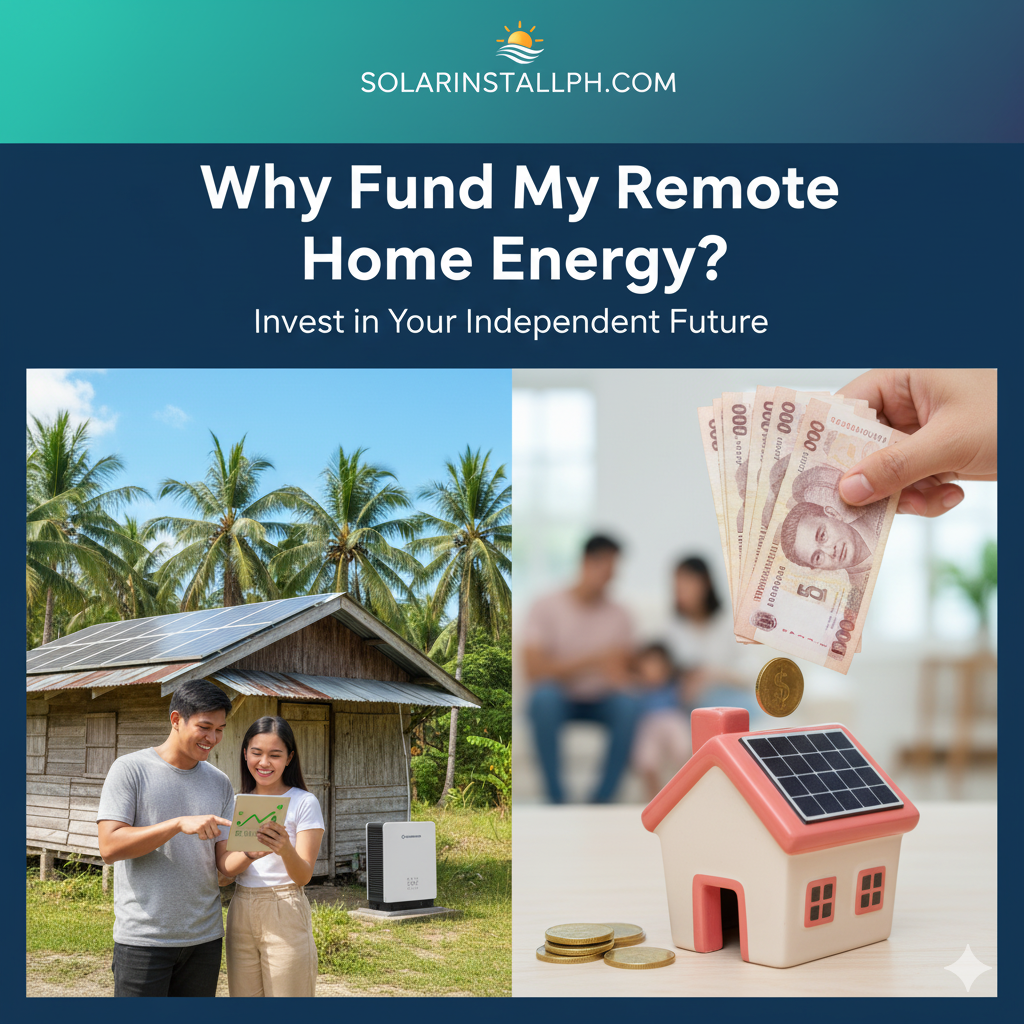
Building a remote home in the Philippines—a secluded beach house in Palawan or a quiet mountain retreat in the Cordilleras—is the ultimate dream for many. It represents a life of tranquility, self-sufficiency, and a deep connection to nature. Powering this dream, however, presents a very practical challenge. With no access to the public utility grid, an off-grid solar energy system is not a luxury, but a necessity. Yet, the single biggest hurdle to achieving this energy independence is the substantial upfront cost. A complete off-grid setup can run into hundreds of thousands of pesos, a figure that can feel daunting and may even seem to put the entire project out of reach.
The question then becomes: why fund this significant expense? Is it a worthwhile investment, or a financial indulgence? The answer lies in reframing the question itself. Financing a remote home's energy system is not merely a cost; it is a foundational investment in the property's viability, resilience, and long-term value. In the Philippine context of high electricity prices, frequent typhoons, and the inherent challenges of island living, securing independent power is the key that unlocks the full potential of a remote property. It transforms a piece of land from a rustic campsite into a modern, functional home. Thankfully, a growing number of financing options are making this crucial investment more accessible than ever, as detailed in this comprehensive solar financial guide.
The Hard Numbers: Upfront Cost vs. Lifetime Value
There's no sugarcoating the initial expense. A robust off-grid solar system capable of powering a modern home is a significant investment. This includes not just the solar panels, but a powerful off-grid inverter, and, most critically, a large battery bank to store energy for use at night and on cloudy days. A typical 5kW off-grid system, which is a common size for a small- to medium-sized home, can range from ₱300,000 to over ₱500,000, depending on the battery capacity and the quality of the components. For larger homes with higher energy demands, including air conditioning, the cost can be substantially more.
While this figure can cause sticker shock, it’s crucial to analyze it not as a one-time expense but as a pre-payment for decades of electricity. The average payback period for solar installations in the Philippines, even for grid-tied systems, is typically 5 to 7 years. For an off-grid home, the calculation is even more compelling. Instead of paying a fluctuating and often exorbitant monthly bill to a utility company, you are locking in your energy costs for the 25-plus-year lifespan of the solar panels. When you consider that you will have zero electricity bills for decades, the return on investment becomes clear. It’s a long-term strategy that offers significant financial savings and complete immunity from rising electricity rates.
More Than Money: The Priceless Benefits of Energy Independence
The justification for funding a remote energy system goes far beyond simple ROI calculations. It's an investment in a lifestyle and in security, benefits that are difficult to quantify but are immensely valuable.
1. Resilience and Reliability: In the Philippines, a country that experiences an average of 20 typhoons per year, power outages are a fact of life. For a remote home, a blackout isn't an inconvenience; it can be a serious safety issue, cutting off communication, refrigeration, and water pumps. An off-grid solar system provides unwavering energy resilience. It ensures your lights stay on, your food stays fresh, and you remain connected when the grid fails. This reliability is the cornerstone of safe and comfortable off-grid living. This is especially true in regions like Bicol, which are frequently in the path of storms and where a typhoon-resistant solar setup is not just a feature, but a necessity.
2. Enabling Modern Life, Anywhere: An off-grid solar system makes modern life possible in even the most remote locations. It powers the essentials like lighting and refrigeration, but it can also support a home office with reliable internet, run a workshop for a home-based business, or power the tools needed for a small farm. It closes the gap between a rustic shelter and a fully functional home, enabling a lifestyle that is both connected and secluded. This is a core part of the appeal for those looking to build an off-grid solar home.
3. Increasing Property Value: A property with a professionally installed, fully-functional off-grid solar system is significantly more valuable than one without. It's a turnkey solution for prospective buyers who want the off-grid lifestyle without the headache of designing and installing the system themselves. The investment you make in your energy system is directly added to the equity of your property, making it a sound financial decision from an asset appreciation perspective.
Navigating the Financing Landscape in the Philippines
The high upfront cost remains a barrier for many, but the financing landscape for solar in the Philippines is evolving rapidly, making it easier than ever to fund a remote energy project.
1. In-House Financing from Solar Installers: This is perhaps the most significant development in making solar accessible. Many of the top solar installation companies in the Philippines now offer their own financing programs. These programs are often more flexible and have a much faster approval process than traditional bank loans. They understand the product and the customer, and can tailor payment plans to suit different budgets. A key advantage is the convenience of a one-stop-shop, where the system design, installation, and financing are all handled by a single entity. It's worth exploring the options offered by various installers with in-house financing.
2. Bank Loans (Solar Loans & Home Improvement Loans): A growing number of Philippine banks are recognizing the demand for renewable energy and are offering specific loan products for solar installations. BPI, for instance, offers a "Solar Mortgage" program, and other banks like Security Bank (through SB Finance) have partnerships with solar providers. These loans often have more competitive interest rates than personal loans, but may require more documentation and a longer approval process. A home improvement loan is another viable route, allowing you to bundle the cost of the solar system into a broader construction or renovation budget.
3. Personal Loans: For those who prefer a straightforward, unsecured loan, a personal loan from a bank or a financing company like Home Credit can be a viable option. While interest rates may be higher, the application process is typically fast and requires minimal paperwork. This can be a good choice for smaller systems or for those who need to close a funding gap quickly.
4. Power Purchase Agreements (PPAs) and Leasing: While more common in the commercial and industrial sectors, some providers are beginning to explore residential PPA or lease models. In a solar lease, you pay a fixed monthly fee to use the solar equipment, which is owned and maintained by the solar company. In a PPA, you agree to buy the power generated by the system at a fixed rate that is lower than the utility's price. These models offer the benefit of zero upfront cost, but you don't own the system, and the long-term savings are less significant than with direct ownership. It is important to perform a thorough solar cost analysis to compare these options.
Funding a remote home's energy system is the pivotal investment that makes the dream of off-grid living a reality. It is a decision that pays dividends not just in long-term financial savings, but in the invaluable currency of resilience, independence, and an enhanced quality of life. By carefully analyzing the costs, understanding the immense non-financial benefits, and exploring the expanding array of financing options available in the Philippines, you can confidently take the step to power your private sanctuary and secure your energy future.