
Solar Philippines: Zero Down Power Up
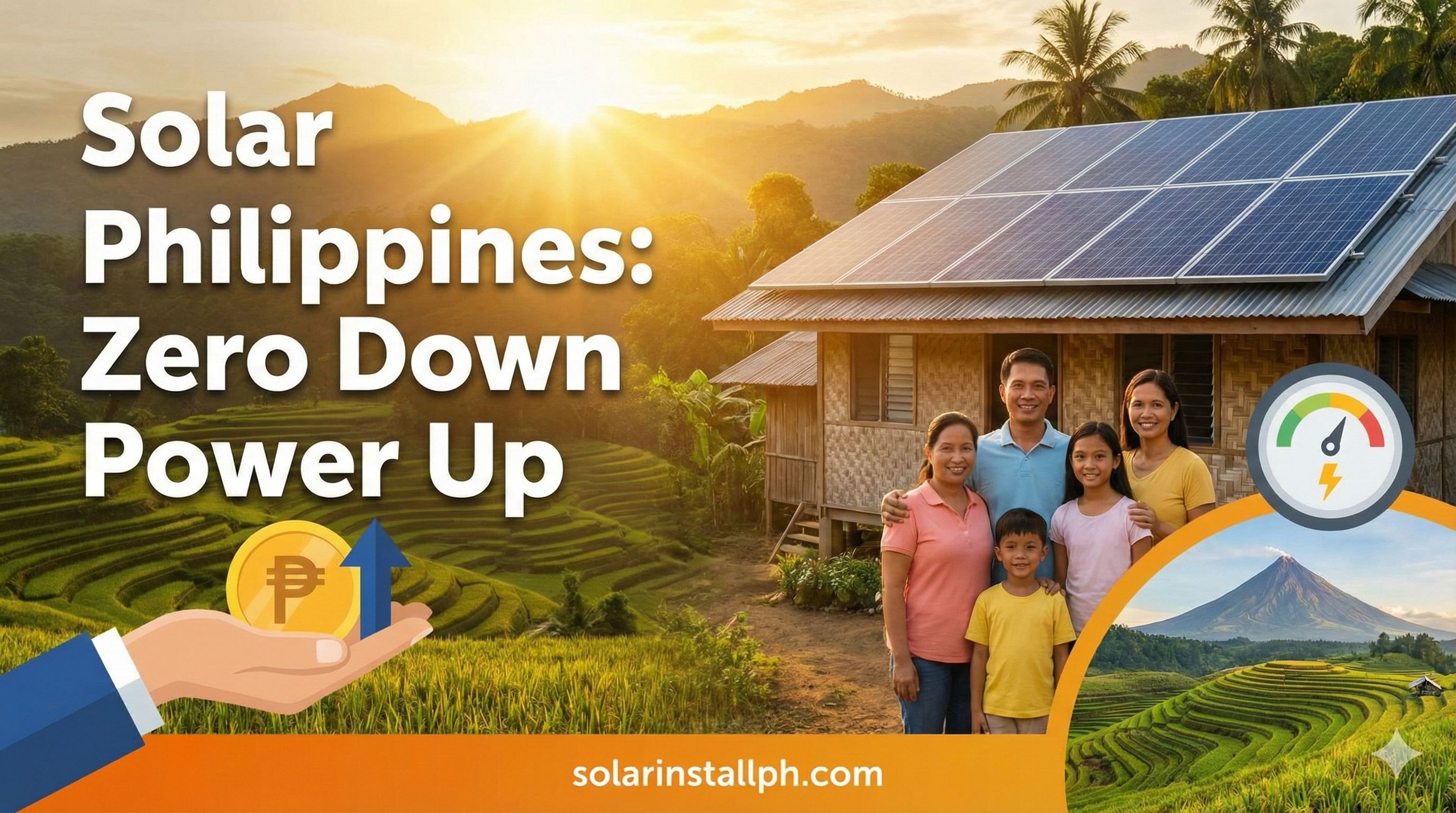
If you have been scrolling through Facebook or researching solar in the Philippines lately, you have likely seen the ads: "Go Solar for Zero Down!" or "₱0 Cash Out Installation!"
It sounds like a scam, doesn't it? In a country where we are used to paying "kaliwaan" (cash on delivery) or massive down payments for cars and condos, the idea of getting a ₱300,000 power plant on your roof for free seems impossible.
Here is the truth for 2025: "Zero Down" is real, but it is not free. It is a financial structure designed to replace your Meralco bill with a loan or lease payment.
For many Filipino homeowners, this is the only way to escape the ₱12–₱15/kWh electricity rates without draining their life savings. But before you sign a 10-year contract, you need to understand exactly which "Zero Down" model you are getting into.
The "Bill Swap" Strategy
To understand zero-down solar, you have to stop thinking of solar panels as a product (like a TV) and start thinking of them as a utility.
Right now, you are paying Meralco or your local coop roughly ₱7,000 per month for 500 kWh of electricity. That money is gone forever.
In a "Zero Down" scenario, a financier pays for the solar system. You then pay that financier ₱7,000 per month instead. The difference? After 5, 7, or 10 years, the payments stop, and you own the system. You are essentially swapping a forever bill for a temporary mortgage.
Model 1: The "Rent-to-Own" (Lease)
This is the newest model gaining traction in Metro Manila and major cities. Specialized companies offer a lease program where they install the system at their cost, and you pay a fixed monthly fee.
How it works:
Cash Out: ₱0 (or a very small processing fee).
Monthly Payment: Fixed for 5–10 years.
Ownership: You do not own the panels initially. The company owns and maintains them. At the end of the term, ownership transfers to you.
The Good:
Maintenance Included: Since they own the system, if an inverter blows up in Year 3, they usually fix it for free.
Performance Guarantee: If the system doesn't produce power, you often don't pay (check your contract terms).
The Bad:
Higher Total Cost: Just like buying a car, leasing ends up costing 20–30% more than paying cash due to the baked-in interest and risk fees.
Hard to Qualify: These companies are strict. They often require proof of high income, home ownership (titled), and a minimum monthly electric bill (often ₱5,000+).
For a deeper look at the pros and cons of this model, read our guide on solar leasing vs. buying.
Model 2: 100% Bank Financing (The "Green Loan")
This is the most common form of "Zero Down" available to the average middle-class Filipino. Banks like BPI, RCBC, and Security Bank have aggressive "Green Energy" loans that can cover the entire cost of the project.
How it works:
Cash Out: ₱0 for the hardware (banks pay the installer directly).
Terms: Up to 5 or 7 years.
Interest: specialized rates around 7–9% per annum.
Why it’s better than leasing:
You Own It: The equipment is yours from Day 1. This adds value to your property immediately.
Choice: You can choose any reputable installer you want, rather than being stuck with the leasing company's specific hardware.
The "Hidden" Costs:
While the panels are zero down, you may still need cash for:
Net Metering Application: Meralco/DU fees can run ₱15,000–₱30,000.
Permits: LGU building permits are rarely covered by the bank loan.
Check our updated list of top solar bank loans for 2025 to compare current interest rates.
Model 3: The PPA (Commercial Only)
If you own a business, factory, or large warehouse, you might be offered a Power Purchase Agreement (PPA).
How it works:
A developer installs a massive solar array on your roof for free.
They sell you the electricity generated by that roof at a discount (e.g., ₱8/kWh instead of the grid’s ₱12/kWh).
You pay zero upfront and zero for maintenance. You just pay for the power you use.
Why it’s rarely for homes:
Investors need scale to make this work. A residential roof is too small and risky (what if you move house?). If you have a business, however, this is the ultimate cash-flow positive move.
Learn more about commercial viability in our guide to solar farm investment and commercial setups.
The "Scam" Warning
Because "Zero Down" is such a powerful marketing hook, it attracts bad actors.
The Facebook "Free Solar" Trap
Be wary of ads on social media promising "Free Solar Programs signed by the Government."
Reality: There is no government program giving away free solar panels to middle-class homes.
The Bait: They often sell overpriced, low-quality off-grid kits disguised as a government initiative.
The Risk: Undersized wiring and non-compliant inverters that can cause fires or void your home insurance.
The "0% Interest" Credit Card Myth
Many installers offer "0% Interest for 12/24 months" on credit cards.
The Catch: Ask for the "Cash Price." You will often find the installment price is 10–15% higher. That markup is the interest. It’s still a convenient option, but do not fool yourself into thinking it’s free money.
Before signing, always verify your installer. Use our guide on verifying installer credentials to ensure they are legitimate.
Is Zero Down Right For You?
Taking on a loan for solar is smart if the math works.
Do it if:
Your bill is high: You pay ₱5,000+ per month. The savings will likely cover the loan amortization.
You have a stable roof: You own the house, and the roof is in good condition (no leaks).
You plan to stay: You aren't selling the house in the next 3 years.
Don't do it if:
Your bill is tiny: If you only pay ₱1,500/month, the bank fees and interest will eat up your savings.
You are renting: You cannot install a permanent fixture on a landlord's roof without complex agreements.
Next Steps
If you are ready to explore financing, start by getting a quote to see the "Cash Price" vs. the "Financed Price."
Get a Quote: Ask a reputable installer for a formal proposal.
Run the Numbers: Use our Solar ROI Guide to calculate your payback period.
Talk to Your Bank: Ask specifically for their "Green Loan" or home improvement rates.
Zero down doesn't mean zero cost—but in the Philippines' high-electricity market, it is often the smartest way to buy your freedom from the grid.