
Fixing Panel Problems: 3 Tips
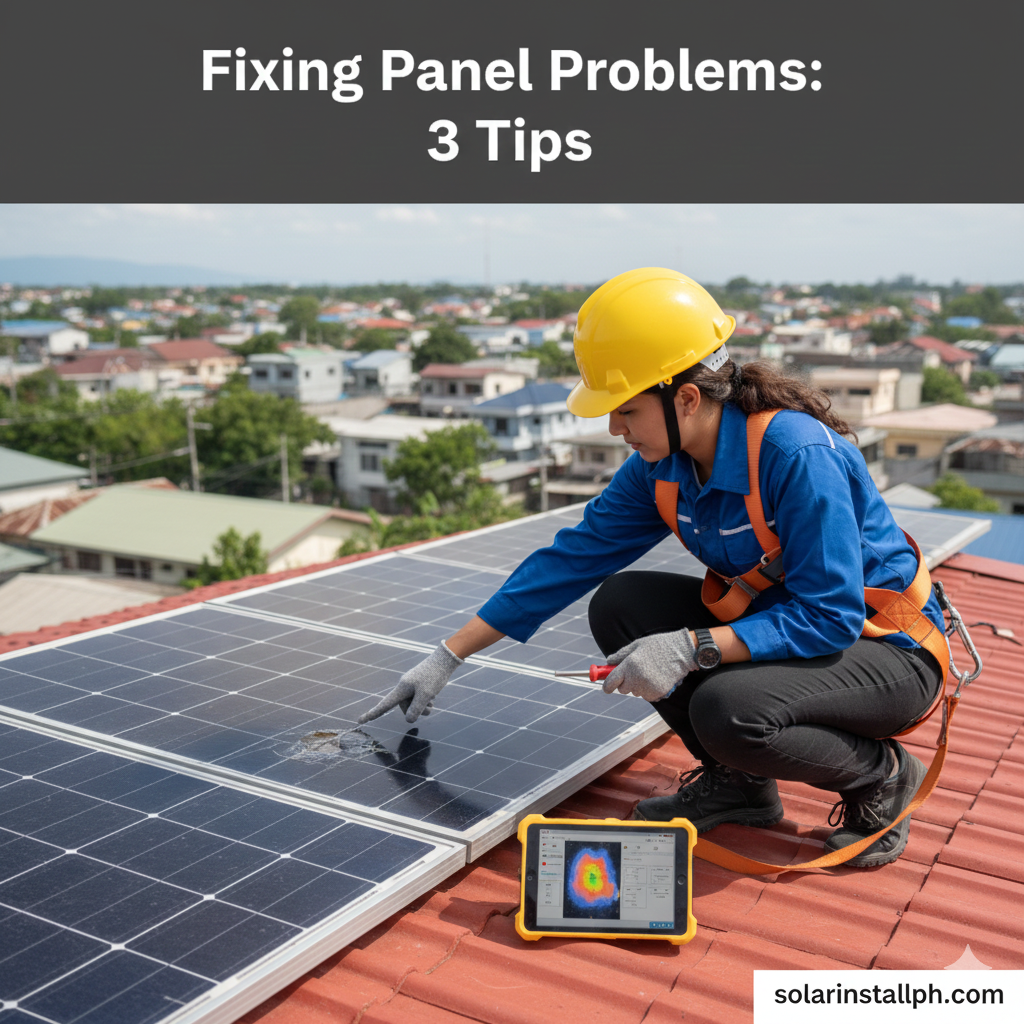
Solar panels are the workhorses of renewable energy. They sit on your roof, baking in the Philippine sun, hammered by typhoons, and covered in city grime, yet they are expected to perform flawlessly for 25 years.
For the most part, they do. Solar photovoltaic (PV) modules are incredibly durable. However, "durable" does not mean "invincible."
In the Philippines, we see specific types of panel failure that differ from what you might read about in US or European guides. Our unique combination of intense ultraviolet (UV) radiation, high humidity, and salt spray creates a challenging environment. When a problem arises, it usually manifests as a drop in production—suddenly, your Meralco bill isn't as low as it used to be.
If you suspect your system is underperforming, don't panic. Most issues are solvable if caught early. Here are three expert tips for diagnosing and fixing the most common solar panel problems in the Philippine setting.
Tip 1: Master the Art of Data Diagnosis
Before you climb onto the roof (which we generally advise against unless you have safety gear), you should start your investigation on your phone or laptop. The most common "panel problem" isn't a broken panel at all—it's a misunderstanding of the data.
The "Ghost" Problem: Heat Derating
New solar owners often panic in April or May. They look at the manufacturer's datasheet, see "450 Watts," and wonder why their app only shows the panel producing 380 Watts at noon.
This is physics, not a failure. Solar panels lose efficiency as they get hotter. In the Philippine summer, roof temperatures can easily exceed 60°C or 70°C. For every degree above 25°C, a standard panel loses about 0.35% of its power. This heat loss is normal.
The Real Problem: String Mismatch
Real trouble usually looks like a sudden, unexplained drop that doesn't match the weather.
If you have a standard string inverter (like those from Growatt, Huawei, or Solis), your panels are wired in series, like Christmas lights. If one panel fails or gets heavily shaded, it can drag down the performance of the entire string.
How to Spot It:
Check your voltage (V) vs. amperage (A) curves in your monitoring app.
If the voltage remains high but the amperage drops significantly during peak sun, you likely have resistance in the line—possibly a corroded connector or a cracked cell.
If you have a sophisticated monitoring system with "optimizers" (like Tigo or Huawei) or microinverters (Enphase), you can see the performance of individual panels. Look for the "black sheep"—the one panel producing 30% less than its neighbors.
If you don't have panel-level monitoring, you are flying blind. This is why we strongly recommend familiarizing yourself with solar monitoring apps to understand what your baseline "healthy" curve looks like.
Tip 2: The Physical Inspection (Microcracks and Hotspots)
If the data suggests a physical defect, the next step is a visual check. You can often spot the culprit from a window or by using a drone.
The Silent Killer: Microcracks
After a strong typhoon, your panels might look fine. The glass isn't shattered. But high winds can flex the panel frame, causing invisible hairline fractures in the silicon cells inside.
Over time, as the panel heats and cools (thermal cycling), these cracks widen. This disconnects parts of the cell, creating "dead zones."
The Fix: Sadly, you cannot repair a microcracked cell. The panel must be replaced. However, you can prevent the damage from spreading to the rest of the string by engaging the warranty early.
The Visible Burn: Hotspots
Hotspots are areas on the panel that heat up excessively because energy cannot flow through them. They act like a resistor instead of a generator.
Causes: The most common cause in the Philippines is hard shading—bird droppings (specifically from Maya birds or pigeons) or cement splatters from a neighbor's renovation. When a single cell is blocked, the current from the other cells tries to force its way through, cooking the blocked cell.
Symptoms: You might see a brown or yellow burn mark on the white backsheet of the panel. In severe cases, the glass may even crack from the thermal stress.
The Fix: If the hotspot is caused by dirt, cleaning might save the panel if caught early. If the backsheet is burned, the panel is a fire risk and must be swapped out. Understanding the mechanics of solar panel shading can help you identify which trees or structures are putting your system at risk.
Cleaning: Do It Right
If you decide to clean the panels yourself to remove a hotspot-causing obstruction:
Never use a pressure washer.
Never wash panels at noon (thermal shock will crack the glass).
Use only water and a soft sponge.
For cement dust (a common Metro Manila woe), you might need a specialized mild acidic cleaner or professional help, as scraping it off can scratch the glass coating. For a full breakdown of the dos and don'ts, refer to our guide on solar panel maintenance.
Tip 3: Isolate the "Wet Season" Faults
The most frustrating panel problems in the Philippines happen during the rainy season. You might wake up to an inverter error code like "Isolation Fault," "Ground Fault," or "ISO Low."
This usually means water has breached the electrical insulation. It rarely means the glass panel itself is leaking; it usually means the connections under the panel are compromised.
The MC4 Connector Failure
Solar panels are connected using plastic clips called MC4 connectors. If the installer was lazy and didn't crimp these tightly, or used low-quality generic connectors instead of the brand that came with the panel, water will eventually get in.
The Symptom: The inverter works fine on sunny days but shuts down every time it rains.
The Fix: This requires a technician to lift the panels, find the wet connector, cut it off, and crimp on a new one.
Rodent Damage
We cannot overstate this: Rats and squirrels love solar wires. The gap between your roof and the panel is a warm, sheltered highway for rodents. They chew on the insulation, exposing the copper wire.
The Danger: When it rains, the water bridges the gap between the exposed wire and the metal roof/frame, causing a ground fault. This is a fire hazard.
The Fix: You need a rewiring job. To prevent recurrence, installers should use mesh guards around the array perimeter. Proper solar wiring management involves clipping wires tight to the rail so they don't dangle, but physical barriers are the only sure defense against pests.
Navigating the Warranty Maze
If you confirm a panel is defective (e.g., it has delaminated, turned yellow, or has internal burns), you need to claim your warranty.
The "Tier 1" Reality
Most reputable brands (Longi, Jinko, Trina, Canadian Solar, etc.) offer a 12-year product warranty and a 25-year performance warranty. However, claiming this in the Philippines can be tricky.
Documentation: You need the serial number of the panel (usually a barcode on the side) and proof of purchase.
The Installer's Role: Most manufacturers will not deal with you directly. You must go through the authorized distributor or your installer. If your installer was a "fly-by-night" operation that has since closed, you might be stuck.
Labor Costs: The warranty usually covers the panel, not the labor to climb up, remove it, and install the new one. You will likely have to pay a service fee.
Before you initiate a claim, read our insights on the solar warranty claim process to manage your expectations regarding timelines and hidden costs.
DIY vs. Professional Repair
When to DIY:
Cleaning: Washing off bird poop or leaves.
Visual Check: Using binoculars or a drone to look for cracks.
Data Check: resetting the Wi-Fi dongle or reading error codes.
When to Call a Pro:
Electrical Testing: If you need to use a multimeter on the roof. Solar strings carry 400V to 800V DC. This is lethal. DC electricity does not let go; it clamps your muscles.
Connector Replacement: Requires specific crimping tools. Pliers are not enough.
Panel Replacement: Panels weigh 20kg–30kg and act like sails in the wind. Carrying one up a ladder is dangerous.
Conclusion
Panel problems are rare, but in the Philippine context, they are usually driven by environmental factors: heat, moisture, and pests.
The key to "fixing" them is usually early detection.
Monitor your app weekly so you know what "normal" looks like.
Inspect physically after every major typhoon season.
Address isolation faults immediately—don't just wait for the sun to dry them out.
Your solar system is an asset. Treat it with the same level of care you give your car, and it will keep your electricity bills low for decades.