
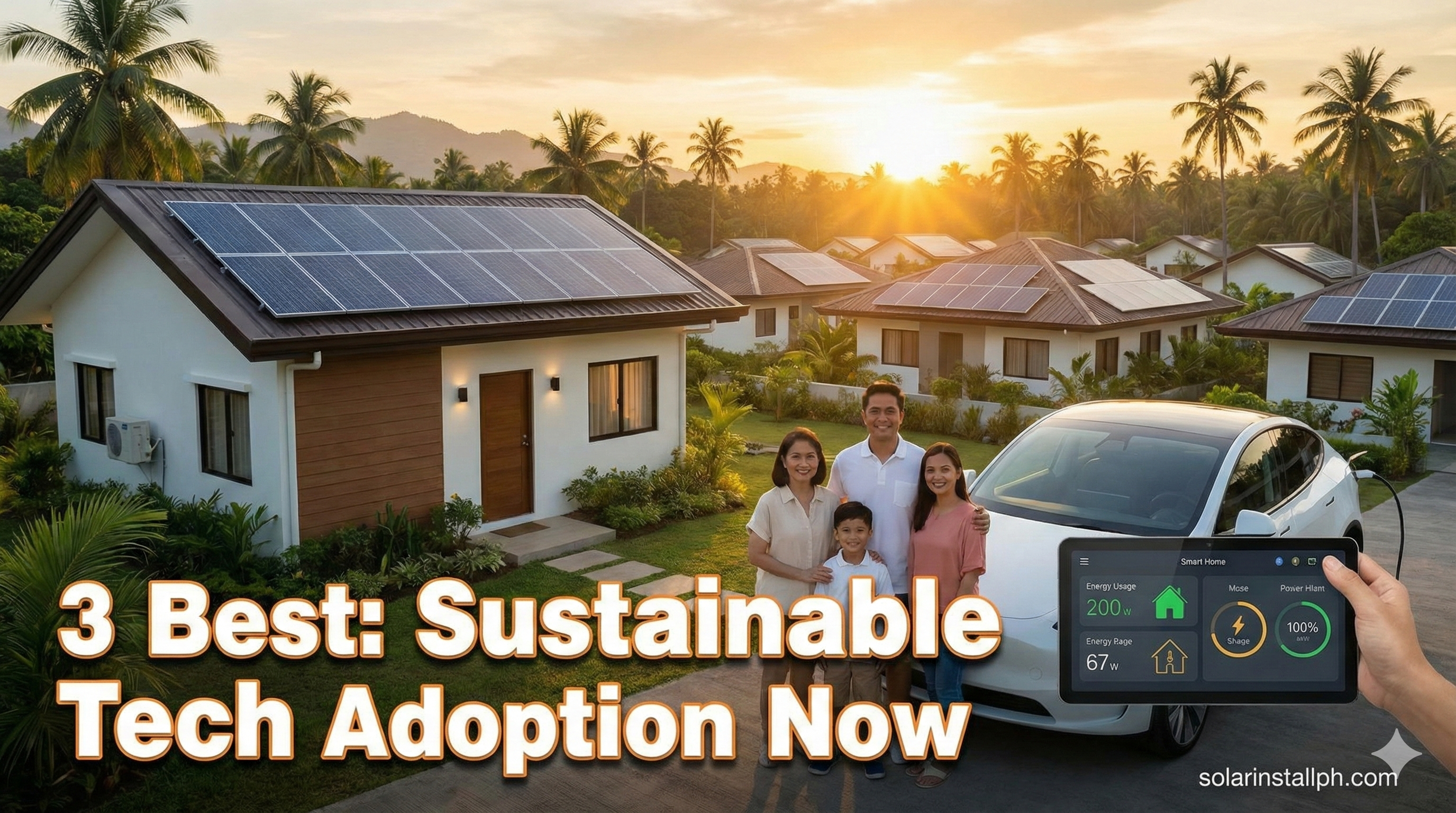
3 Best: Sustainable Tech Adoption Now
Adopting sustainable technology in the Philippines is no longer just about being "green." In 2025, it is a calculated response to some of the highest electricity rates in Southeast Asia and a grid that struggles with reliability. For homeowners and Filipino business owners, the shift toward sustainability is driven by a need for energy independence and long-term cost control.
While the global conversation focuses on abstract climate goals, the Philippine reality is much more practical. We are looking at a 4 to 7-year payback period for solar, the rise of electric mobility to bypass fluctuating pump prices, and smart systems that keep the lights on when the local co-op goes down.
1. Rooftop Solar with Smart Storage
Solar energy remains the heavyweight of sustainable tech in the Philippines. As of early 2026, the cost of a residential grid-tied system has stabilized, but the way we use it has changed. We are seeing a massive shift from simple "grid-tie" setups to hybrid systems that include lithium iron phosphate (LiFePO4) batteries.
The Shift to Hybrid Systems
Previously, most homeowners opted for pure grid-tie systems to lower their daytime bills. However, with the increasing frequency of rotational brownouts and the aging state of the national grid, solar backup power has become a priority. A hybrid system allows you to sell excess power back to the grid during the day while keeping a reserve for nighttime or emergency use.
Average Cost: Residential systems typically range from ₱150,000 for a basic 2kWp setup to over ₱900,000 for large 15kWp installations.
Net Metering: This remains the most effective way to maximize your investment. By enrolling in the Meralco or local electric cooperative’s net metering program, you receive credits for the excess energy you feed back into the system.
ROI Reality: If your monthly bill is ₱10,000 or higher, you are likely looking at a solar payback factor that sees the system paying for itself in roughly 5 years.
2. Electric Mobility and Charging Infrastructure
The second pillar of adoption is the transition to Electric Vehicles (EVs), specifically two-wheelers and compact cars. The E-Vera law (RA 11697) has provided the framework, but the actual adoption is happening because the cost per kilometer for an EV is significantly lower than a gasoline counterpart.
Solar-EV Synergy
The smartest adopters are those pairing their EV with their home solar system. Charging an electric scooter or car using "free" energy from your roof eliminates the biggest hurdle of EV ownership: the cost of power.
For businesses, integrating EVs into delivery fleets is becoming a standard move to hedge against fuel price volatility. We are also seeing more developers include EV charging stations in new condo and commercial projects. If you are living in a high-rise, it is important to understand how condo solar rules and management policies are evolving to accommodate these charging needs.
3. Smart Energy Management Systems (HEMS/BEMS)
Sustainability in 2025 is as much about not using power as it is about generating it. Smart Home Energy Management Systems (HEMS) and Building Energy Management Systems (BEMS) are the "brains" of a sustainable setup. These technologies use AI and IoT sensors to monitor consumption in real-time.
Why Monitoring Matters
You cannot manage what you do not measure. In the Philippines, where a single inefficient air conditioning unit can add ₱3,000 to your monthly bill, smart monitoring is essential. These systems can:
Automatically turn off non-essential loads during peak pricing hours.
Prioritize solar power usage for heavy appliances like pumps or water heaters.
Alert you to "phantom loads" or equipment that is beginning to fail and draw excess current.
For those just starting, a simple home energy audit is the best first step. It identifies where your money is leaking before you spend on expensive hardware.
The Real Drivers Behind the Trend
The adoption of these technologies isn't just a lifestyle choice; it's a structural necessity. Several factors are pushing Filipinos to pull the trigger on these investments now:
RA 9513 Incentives: The Renewable Energy Act continues to provide VAT zero-rating on RE equipment and duty-free importations, which keeps hardware costs competitive despite global inflation.
GEOP Expansion: The Green Energy Option Program now allows more commercial users to choose their electricity supplier, effectively letting them opt for 100% renewable sources without necessarily installing their own panels.
Climate Resilience: With the Philippines facing intensified typhoons, "sustainable" now means "resilient." Systems are being designed for higher wind load solar requirements to ensure they survive 250kph+ gusts.
Common Mistakes to Avoid
In the rush to adopt, many Filipinos fall into traps that turn a good investment into a headache.
Skipping Permits: Many think they can save money by skipping LGU permits. This often leads to fines, issues with fire insurance, and an inability to enroll in net metering.
Ignoring Shading: Even a small shadow from a neighbor’s tree or a Meralco pole can significantly drop your system's output. Always insist on a professional shading analysis.
Low-Quality Inverters: The panels get all the glory, but the inverter does the hard work. Cheap, off-brand inverters often fail within 2–3 years in our humid, salty environment.
How to Evaluate Your Own Situation
Before you buy into the hype, look at your data.
Check your bill: Are you consuming more than 400kWh a month? If so, solar is almost certainly a "yes."
Assess your roof: Is it structurally sound? A solar system lasts 25 years; your roof should too.
Verify your installer: Always work with DOE-accredited installers who understand the local grid codes and permitting requirements.
Sustainable tech adoption in the Philippines is about building a buffer between your wallet and the volatile energy market. Whether it's through a few panels on the roof or a smart monitor in your circuit box, the goal is the same: efficiency, reliability, and long-term savings.