
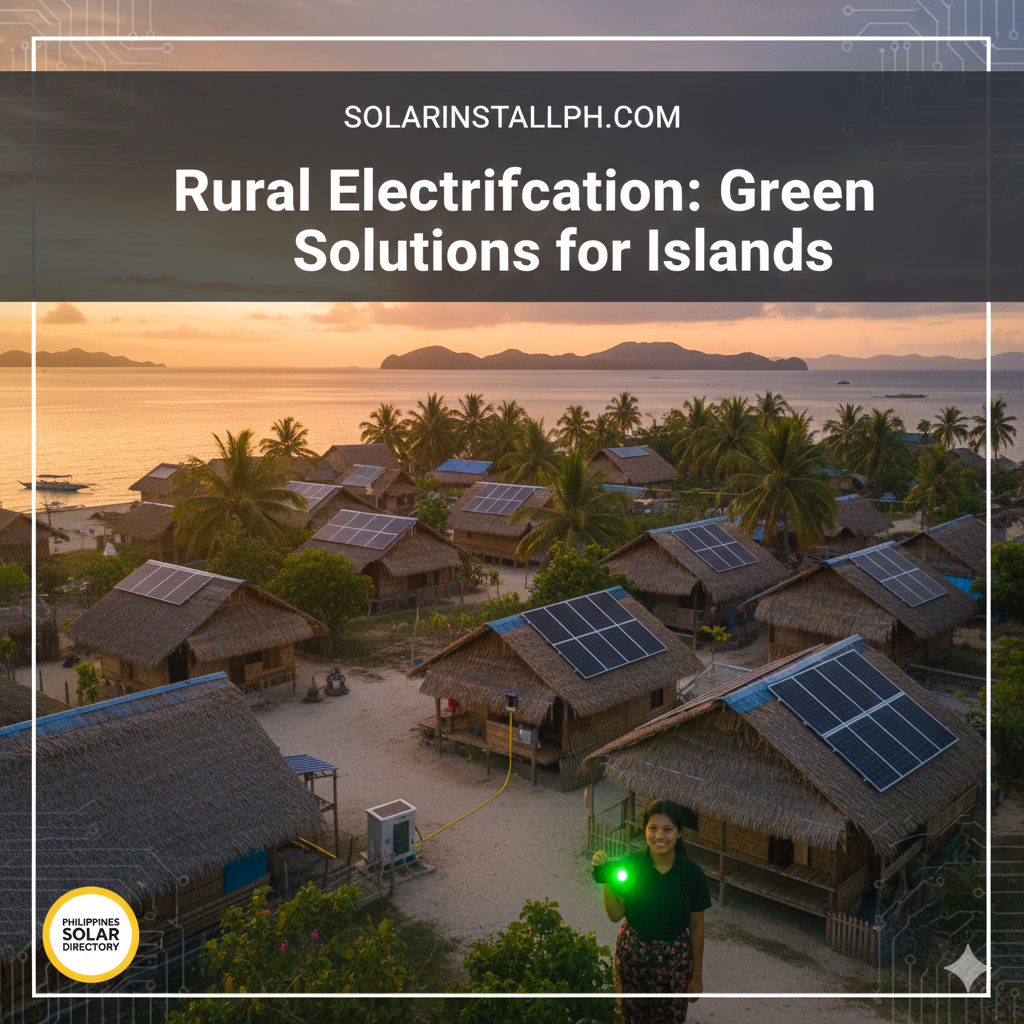
Rural Electrification: Green Solutions for Islands
Rural electrification in the Philippines has historically been a story of diesel generators and limited hours of light. For many of the country's 7,641 islands, the "grid" is a localized circuit powered by expensive, imported fuel that often runs for only four to eight hours a day. This dependency makes electricity in remote areas significantly more expensive than in Metro Manila, often exceeding ₱15 per kWh before government subsidies.
In 2025, the narrative is shifting toward decentralized renewable energy. With the enactment of the Microgrid Systems Act (RA 11646), the Department of Energy (DOE) has streamlined the entry of Microgrid System Providers (MGSPs). This allows private companies to bypass the usual franchise hurdles to bring 24/7 power to unserved and underserved barangays using solar-hybrid technology.
The Shift from Diesel to Solar-Hybrid Systems
The most practical solution for Philippine islands is no longer a choice between "solar only" or "diesel only." The standard has become the solar-hybrid microgrid. These systems combine large-scale solar arrays with Lithium-ion Battery Energy Storage Systems (BESS) and a backup diesel generator.
This setup ensures that solar handles the daytime load and charges the batteries, while the generator only kicks in during prolonged monsoon rains or technical maintenance. For a typical island community, a hybrid system can reduce diesel consumption by over 60%. This transition is critical because it stabilizes the solar system lifespan by reducing the mechanical wear and tear on generators that previously had to run 24/7.
Why Hybrids Win on Islands
Cost Stability: Solar energy has zero fuel cost, shielding islanders from global oil price spikes.
Reliability: Batteries provide an instantaneous buffer, preventing the "flicker" common in old diesel grids.
Environmental Safety: Lower fuel transport needs mean fewer chances of oil spills in pristine island waters.
Economic Drivers: ROI and Productive Use of Energy
For a remote resort or a small island business, the return on investment (ROI) for solar is often faster than in the city. While a residential solar cost analysis for a Manila home might show a 5-year payback, an island business paying for diesel-generated power can see an ROI in as little as 3 years.
Energy on an island is not just about lighting a bulb; it is about "productive use." When 24/7 power arrives, it transforms the local economy:
Fisheries: Cold storage and blast freezers allow fishermen to store their catch, reducing spoilage and allowing them to sell when prices are better.
Tourism: Homestays and eco-resorts can offer air conditioning and reliable Wi-Fi, significantly increasing their nightly rates.
Agriculture: Solar-powered irrigation pumps replace expensive manual hauling of water, increasing crop yields for high-value island produce.
Understanding the solar payback factors in these regions requires looking at the "avoided cost" of diesel, which is currently the highest-priced energy source in the country.
Technical Challenges: Salt Air and Typhoons
Building solar on an island is not the same as building in a landlocked province. The environmental stressors are intense. Corrosion from salt spray can eat through standard aluminum rails in a matter of months, and typhoon-force winds can easily lift panels if they are not secured properly.
Designing for Durability
Installers must prioritize high-quality mounting hardware. We recommend nonpenetrating mounts for certain metal roof types to maintain structural integrity, or heavy-duty ground mounts for larger community arrays.
All electrical enclosures must be NEMA 4X rated to resist salt-air corrosion. Furthermore, the system must be designed with the local wind zone in mind. Philippine structural codes now require solar racks to withstand winds up to 300 kph in typhoon-prone regions like Bicol and Eastern Samar. Proper solar mounting is the difference between a 25-year asset and a liability that flies away during the first storm of the season.
Policy and Financing for Rural Solar
The Philippine government provides several mechanisms to make these projects viable. The Universal Charge for Missionary Electrification (UCME) is a subsidy paid by all on-grid consumers to help lower the cost of power in off-grid areas. New regulations now allow solar developers to tap into these subsidies if they can provide power cheaper than the existing diesel-only plants.
For smaller scale projects, like a family-owned island resort, traditional bank loans are becoming more accessible. There are specific bank solar loan reqs that applicants must meet, often involving a technical feasibility study and a reputable EPC (Engineering, Procurement, and Construction) partner.
Common Mistakes in Island Installations
We often see "DIY" island systems fail within two years. The most common culprit is poor battery management. Using lead-acid batteries in a high-temperature island environment leads to rapid degradation. Modern Lithium Iron Phosphate (LiFePO4) batteries are the only logical choice for 2025 due to their higher depth of discharge and thermal stability.
Another mistake is undersizing the system. On an island, you cannot just "buy more from the grid" if you run out. Accurate load profiling is essential. An installer must account for the heavy startup currents of water pumps and refrigerators, which can trip an undersized inverter.
Evaluating Your Island Project
If you are looking to bring green energy to a remote property or community, start with a data-driven approach:
Audit the Load: Identify every appliance and its operating hours.
Assess the Site: Look for shading from coconut trees or mountains that might cut into your peak sunlight hours.
Verify the Installer: Ensure the company has experience in maritime or off-grid environments. Check their portfolio for projects that have survived at least three typhoon seasons.
FAQ
Is off-grid solar cheaper than Meralco?
In terms of upfront cost, no. But on an island where there is no Meralco, solar is significantly cheaper than running a diesel generator, which can cost ₱25–₱40 per kWh when you factor in fuel transport and maintenance.
Can solar power an entire island?
Yes. Several islands in the Philippines, such as Cobrador in Romblon and various barangays in Palawan, are already powered primarily by solar-hybrid microgrids.
What happens during a typhoon?
A properly engineered system will have panels low-profiled and bolted to reinforced structures. During the storm, the system is usually shut down to protect the electronics from power surges caused by lightning or falling debris.
Rural electrification is no longer a waiting game for a subsea cable that may never come. With the right technology and a solid understanding of the Philippine environment, islands can leapfrog traditional power grids and go straight to a clean, resilient, and independent energy future.