
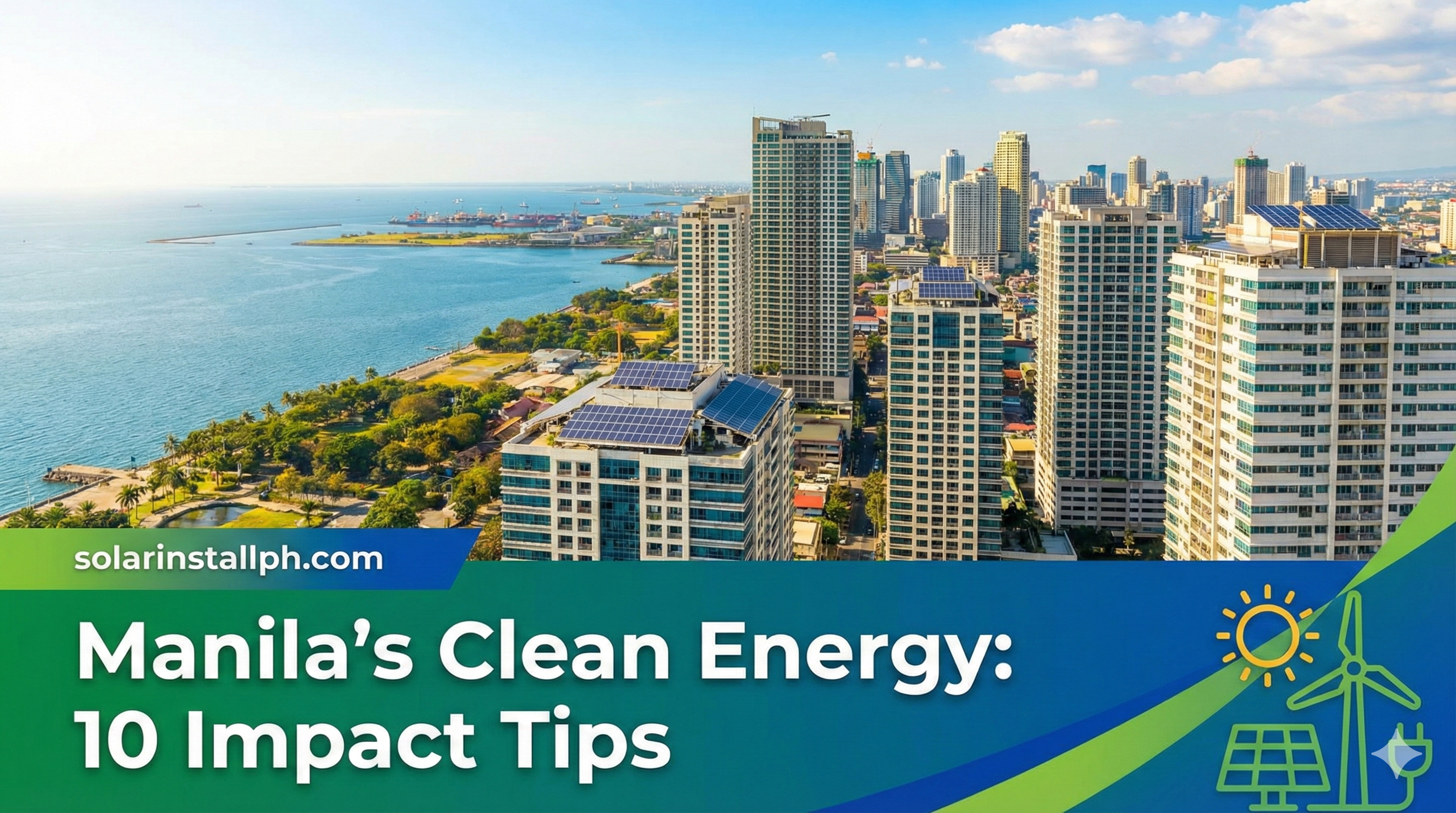
Manila's Clean Energy: 10 Impact Tips
The energy landscape in Metro Manila is shifting. With electricity rates in the Philippines remaining among the highest in Southeast Asia, homeowners and business owners are no longer looking at clean energy as a "green" luxury but as a financial necessity. As of early 2026, the convergence of aggressive government mandates, streamlined permitting, and the falling costs of photovoltaic (PV) hardware has created a perfect window for adoption.
Whether you are managing a high-rise office in BGC or a household in Quezon City, the goal is the same: reduce grid dependence and shield yourself from volatile price hikes. Here are 10 practical, impact-focused tips for navigating Manila's clean energy transition.
1. Maximize the Net Metering Program
If you install solar panels in Manila, do not just use them for "own-use." Enrolling in the Meralco net metering guide program allows you to export excess power generated during the day back to the grid. In exchange, you receive credits on your bill that offset the power you use at night.
Impact: Net metering can significantly shorten your ROI by turning your roof into a micro-revenue generator.
Update for 2026: Under Joint Memorandum Circular No. 001 (series of 2026), local government units (LGUs) are now mandated to process electrical permits for net metering within just three working days.
2. Right-Size Your System Based on Load Profiles
A common mistake is over-installing. Before buying panels, analyze your "load profile"—the specific times of day when your consumption peaks. For most Manila offices, consumption peaks during the day (air conditioning and computers), making them perfect candidates for solar. Households, however, often peak at night, which might necessitate a different strategy or smaller array.
Understanding your usage helps you determine the most accurate solar payback factors for your specific situation.
3. Conduct a Professional Energy Audit
Sustainability starts with efficiency. Before spending hundreds of thousands on hardware, perform a home energy audit to identify "phantom loads" and efficiency leaks.
Check Insulation: In the Philippine heat, attic insulation can reduce indoor temperatures, lowering the work required from your AC.
Seal Leaks: Ensure windows and doors in air-conditioned rooms are airtight.
Lighting: Replacing old bulbs with LEDs can save up to 75–80% on lighting energy.
4. Prioritize "Inverter" Technology for Heavy Appliances
If your budget is limited, prioritize replacing non-inverter appliances. Inverter-type air conditioners, refrigerators, and washing machines modulate their power usage rather than switching on and off at full blast. In a Manila setting, switching to an inverter AC can reduce that specific appliance’s consumption by up to 30–50%.
5. Leverage Government Fiscal Incentives
The Renewable Energy Act (RA 9513) provides several incentives that many residents and small businesses overlook:
VAT Zero-Rating: RE developers and equipment purchasers can avail of 0% VAT on local supply goods and services.
Duty-Free Importation: For the first 10 years of operation, RE equipment can be imported without duties.
Income Tax Holiday (ITH): Commercial RE projects can enjoy an ITH for the first seven years.
6. Build for Resilience: Typhoon and Wind Load
Manila's location makes it a target for typhoons. Your PV system is an outdoor asset that must be engineered for wind load solar requirements.
Mounting: Ensure your installer uses high-quality, non-corrosive mounting rails.
Fasteners: Use stainless steel hardware to prevent rust from Manila's humid and sometimes salty air.
Professionalism: Always hire certified solar pros who understand the structural integrity required for Philippine roofing.
7. Strategic Scheduling of High-Drain Tasks
If you have a grid-tied system without batteries, "use it while you make it." Schedule energy-intensive tasks during peak sunlight hours (typically 10:00 AM to 2:00 PM).
Laundry: Run your washing machine while the sun is out to use your solar power directly.
Water Heating: If you have an electric heater, use it during the day.
Charging: Plug in laptops, power banks, and electric scooters during high-noon.
8. Explore the Green Energy Option Program (GEOP)
For large commercial or industrial users in Manila (those with a peak demand of at least 100kW), the GEOP program is a game-changer. This allows you to choose your electricity supplier, specifically opting for one that provides 100% renewable energy. It allows businesses to go "green" without necessarily installing panels on their own roof.
9. Optimize Cooling Through Passive Design
Manila’s urban heat island effect can be brutal. Use passive design to reduce the "cooling load" of your building:
Cross-Ventilation: Place windows on opposite sides of rooms to encourage natural airflow.
Awnings: Install overhangs to protect windows from direct afternoon sun.
Greenery: Indoor plants can improve air quality and provide a minor cooling effect through transpiration.
10. Stay Compliant with Standardized Timelines
In 2026, there is no excuse for "guerrilla" solar (installing without permits). Not only is it unsafe for the grid, but it also voids your insurance and prevents net metering.
Approval Deadlines: The DILG now strictly enforces that Certificates of Final Electrical Inspection must be issued within seven working days.
Digital Filing: Many Metro Manila LGUs have adopted digital systems to reduce delays.
Documentation: Work with your installer to prepare your Certificate of Compliance (COC) and updated electrical plans signed by a Professional Electrical Engineer (PEE).
FAQ: Clean Energy in Manila
Is solar worth it if I live in a condo in Makati or BGC?
Yes, but you are often limited by space. Some condos allow solar on the roof for top-floor units or common areas. Alternatively, focus on energy-efficient appliances and check if your building is enrolled in a green energy procurement program.
What is the "Zero Export" program?
If you do not want to go through the full net metering process, you can apply for a zero export overview setup. This uses a "limiter" to ensure no power goes back to the grid, but you still need to notify Meralco for safety and grid compatibility.
How long do solar panels last in Manila’s weather?
Most Tier 1 panels are rated for 25 years. However, regular cleaning is required because of Manila's smog and dust, which can reduce efficiency if left to build up.