
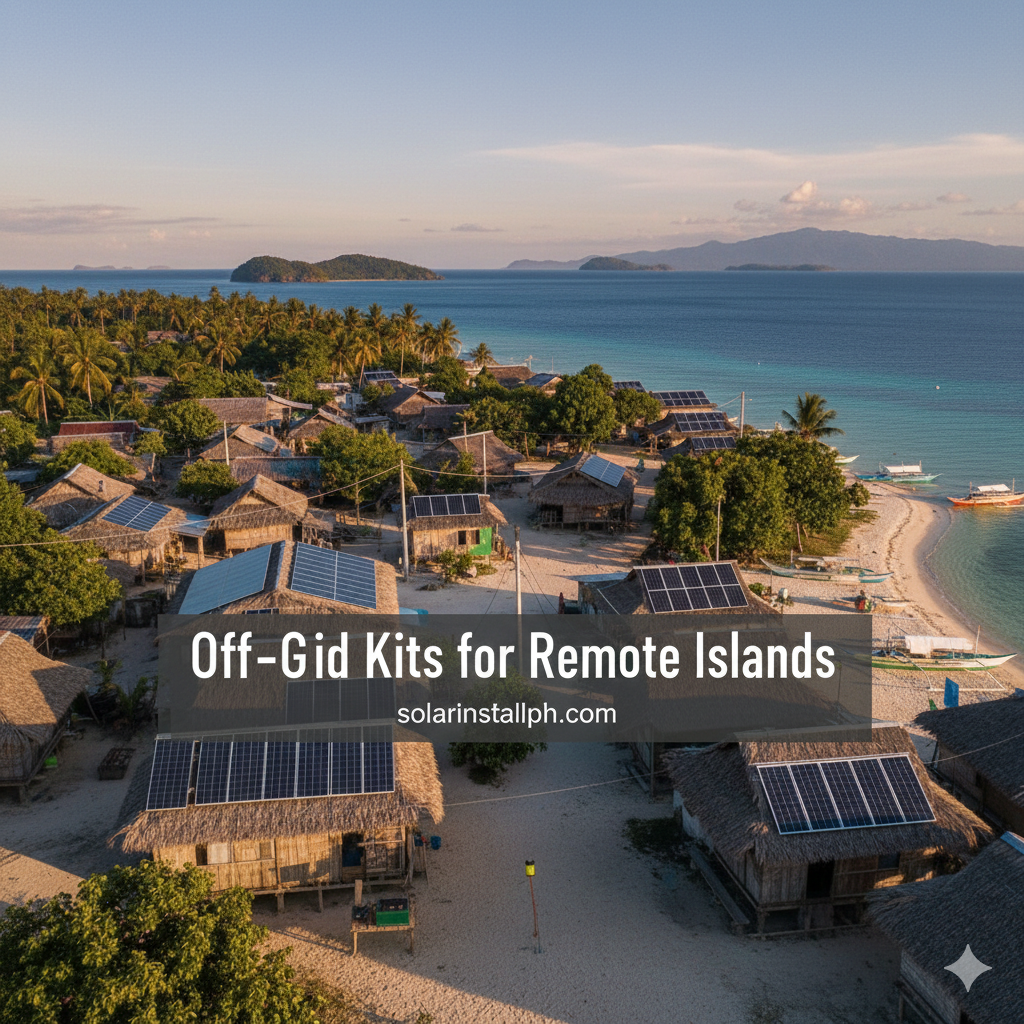
Off-Grid Kits for Remote Islands
The Philippine archipelago is a stunning mosaic of over 7,000 islands, but for those living on remote shorelines, beauty often comes with a steep price: energy isolation. For decades, the "Republic's Power" in these areas meant a few hours of noisy diesel generation at night or total darkness. However, as we move through 2025, a quiet revolution is happening. Off-grid solar kits are no longer just hobbyist projects; they are becoming the primary tool for island independence.
For residents of far-flung barangays in Palawan, Tawi-Tawi, or the smaller islands of the Visayas, an off-grid solar kit represents more than just light. It represents the ability to keep life-saving medicine cold, power digital classrooms, and eliminate the high cost of hauling diesel fuel across rough seas. This guide explores the technical, regulatory, and practical realities of deploying off-grid solar in the most challenging environments of the Philippines.
The Reality of Island Energy in 2025
Historically, remote islands relied on the Small Power Utilities Group (SPUG) managed by the National Power Corporation (NPC). While vital, these systems are often limited by fuel logistics and high generation costs. In many cases, electricity is only available for 4 to 6 hours a day.
The shift toward solar is driven by a massive drop in hardware costs and a shift in government policy. Under the Microgrid Systems Act (RA 11646), the Department of Energy (DOE) has streamlined the process for private Microgrid System Providers (MGSPs) to operate in "unserved and underserved" areas. This allows for localized energy systems that are more reliable and cheaper than traditional diesel. For those looking to start their own journey, understanding residential solar costs provides a baseline for what to expect when moving away from the grid.
Anatomy of a Marine-Grade Off-Grid Kit
An off-grid kit for a remote island is fundamentally different from a suburban setup in Manila. The environmental stressors—salt air, high humidity, and extreme wind—require specific hardware choices.
Solar Panels: N-Type and Salt Resistance
In a tropical island setting, panels face two main enemies: heat and salt. N-type TOPCon panels have become the standard because they lose less efficiency as they heat up under the noon sun. More importantly, island kits must use panels with high salt-mist corrosion resistance certifications (IEC 61701). Without this, the aluminum frames and internal connections will oxidize and fail within a few years.
The Inverter: Grid-Forming Capabilities
In an off-grid scenario, the inverter is the "brain" that creates its own electrical grid. It must be a "grid-forming" inverter that can handle the surge currents of appliances like refrigerators or water pumps. Many island dwellers are now choosing microinverters for modularity, although centralized off-grid inverters remain the workhorse for larger community systems.
Battery Storage: The Move to LiFePO4
The days of heavy, short-lived lead-acid batteries are over. Modern island kits almost exclusively use Lithium Iron Phosphate (LiFePO4). These batteries last 10 times longer, can be discharged more deeply, and handle the heat of the Philippines much better. When building your kit, comparing solar battery brands is essential to ensure you are getting a unit with a built-in Battery Management System (BMS) that can survive the humidity.
Typhoon Resilience: Engineering for Survival
In the Philippines, an off-grid kit isn't truly independent if it flies away during a Signal No. 4 typhoon. The mounting system is arguably the most critical part of an island installation.
Wind Load and Mounting
Standard rails are often insufficient. Island kits require heavy-duty aluminum or hot-dipped galvanized steel mounts. Engineering for these areas involves:
Low Tilt Angles: Keeping panels at 5 to 10 degrees to minimize "uplift" forces during high winds.
Through-Bolting: Using stainless steel bolts that go through the roof structure rather than just gripping the metal sheets.
Thorough Site Assessment: Identifying wind tunnels created by local topography.
We strongly advocate for securing panels with typhoon-rated mounting because, on a remote island, replacement parts can take weeks or months to arrive. Resilience is the only path to long-term freedom.
Sizing Your System: The "Autonomy" Factor
When you are off-grid, you cannot rely on the utility if your batteries run dry. Sizing is a balance between your daily consumption and "Days of Autonomy"—the number of days the system can run without sun.
A Typical Island Household Load:
Lighting (4-6 LED bulbs): 60Wh/day
Electric Fan (8 hours): 400Wh/day
Small Refrigerator (24 hours): 1,200Wh/day
Mobile Charging and Radio: 100Wh/day
Total: ~1.8 kWh per day
To support this daily load with 2 days of autonomy (cloudy days), a typical kit would need approximately 1 kWp of solar panels and a 5 kWh LiFePO4 battery. For those wanting to see how this translates into financial savings, navigating the Meralco net metering guide provides an interesting contrast on how on-grid users manage their excess power compared to the "total capture" model of an off-grid islander.
Installation and the "Fly-by-Night" Risk
Remote areas are prime targets for sub-standard installers selling "cheap" kits that fail after the first rainy season. For a system to be safe and legal, it should ideally be designed or reviewed by a Professional Electrical Engineer (PEE).
The DOE maintains a list of accredited providers to ensure quality standards. We recommend selecting a DOE-accredited solar installer even for off-grid projects. These professionals understand the specific earthing and lightning protection requirements necessary for isolated systems in storm-prone regions.
Maintenance: The Islander’s Routine
Self-sufficiency requires a commitment to maintenance. On a remote island, you are the technician.
Cleaning: Salt film can reduce output by 20% in a month. Panels must be wiped down with fresh water regularly.
Connection Checks: High humidity and salt air can loosen or corrode terminals. A biannual check of all DC and AC connections is mandatory.
Battery Monitoring: Modern LiFePO4 batteries often come with Bluetooth apps. Checking your state of charge (SoC) daily helps you adjust your appliance use during rainy weeks.
The Economic Impact of Island Freedom
The transition to solar kits is transforming local island economies.
Fisheries: Solar-powered chest freezes allow fishermen to store their catch, reducing spoilage and allowing them to sell when prices are higher.
Tourism: Eco-resorts can operate without the noise of generators, attracting "green" travelers and lowering operating costs.
Education: "Last-mile" schools are using solar kits to power tablets and satellite internet, bridging the digital divide for island youth.
Conclusion
Off-grid kits for remote islands are the ultimate expression of energy freedom in the Philippines. They turn the sun—our most abundant resource—into a tool for economic development and disaster resilience. While the initial investment is higher than staying on a diesel grid, the long-term savings and the peace of mind of 24/7 power are priceless.
In 2025, the "Republic's Power" is being redefined. It is no longer just about the big wires coming from the city; it is about the panels on a nipa hut and the light in a remote classroom.
FAQ
Can I run an air conditioner on an off-grid kit?
Yes, but it requires a significantly larger and more expensive system. A typical 1.0 HP inverter AC needs about 3-4 kWp of solar and at least 10-15 kWh of battery storage to run through the night. For most islanders, energy-efficient DC fans are a more practical choice.
What happens if my battery dies in the middle of the night?
A well-designed off-grid kit should have a Low Voltage Disconnect (LVD) to protect the battery from permanent damage. If this happens, your power will shut off until the sun rises and begins recharging the system the next morning.
Is it legal to build my own off-grid system?
Yes, for personal use on your own property. However, if you plan to sell power to your neighbors or create a community grid, you must comply with the Microgrid Systems Act and register as a Microgrid System Provider (MGSP) with the DOE and ERC.