
Backup Batt Solutions: Expert Insights
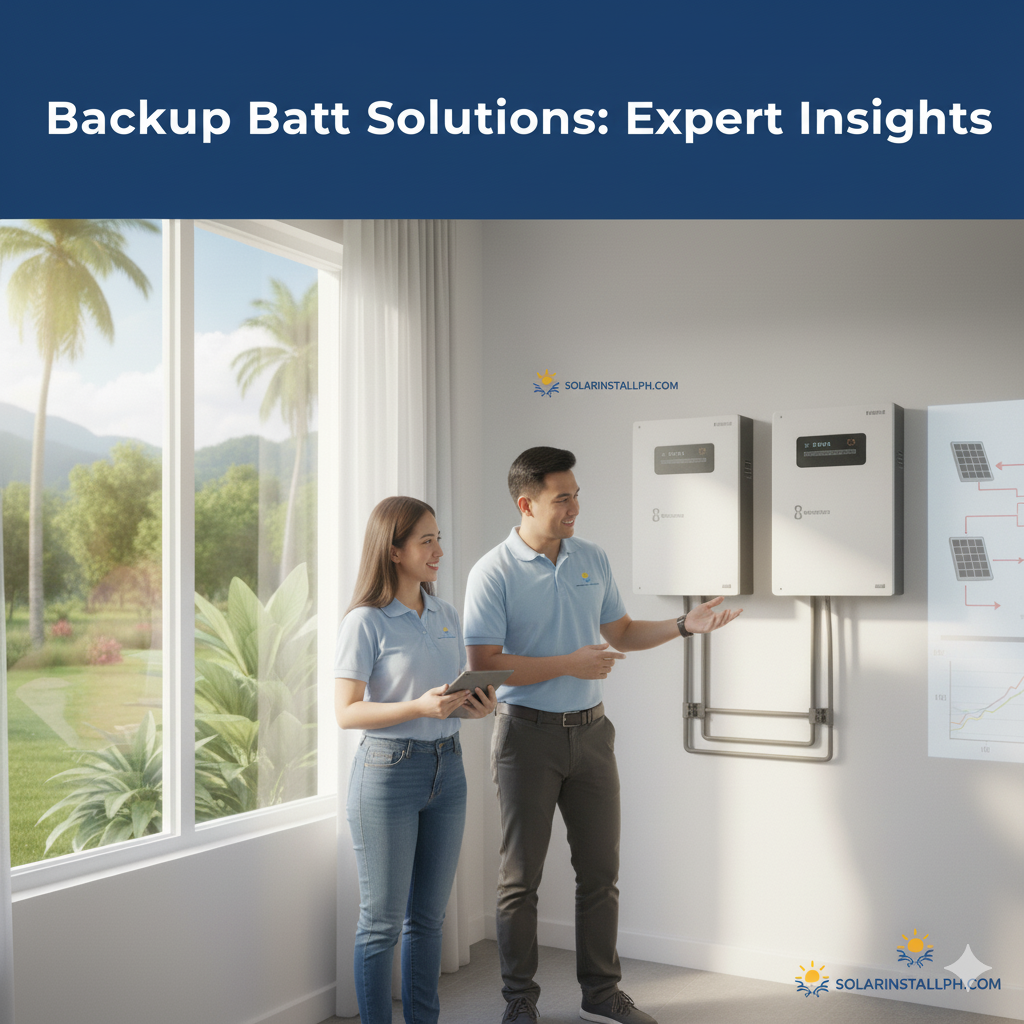
In the Philippines, the flicker of lights followed by sudden darkness is an all-too-familiar narrative. It’s the dreaded brownout, a disruptive force that halts business, interrupts family life, and serves as a stark reminder of the vulnerabilities of a centralized power grid. For decades, the go-to solution was the noisy, fume-belching generator set—a clunky but necessary tool for weathering the outages. But today, a quiet and profound shift is underway, driven by expert consensus and technological maturity.
The new gold standard for energy resilience is the solar battery. This is not merely a gadget for early adopters; it is a strategic asset that provides seamless, silent, and sustainable power when the grid fails. It represents a fundamental change in how we approach energy security, moving from a reactive scramble for fuel to a proactive state of constant readiness.
But what does it really take to implement an effective backup battery solution? What do the seasoned professionals—the engineers and veteran installers who work with this technology every day—advise? We’ve gathered their top insights to create a definitive guide. This is not about sales pitches; it's about expert-driven strategy for achieving true peace of mind through a reliable backup battery system. The journey to energy independence has many facets, and understanding the core solar benefits is a critical first step.
Expert Insight #1: Ditch the Generator Mentality
The first piece of advice from nearly every energy expert is to re-evaluate the role of the traditional generator set. While it has served a purpose, its drawbacks are becoming increasingly glaring when compared to a modern battery backup system.
The Expert Breakdown: Battery vs. Generator
Activation: A generator requires manual startup, a trip outside (often in bad weather), and a waiting period. A battery system, managed by a hybrid inverter, provides an instant and automatic switchover. The power transfer is so seamless—often occurring in milliseconds—that your lights won't even flicker. You may not even realize a brownout has occurred until you look outside.
Fuel & Ongoing Costs: Generators run on diesel or gasoline, volatile commodities whose prices fluctuate and which can be difficult to source during widespread emergencies. They require constant refueling. A solar battery, on the other hand, runs on stored sunshine. Its fuel is free, abundant, and harvested directly from your own roof.
Maintenance: Generators are complex mechanical engines with oil to change, filters to clean, and parts that wear down. They need regular, often messy, maintenance. A lithium-ion battery is a solid-state device with no moving parts, requiring virtually zero maintenance over its 10 to 15-year lifespan.
Noise & Emissions: The roar of a generator is a neighborhood nuisance and an environmental pollutant. A battery system operates in complete silence, producing zero onsite emissions. It's a clean, quiet, and considerate solution.
The professional consensus is clear: for residential and most small business applications, a battery system isn't just a better backup; it's a fundamentally superior technology that offers a higher class of reliability and convenience.
Expert Insight #2: Right-Size It with a Professional Load Audit
A common mistake homeowners make is thinking about batteries in terms of "how many days" of backup they provide. Experts advise a more precise approach: a professional load audit. Before you can choose the right battery, you must know exactly what you need to power.
An experienced installer will analyze your electricity usage patterns and, more importantly, work with you to identify your "critical loads." These are the non-negotiable appliances and devices you need to keep running during an outage. This typically includes:
Lighting: Key lights in hallways, living areas, and bathrooms.
Refrigeration: The refrigerator and freezer, to prevent food spoilage.
Connectivity: Your Wi-Fi router and modem, to stay informed and connected.
Ventilation: Electric fans for comfort.
Charging: Designated outlets for charging phones, laptops, and medical devices.
Once this list is defined, the installer calculates the total power (in watts) and energy (in watt-hours) these critical loads consume over a specific period. This data-driven analysis allows them to "right-size" your battery capacity (measured in kWh). This prevents you from overspending on a battery that's excessively large or being disappointed by one that's too small to meet your needs. This level of detail is a hallmark of a comprehensive solar install guide.
Expert Insight #3: Embrace the Critical Load Panel Strategy
This is perhaps the single most impactful piece of expert advice for maximizing the effectiveness of a backup battery. Instead of trying to power your entire home, which would require a massive and costly battery bank to handle high-demand appliances like air conditioners, professionals implement a critical load panel (or sub-panel).
During installation, an electrician moves the circuits for your designated critical loads from your main breaker box to this new, separate sub-panel. This panel is wired directly to the backup power source of your hybrid inverter.
Here’s why this is the pro move: When a brownout occurs, the inverter instantly isolates your home from the grid and channels all the battery's power only to the critical load panel. This ensures that every precious watt of stored energy is used efficiently to run your essentials for the longest possible time. It's the difference between a battery lasting for 12-24 hours versus being drained in 2-3 hours by a single air conditioning unit. This strategy is a core principle of designing resilient off-grid solar systems, and it's equally vital for grid-tied backup.
Expert Insight #4: Invest in Lifetime Value, Not Just Upfront Cost
When it comes to battery chemistry, you'll encounter two main options: Lead-Acid and Lithium-Ion. While the low initial price of lead-acid can be tempting, seasoned experts will almost always steer clients toward Lithium Iron Phosphate (LiFePO4), a specific type of lithium-ion battery. The reasoning is based on a professional understanding of Total Cost of Ownership (TCO) and lifetime value.
An Expert's View on Battery Chemistry:
Lead-Acid: Think of it as a budget-friendly but short-term solution. It’s cheaper upfront but has a short lifespan (3-5 years), requires regular maintenance, and you can only use about 50% of its stored energy (Depth of Discharge). You will likely have to replace it 2-3 times during the lifespan of a single lithium battery.
Lithium-Ion (LiFePO4): This is the professional standard. While the initial investment is higher, the lifetime value is vastly superior. It offers a 10-15 year lifespan, is maintenance-free, and provides a much higher Depth of Discharge (80-100%), meaning you can use almost all the energy you've stored. It is also significantly safer and more stable than other lithium chemistries.
An expert knows that the true cost of a battery is not its purchase price, but the cost per kilowatt-hour it can deliver over its entire life. On this metric, LiFePO4 is the clear winner and the smarter long-term investment. Navigating these options is easier with a dedicated solar battery guide.
Expert Insight #5: The Installer is Your Most Important Component
You can buy the best battery and the best inverter on the market, but their performance and safety are entirely dependent on the quality of the installation. The single most important decision you will make in your backup battery journey is choosing a qualified, experienced, and reputable solar installer.
Here's what a top-tier installer brings to the table, and why it's a non-negotiable:
Safety & Compliance: A battery system is a high-voltage power plant in your home. Professional installers are trained to handle this safely and ensure every aspect of the installation adheres to the strict standards of the Philippine Electrical Code. This is not a DIY project.
Warranty Protection: Virtually all leading battery and inverter manufacturers will void their warranties if their equipment is not installed by a licensed professional. Your investment is only protected if it's installed correctly.
System Optimization: A professional doesn’t just connect wires. They configure the inverter's software, fine-tune the charging parameters, and commission the system to ensure it operates at peak efficiency, maximizing both your backup time and your financial savings.
Peace of Mind: Knowing that your system is safe, compliant, and optimized by an expert provides a level of assurance that is priceless.
Ultimately, your choice of installer will have a greater impact on your long-term satisfaction than your choice of brand. Taking the time to find and vet experienced solar installers is the final and most crucial piece of expert advice.
By embracing these five expert insights, you can move forward with confidence, knowing you are making a strategic investment that will deliver reliable power and true peace of mind for many years to come.