
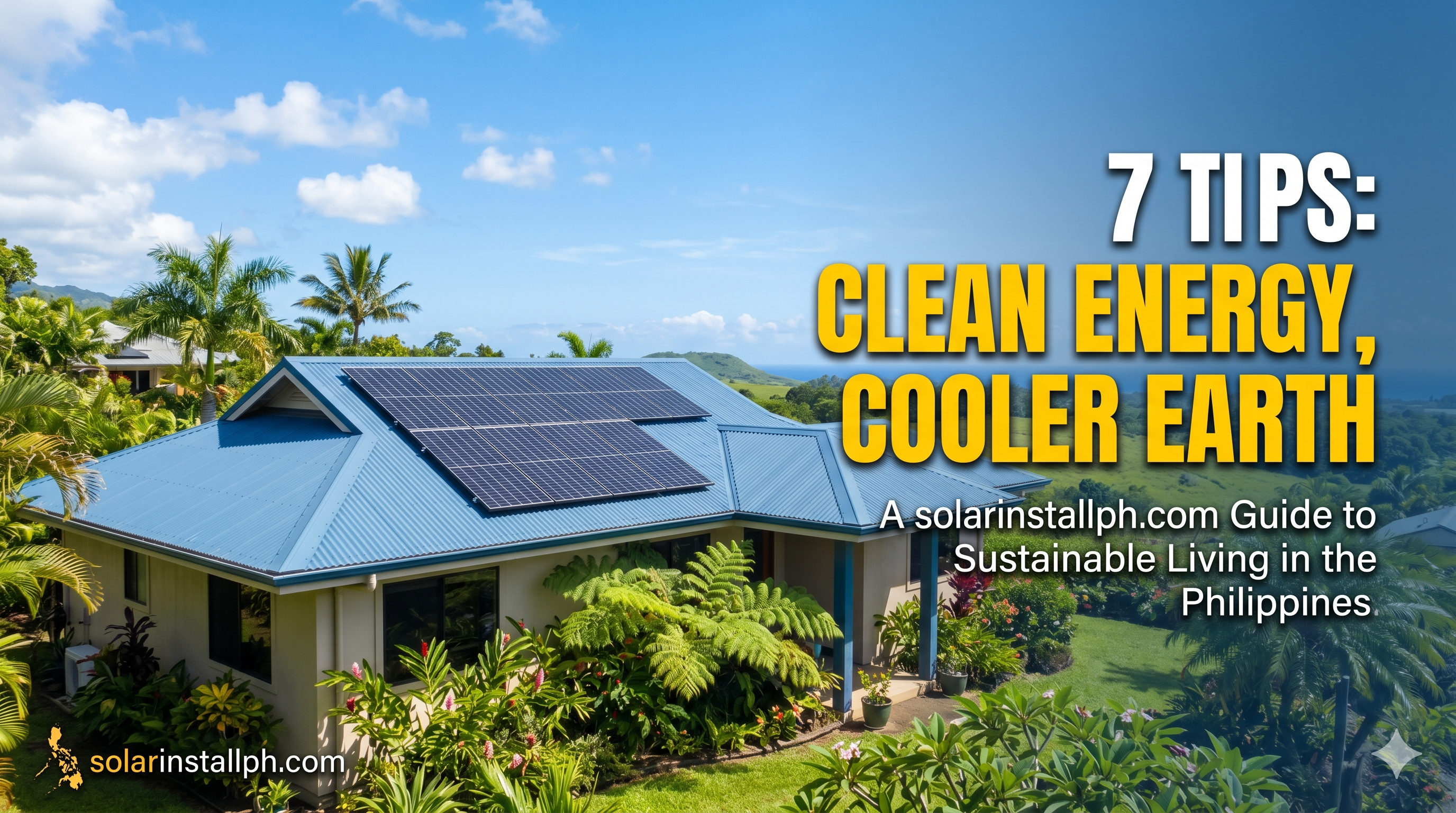
7 Tips: Clean Energy Cooler Earth
Adopting clean energy in the Philippines is no longer just about environmental idealism. In 2026, with Meralco rates hovering between ₱11 and ₱13 per kWh, it is a matter of survival and smart economics. Transitioning to solar power does more than just lower your monthly overhead; it directly contributes to cooling the planet by reducing our heavy reliance on coal-fired power plants.
However, a solar installation is a 25-year commitment. To ensure your system actually helps the earth while protecting your wallet, you need to navigate the local regulatory and environmental landscape correctly.
Here are seven practical tips for Filipino homeowners and businesses looking to make the switch to clean energy.
1. Maximize Your ROI with Net Metering
The most effective way to make clean energy work for you is through the Net Metering program. Under RA 9513, the Renewable Energy Act of 2008, homeowners can install up to 100 kW of solar capacity and sell excess electricity back to the grid.
In the Philippines, you typically consume power during the day when the sun is peaking, but if your house is empty while you are at work, that energy goes to waste unless you have a way to "store" its value. Net Metering allows you to earn credits on your bill for every kilowatt-hour you export. This significantly shortens your payback period, often bringing it down to a realistic 4 to 7 year payback for suitable loads. Without this, you might be forced into a "zero-export" setup which, while simpler to install, leaves money on the table.
2. Design for Typhoon Resilience
We live in a country that sees an average of 20 typhoons a year. A "cheap" solar installation can quickly become an expensive liability if the mounting system isn't rated for high wind loads.
When talking to installers, ask about their mounting hardware. Standard aluminum rails must be properly anchored to the roof beams, not just the GI sheets. For those in high-risk areas like Bicol or Northern Luzon, ensure the system is designed to withstand winds of at least 250 kph. Proper solar mounting for different roof types is the difference between a system that lasts decades and one that ends up in your neighbor's yard after a Signal No. 4 storm.
3. Prioritize Tier 1 Hardware
The Philippine market is unfortunately flooded with "unbranded" or "B-grade" panels that degrade quickly under the intense tropical heat. To truly contribute to a cooler earth, your hardware needs to be efficient and durable.
Investing in Tier 1 solar panels ensures that the cells are manufactured with higher standards and backed by legitimate 25-year warranties. Similarly, your inverter—the "brain" of the system—needs to be a reputable brand. High-quality inverters handle the fluctuating voltage of our local grid much better than generic ones. You can check our comparison of Tier 1 solar brands to see which manufacturers currently lead the market in reliability and efficiency.
4. Don't Skip the LGU and Utility Permits
It is tempting to "DIY" a small system or hire a "fly-by-night" installer to skip the paperwork. This is a massive mistake. To legally connect to the grid and avail of incentives, you need:
A Certificate of Final Electrical Inspection (CFEI) from your LGU.
An approved Net Metering agreement from your Distribution Utility (like Meralco or VECO).
Skipping these steps means your system is "unauthorized." If your inverter accidentally feeds power back into the grid during a brownout, it could electrocute line workers, and you could face heavy fines or disconnection. Legal compliance is part of being a responsible clean energy producer.
5. Account for "Peak Sun Hours," Not Just Daylight
One common misconception in the Philippines is that as long as it is light outside, the panels are working at 100%. In reality, we design systems based on Peak Sun Hours (PSH)—the window where solar radiation is strong enough to produce maximum power.
In most parts of the Philippines, we average about 4.5 to 5.0 PSH per day. Understanding this helps you size your system correctly. If you over-size based on 12 hours of daylight, you’ll overspend on panels you don't need. If you under-size, you won't see the bill impact you expected. You can find more detail on this in our guide to understanding peak sunlight hours in the Philippines.
6. Maintain Your System for Maximum Cooling
Dirt, bird droppings, and the notorious "salt air" corrosion in coastal areas can drop your solar production by 10% to 20%. Since solar panels work by converting light, any physical barrier on the glass reduces the "clean energy" you contribute to the grid.
Cleaning: Wash your panels every 3–6 months using only water and a soft cloth. Never use harsh detergents.
Monitoring: Most modern systems come with apps. If you see a sudden dip in production on a sunny day, it’s a red flag.
Professional Checkups: Have a licensed technician check your wiring and mounting torques annually, especially after the typhoon season.
7. Vet Your Installer Thoroughly
The surge in solar demand has led to many new companies popping up. Not all are created equal. Some may offer low prices by using undersized wires or skipping lightning protection, which are fire hazards.
Always check if the company is accredited by the Department of Energy (DOE). An accredited installer understands the Philippine Electrical Code and the specific requirements for grid-tied systems. Ask for references from past clients who have had their systems running for at least two years to see how the hardware holds up against the local climate.
FAQ
Is solar still worth it if I have a small house?
Yes, but the ROI is faster for those with higher electricity consumption. If your bill is above ₱5,000, the math is very favorable. For smaller loads, a "Grid-Tie" system without batteries is usually the most cost-effective entry point.
What happens to my solar panels during a brownout?
By law, standard grid-tied inverters must shut down during a brownout to prevent "islanding," which protects grid workers. If you need power during outages, you must invest in a Hybrid System with battery storage, which allows your home to run independently from the grid.
Does the government offer loans for solar?
Yes, several major Philippine banks like BPI, BDO, and Security Bank have specific "Green Finance" or "Eco-Loans" for residential solar. Additionally, Pag-IBIG has provisions that allow for home improvement loans to be used for solar installations.
By following these tips, you aren't just saving money—you are actively participating in the global shift toward a cleaner, cooler earth. The Philippine sun is a massive, untapped resource; it’s time we used it properly.