
Clean Panels: Easy How-To Guide
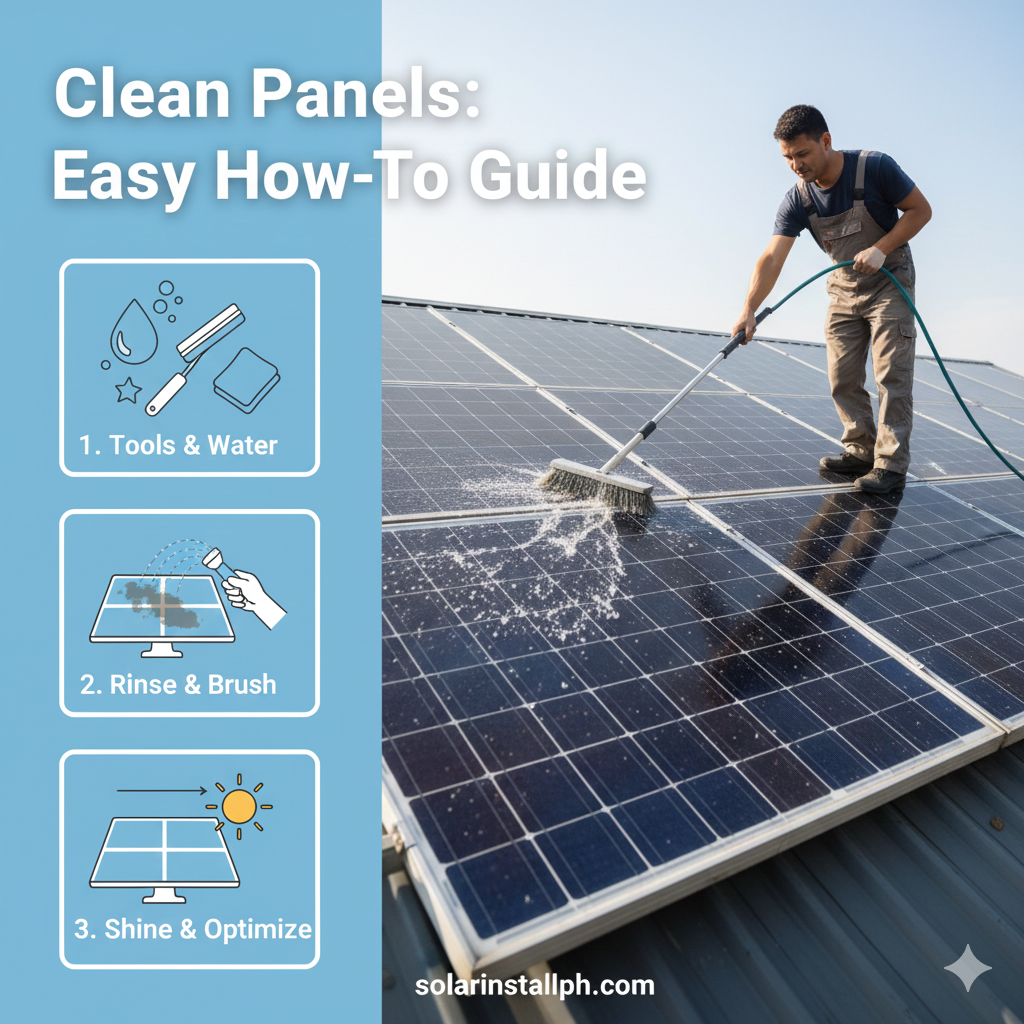
You spent six figures on a solar system to lower your Meralco bill. But if you ignore those panels for a year, you are literally throwing money away.
In the Philippines, we deal with a unique cocktail of roof dirt: construction dust from the neighbor’s renovation, soot from jeepney exhaust, sticky pollen during the summer, and the occasional ashfall if Taal or Kanlaon acts up.
A dirty system can lose 5% to 15% of its production power. On a standard 5kW system, that’s like disconnecting one entire panel permanently.
The good news? You don’t always need to hire a pro. If you have a hose, a soft brush, and some common sense, you can bring that power back in less than an hour. Here is the no-nonsense guide to cleaning your panels without breaking your neck or voiding your warranty.
When to Clean (Timing Is Everything)
You cannot just climb up there whenever you feel like it.
The Golden Rule: Only clean when panels are cool.
This means early morning (6:00 AM – 8:00 AM) or late afternoon (after 5:00 PM).
Why? Solar panels are made of tempered glass. In the Philippine noon sun, surface temperatures can hit 65°C or higher. If you spray cold tap water on hot glass, the thermal shock can cause micro-cracks. These cracks are invisible at first but will destroy your system’s output over time.
Frequency:
For most Filipino homes, cleaning every 3 to 6 months is sufficient.
Dry Season (March–May): Dust builds up fast. You might need to rinse monthly if you live near a main road.
Rainy Season (June–Nov): The rain helps, but it doesn't do a perfect job. It often leaves "mud trails" at the bottom edge of the frame that need scrubbing.
For a deeper dive on scheduling, read our guide on how often you should clean solar panels.
What You Need (And What to Avoid)
Stop! Put the pressure washer away.
Using a high-pressure washer (like a Karcher) is the fastest way to void your warranty. The high pressure can force water into the panel seals or shatter the glass.
The Safe Tool Kit:
Water Source: A standard garden hose with normal tap pressure.
Soft Brush/Sponge: A soft-bristled car wash brush on an extendable pole is perfect. Do not use scotch-brite or abrasive scrubbing pads.
Squeegee: To wipe off excess water and prevent calcium spots (optional but recommended).
Soap? Usually, plain water is enough. If you have stubborn bird poop, use a tiny amount of mild dish soap (like Joy), but rinse it thoroughly so it doesn't leave a film.
Step-by-Step Cleaning Guide
1. Safety Shutdown
Before you wet anything, turn off your system.
Go to your inverter and switch off the AC Isolator and DC Isolator. While panels are waterproof, you are introducing water and metal tools near high-voltage electricity. It is better to be safe.
Read more about electrical safety during maintenance before you climb.
2. Rinse First
Spray the panels gently with your hose. Let the water soak the hardened bird droppings and caked-on dust for 5 minutes. Do not scrub dry dirt—that’s essentially sanding your glass, which causes scratches.
3. The "Soft" Scrub
Dip your soft brush in a bucket of water (or use a flow-through brush). Gently wipe the glass.
Do not lean on the panels. Solar panels are not designed to support your weight. Walking or kneeling on them causes invisible micro-cracks in the solar cells underneath.
Focus on the bottom edge where dirt accumulates against the aluminum frame.
4. Final Rinse & Inspect
Spray everything down one last time to remove any soap residue. Soap film can actually attract more dirt later if left to dry.
While you are up there, look for loose wires, burn marks, or cracks. Early detection saves you thousands in repairs later.
See our full checklist for solar panel maintenance to know what defects to look for.
When to Call a Pro
DIY is great for a bungalow with an easy roof. But you should hire a professional if:
Steep Roofs: If your roof pitch is steep and you don't have a harness, do not risk your life for a clean panel.
Hard-to-Reach Areas: If you need a 20-foot ladder just to see the panels, call a team with scaffolding or long-reach equipment.
Stubborn Grime: If you have tree sap or cement splatter (from nearby construction), standard soap won't work, and scraping it off requires professional tools.
We have a comparison of DIY vs. Professional cleaning to help you decide if the cost is worth it.
Conclusion
Cleaning your solar panels is the easiest high-return investment you can make. A clean system produces more power, which means lower bills and faster ROI.
If you are heading into the rainy months, don't assume nature will do all the work. A quick check and a scrub can ensure you maximize every hour of sunlight between the clouds.
Check our guide on solar performance during the rainy season to understand how weather affects your output even when clean.