
Permit Rules: Connecting Your Power
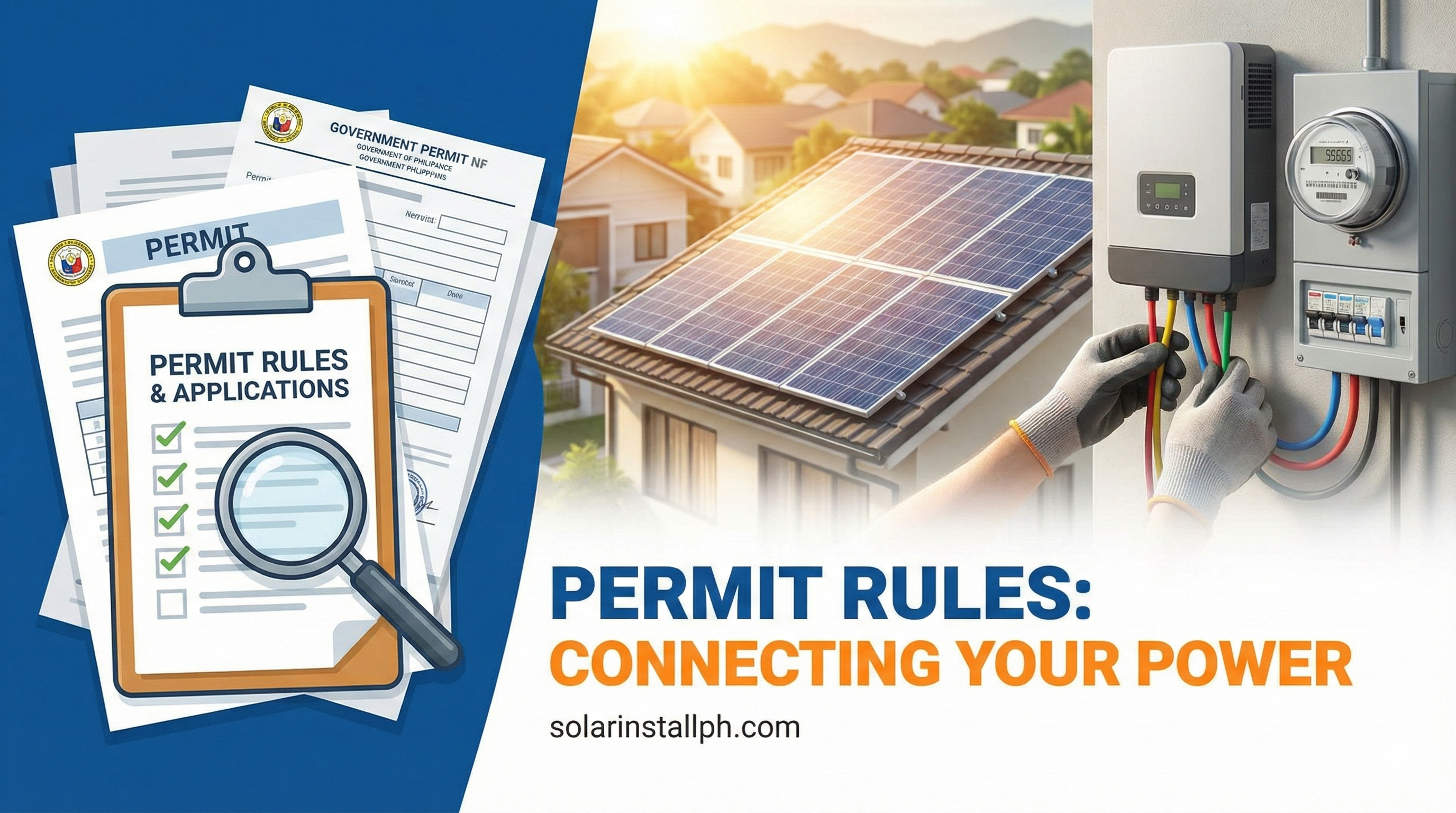
You have the panels on your roof. The inverter is mounted. The wires are run. You flip the switch, and… nothing happens.
Or rather, nothing should happen yet.
Connecting your solar system to the grid is not as simple as plugging in a refrigerator. It is a regulated engineering event that turns your home into a miniature power plant. In the Philippines, this process is governed by a mix of local safety codes (LGU) and utility rules (Meralco or your local coop).
The landscape has shifted significantly in 2025. New ERC resolutions have streamlined the paperwork, but the safety inspections on the ground remain as strict as ever. If you get this wrong, you don’t just fail an inspection—you risk frying your expensive inverter or getting slapped with a "violation of contract" by your utility.
Here is the practitioner’s guide to the rules of engagement for grid connection in 2025.
The "Yellow Card" is King
Before you even think about "exporting power" or earning credits, you need one specific document: the Certificate of Final Electrical Inspection (CFEI).
In the industry, we often call this the "Yellow Card" (though the actual paper color varies by city). This is the document issued by your City Engineer’s Office (OBO) certifying that your installation complies with the Philippine Electrical Code (PEC).
Without this, Meralco (or Visayan Electric, Davao Light, etc.) will not touch your system. They cannot legally install a net metering bi-directional meter without it.
The "Big Three" Requirements for CFEI
To get the Yellow Card, your installer generally needs to present:
As-Built Electrical Plans: Signed and sealed by a Professional Electrical Engineer (PEE). These must match exactly what is on your roof.
Structural Analysis: Signed by a Civil Engineer, proving your roof trusses won’t collapse under the extra 300kg+ of weight.
Logbook of Installation: Some strict LGUs (like Pasig or Quezon City) require a logbook showing the supervising engineer was present during key installation steps.
For a detailed breakdown of the paper trail, see our guide on the permitting process for rooftop solar.
The New 2025 Net Metering Rules (ERC Resolution No. 15)
Here is the good news. The Energy Regulatory Commission (ERC) passed Resolution No. 15, Series of 2025, which is a massive win for homeowners.
1. Simplified Requirements
The new rules mandate that Distribution Utilities (DUs) can only ask for four specific documents for Net Metering applications:
Application Form.
Certificate of Final Electrical Inspection (CFEI).
Identification (ID).
Amended Net Metering Agreement.
Gone are the days when utilities could demand arbitrary "extra" documents like tax declarations or redundant engineer certifications that the LGU already checked.
2. Banking of Credits
This is the game-changer. Previously, if you had excess credits at the end of the year, they might expire or be hard to cash out. Under the 2025 rules, your Net Metering credits can be banked and rolled over indefinitely. This acts like a virtual battery, letting you save summer credits for the rainy season.
3. The REC Meter is Now Voluntary
For years, homeowners had to pay for a second meter called the "REC Meter" (Renewable Energy Certificate meter) just to measure total generation. The new rules make this optional. You can now waive this requirement, saving you roughly ₱8,000–₱12,000 in upfront metering costs.
The Technical "Gotchas": Why Inspections Fail
While the paperwork has gotten easier, the technical inspection has not. Meralco engineers are thorough. They are looking for specific safety violations that "DIY" or "budget" installers often miss.
1. Grounding Violations (PEC 2.50)
This is the #1 reason for rejection.
The Rule: Your solar frames (racking) and the inverter must be bonded to the existing grounding system of the house.
The Mistake: Installers often drive a separate ground rod for the solar panels and do not bond it to the main house ground. This creates a "ground loop" and potential voltage difference that is dangerous.
The Fix: Ensure a continuous grounding conductor runs from the roof to your main distribution panel's ground bus.
2. Disconnect Switch Placement
The Rule: The AC Disconnect switch must be visible, accessible, and lockable.
The Mistake: Placing the disconnect switch inside a locked garage or behind a gate.
The Reason: In an emergency (like a fire), utility linemen need to be able to cut off your solar system from the street without entering your house. If they can’t see it, you fail.
3. Labeling (The "Red Placard")
The Rule: You need permanent, weather-resistant labels on all disconnects and conduits.
The Mistake: Using paper stickers or permanent markers.
The Requirement: You need engraved plastic placards (usually red with white text) that say things like "WARNING: DUAL POWER SOURCE" or "PV SYSTEM DISCONNECT."
For a checklist of these technical must-haves, refer to our Net Metering application guide.
The Connection Timeline
Realistically, how long does this take in 2025?
Installation (3–5 Days): The physical work is fast.
LGU Inspection (2–4 Weeks): Waiting for the City Engineer to visit and issue the CFEI.
Meralco Technical Evaluation (1–2 Weeks): Once you submit the CFEI, Meralco conducts the "Distribution Impact Study" (DIS). For residential systems <100kW, this is usually a quick check to ensure the local transformer can handle your export.
Meter Replacement (1 Week): Meralco swaps your old meter for a bi-directional one.
Total Time: Expect 4–8 weeks from the day you sign the contract to the day you see "Export" on your bill.
Why You Must Not "Just Hook It Up"
We know the temptation. You have the equipment; why wait for the permit?
If you turn on your system without the bi-directional meter, you will be charged for the power you export. The old digital meters read all current flow as "consumption." You will literally pay Meralco for the electricity you give them.
Furthermore, operating an unpermitted power plant is illegal. If caught, you face disconnection and penalties. Learn more about the specific risks in our article on skipping LGU permits.
Conclusion
The rules for connecting power in 2025 are the most consumer-friendly they have ever been. The "banking" of credits and the removal of the REC meter fee are huge financial wins.
However, these perks are only available to those who play by the rules. The permit process is the gatekeeper. It forces your installer to adhere to safety standards that protect your home from electrical fires.
Don't view the permit as a hurdle; view it as your insurance policy. It guarantees that when you finally flip that switch, the only thing that gets "shocked" is your electric bill—in a good way.
FAQ
Can I use my solar system while waiting for the permit?
Technically, no. However, some systems have "Zero Export" devices that prevent power from flowing to the grid. While this avoids the billing issue, it is still technically a "modification" that requires an electrical permit. Proceed with caution.
What happens if I fail the Meralco inspection?
Meralco will issue a "Notice of Discrepancy." You must fix the issue (e.g., replace a label, tighten a ground wire) and schedule a re-inspection. This usually delays you by another 1–2 weeks.
Who pays for the bi-directional meter?
For residential customers, Meralco typically covers the cost of the meter itself, but you may pay a "meter deposit" or installation fee. The new rules cap certain replacement charges, so check your Meralco Net Metering guide for the latest fee structures.
Do I need a permit for a 1kW "plug and play" system?
Yes. Even small grid-tied systems require permits. "Plug and play" is a marketing term, not a legal exemption. Connecting any generation source to the grid without approval is a violation of the Anti-Pilferage Act and the Philippine Electrical Code.
Does the 2025 Banking Rule apply to existing users?
Yes. The ERC resolution applies to all Qualified End-Users. If you are already on Net Metering, your billing should automatically adjust to the new credit banking system once your DU implements the changes.