
Filipino Power: 7 Reliable Energy Tips
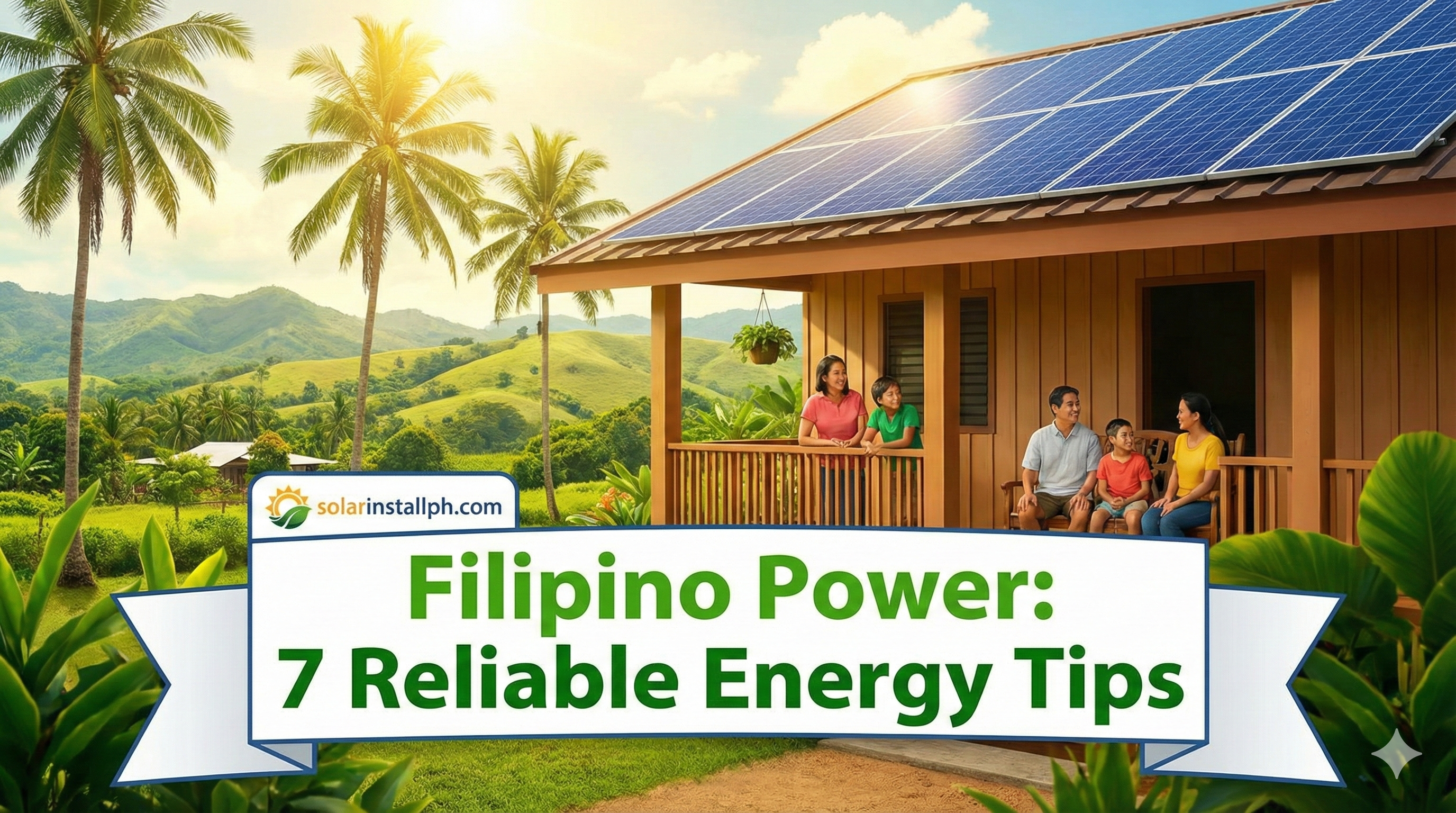
If you live in the Philippines, you know the drill. It’s 2:00 PM, the heat index is hitting 44°C, your aircon is struggling, and suddenly—darkness. The fan stops, the beep of the UPS creates panic, and you're left sweating while waiting for the "power restoration" text from Meralco or your local coop.
We have some of the most expensive electricity in Asia, yet our grid reliability often feels like a suggestion rather than a guarantee. With red and yellow alerts becoming standard features of our summers, relying solely on the grid is a risky strategy for any modern Filipino household.
Reliability isn't just about having power when the grid fails; it's about having affordable power that doesn't bankrupt you every month. Here are 7 practical, practitioner-grade tips to secure your home’s energy future.
1. Conduct a Ruthless "Vampire" Audit
Before you spend a single centavo on solar panels or batteries, you need to stop the bleeding. Most Filipino homes are leaking energy without realizing it.
The biggest culprits aren't always obvious. While we all know aircons are heavy consumers, look at your "always-on" loads. That old refrigerator with the broken seal? It’s running its compressor 24/7. The dispenser heating water no one drinks at 3 AM? That’s 500 watts of wasted potential.
You can't manage what you don't measure. You need to sit down with your bill and your appliances to understand exactly where those kilowatt-hours (kWh) are going.
Action: Check your meter reading at 8 AM and again at 8 PM to see your day vs. night usage.
Resource: For a step-by-step guide on how to calculate your specific load profile, read our tutorial on conducting a home energy audit.
2. The Inverter Aircon "Truth"
In our humid tropical climate, air conditioning is responsible for 40% to 60% of the average middle-class electricity bill. The debate between inverter and non-inverter units is settled, but many people still buy the wrong unit to "save money" upfront.
Here is the math: A non-inverter unit runs at full blast until the room is cold, then stops. When the room warms up, it blasts again. This "stop-start" spike is expensive and stressful on the grid. An inverter unit, largely standard in the PH market now, ramps down to maintain temperature, often consuming as little as 300–500 watts once the room is cool.
The Trap: An undersized inverter aircon is worse than a non-inverter. If you put a 1.0 HP inverter in a large living room, it will never "ramp down." It will run at 110% capacity trying to cool a space it can't handle, burning more current than a standard unit. Always oversize your AC slightly (e.g., use 1.5 HP where 1.0 HP is required) so it can coast at low power.
3. Solar: The "Day-Walker" Strategy
The most reliable energy is the kind you generate yourself. In the Philippines, we have peak sunlight roughly from 9:00 AM to 3:00 PM. Coincidentally, this is often when electricity rates are highest and when your aircon works the hardest.
For most homes, a Grid-Tie System is the most ROI-positive move. You use the solar power directly as it is generated. If your house needs 3kW and your roof generates 3kW, you pull zero from Meralco.
The Cost Reality: Many people fear the price tag, but prices have dropped. A standard 3kW to 5kW system is now surprisingly accessible compared to five years ago.
The ROI: With current rates hovering around ₱12–₱13 per kWh, the payback period for a well-sized system is often just 4 to 5 years.
To understand the real-world pricing for 2025, check our breakdown of residential solar costs.
4. Brownout-Proofing Your Essentials
Solar panels alone (grid-tie) will not work during a brownout. This is a safety feature called "anti-islanding" to protect linemen fixing the wires. If you want power when the grid is down, you need energy storage.
You have two main paths for reliability:
The Hybrid Setup: A hybrid inverter plus batteries. This is seamless. When the grid cuts, the inverter switches to battery power in milliseconds.
The "Critical Load" Strategy: You don't need to power the whole house. Isolating just your fridge, wifi, and one bedroom aircon onto a backup circuit reduces the size (and cost) of the battery bank you need.
Before you buy a generator or a battery, you must calculate exactly how many hours of backup you need. Do you need to survive a 2-hour rotational brownout or a 3-day typhoon outage?
Learn how to size your system correctly in our guide to solar brownout backup.
5. Choose the Right Battery Chemistry
If you decide to go with batteries, do not cheap out. The Philippine market is flooded with cheap Lead-Acid (Deep Cycle) batteries and "Gel" batteries.
The Hard Truth: Lead-acid batteries are false economy. They may look cheap, but they can only be discharged to 50% of their capacity without damage. If you drain them fully, they die in less than a year. They also struggle in our heat.
The Standard: Lithium Iron Phosphate (LiFePO4) is the current gold standard.
Lifespan: They last 10+ years (6000+ cycles) vs 2 years for lead-acid.
Usability: You can safely use 80–90% of their capacity.
Safety: Unlike the lithium in cellphones, LiFePO4 is extremely stable and does not easily catch fire.
For a detailed technical comparison of why you should avoid lead-acid for solar, read our analysis on lead-acid vs lithium.
6. Passive Cooling: The Low-Tech Solution
Reliability isn't just about adding power; it's about needing less of it. Philippine homes are often built like ovens—concrete boxes that trap heat.
You can reduce your energy reliability issues by fixing your house's thermal performance:
Roof Ventilation: Hot air gets trapped in your ceiling. Installing simple roof vents or a "whirlybird" can lower your ceiling temperature significantly.
Insulation: If you have a GI sheet roof with no foam insulation (PE foam), your aircon is fighting the sun directly. Adding 15mm or 20mm of foam insulation is one of the cheapest ways to lower your bill.
Shading: Plant a tree. An unshaded west-facing wall absorbs heat all afternoon and radiates it into your bedroom at night.
7. Maintenance Is Safety
Finally, a reliable energy system is a maintained one. We see it all the time: a homeowner installs a beautiful solar array and then ignores it for three years.
Dust and Grime: In the city, pollution settles on panels. In the provinces, it’s bird droppings and pollen. A dirty panel can lose 15% to 25% of its production.
The Fire Risk: The Philippines has high humidity and salt air. Connections corrode. A loose connection creates resistance, which creates heat, which creates fire.
You should have your system checked annually, specifically looking for "hot spots" in the wiring and ensuring the mounting hardware hasn't rusted through during the rainy season.
For a checklist on keeping your system running safely, see our guide to solar panel maintenance.
Final Thoughts
Energy reliability in the Philippines is a "choose your own adventure." You can stay at the mercy of the grid, paying fluctuating rates and sweating through yellow alerts, or you can take control.
Start with the audit. Fix your insulation. Then, when you are ready, invest in quality hardware that pays you back. The sun is free—you just need the right gear to catch it.