
5 Best: Tychoons and Sun: Staying Lit
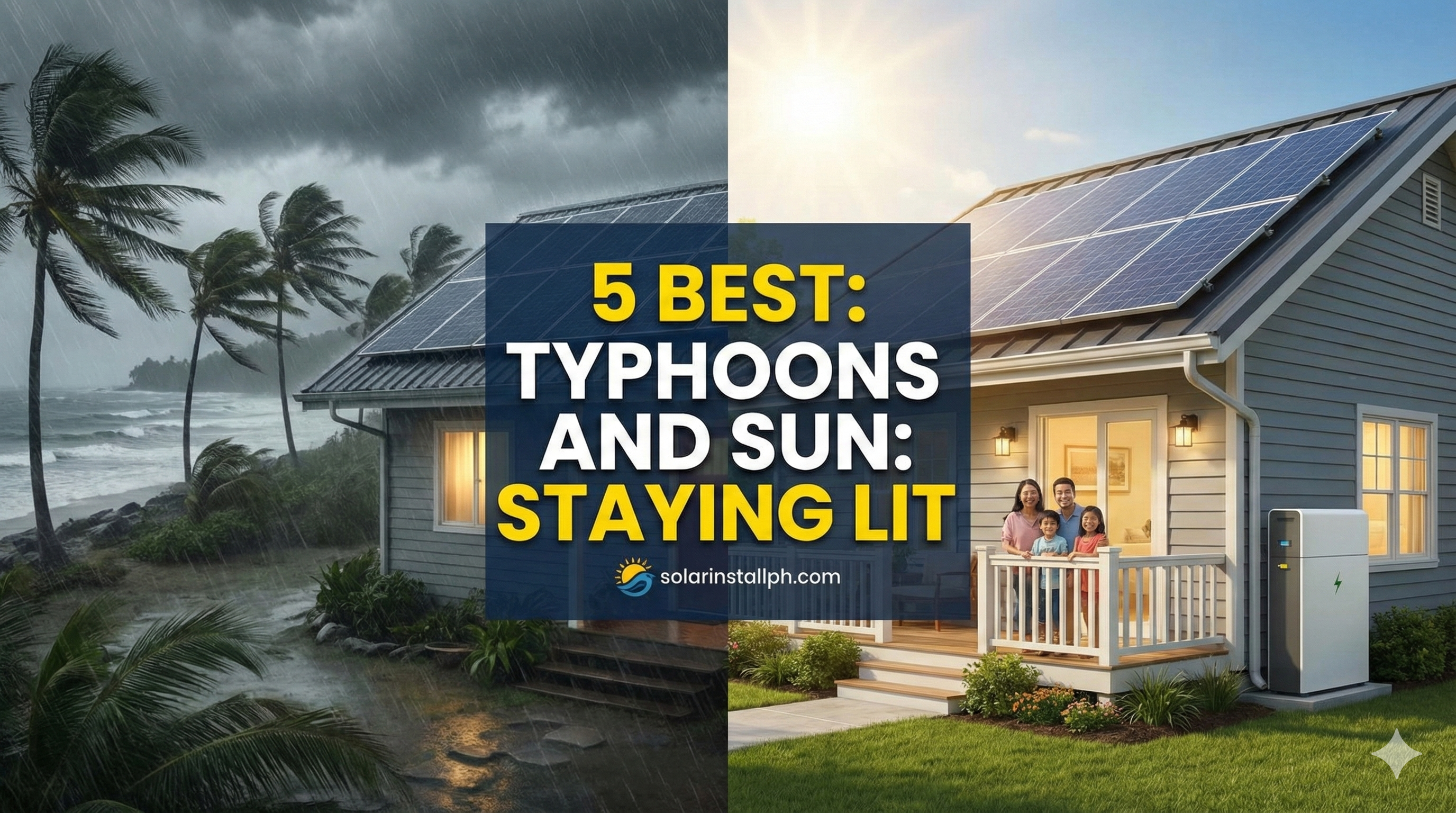
In the Philippines, we have a unique relationship with the weather. We name our storms, track them like celebrities, and prepare for them like soldiers. But whether you call them "Typhoons" or accidentally type "Tychoons," the reality is the same: when the wind howls, the lights go out.
And they stay out. In provinces like Albay, Leyte, or even parts of Batangas, a major storm doesn't just flicker the lights; it kills the grid for weeks.
For solar owners, this is the ultimate frustration. You look up at your roof, see your expensive panels intact, but your house is pitch black because you installed a standard grid-tie system that shuts down when Meralco goes offline. To "stay lit" when the rest of the barangay is in darkness, you need more than just panels. You need a survival strategy.
Here are the 5 best ways to ensure your solar investment actually powers you through the next super typhoon.
1. The Hybrid Inverter: The Brain of the Operation
The biggest misconception in Philippine solar is that "Solar Panels = No Brownouts." This is false. A standard grid-tie inverter is designed to shut down immediately during a power outage. This is a safety feature (Anti-Islanding) to prevent electrocuting linemen repairing the wires down the street.
To stay lit, you need a Hybrid Inverter.
A hybrid inverter is a dual-personality device. During normal days, it syncs with the grid to lower your bill. But when the grid fails, it automatically isolates your house (forming a micro-grid) and continues to supply power from your panels and batteries.
Why You Need It Now
If you are planning a system in a typhoon-prone area, do not let an installer talk you into a cheaper string inverter unless you have a separate generator. A hybrid system is the only seamless way to keep the lights on. It manages the flow of energy between the sun, your load, and your battery backup.
Is the extra cost worth it? We break down the numbers in our analysis of whether hybrid solar makes financial sense.
2. Lithium Iron Phosphate (LiFePO4) Batteries: The Power Tank
If the inverter is the brain, the battery is the heart. In the past, "staying lit" meant dealing with heavy, toxic, and short-lived Lead Acid batteries (the size of truck batteries). You had to add distilled water, check acid levels, and replace them every two years.
In 2025, the standard is Lithium Iron Phosphate (LiFePO4).
The Typhoon Advantage
Depth of Discharge: You can drain them down to 80% or 90% capacity without damage. Lead acid dies if you go below 50%.
Cycle Life: They last 6,000+ cycles (10-15 years), meaning they will likely outlast the next decade of storms.
Charging Speed: They charge much faster than lead acid. This is critical during a typhoon when you might only get 2 hours of sun between rain bands. You need to grab that energy quickly.
Don't buy generic batteries from questionable online marketplaces. A battery fire during a storm is a disaster you cannot call the fire department for. Stick to proven manufacturers. Check our guide to the top solar batteries for 2025 to see which brands are dominating the local market.
3. The Portable Power Station: The "Go-Bag" of Energy
Sometimes, the damage is too severe. Maybe a tree hit your main distribution line, or you need to evacuate to a relative’s house. Your roof-mounted system cannot come with you.
This is where a Portable Power Station becomes your best friend. These are essentially "solar generators" in a box—a lithium battery, an inverter, and USB/AC outlets all integrated into a carry-on sized unit.
Why Every Filipino Home Needs One
Redundancy: Even if your main solar system fails, this unit can charge phones, power a radio for news updates, and run a small fan.
Mobility: You can take it to the neighbor's house to help them, or bring it into the bedroom to power a nebulizer or CPAP machine.
Solar Charging: Most units come with foldable solar panels. You can charge them on a balcony or driveway once the rain stops.
We consider this an essential layer of typhoon resilience, distinct from your main roof system. Learn more about sizing one for your needs in our portable power station guide.
4. Solar Perimeter Lighting: The First Line of Defense
When the grid fails after a typhoon, security becomes a major concern. looting is rare, but opportunism isn't. A dark house looks like an empty house.
However, you do not want to waste your expensive main battery capacity on outdoor floodlights. You need that power for the fridge and the wifi.
The Independent Layer
Install standalone Solar Street Lights or perimeter floodlights. These units have their own built-in panel and battery.
Decentralized: If one breaks, the others stay on.
Zero Load: They do not draw from your main hybrid system.
Psychological Deterrent: A well-lit perimeter signals that the home is occupied and managed.
Be careful with cheap "buy 1 take 1" lights online; they often fail after the first heavy rain. Look for units with IP65 or IP67 ratings. For more on selecting durable outdoor lighting, read our article on solar lights and safety.
5. The Hardware That Survives the Wind
Finally, "staying lit" is impossible if your equipment is flying through the air. You can have the best batteries and the most expensive hybrid inverter, but if your panels detach during the gusts, the system is dead.
Inverter Durability
Your inverter is likely mounted outdoors or in a semi-exposed garage. During a typhoon, rain doesn't fall down; it flies sideways.
IP Rating: Ensure your inverter is rated IP65 (water jet protection) at a minimum.
Brand Reliability: Some cheaper inverters are notorious for failing when the grid fluctuates wildly (which happens right before and after a blackout). You need a brand known for robust grid-protection parameters.
We have seen countless systems fail not because of wind damage, but because the inverter fried from moisture ingress or grid surges. Choosing the right hardware is the foundation of resilience. Review our list of top inverter brands for 2025 to see which manufacturers offer the best protection for Philippine conditions.
Conclusion
In the Philippines, "tychoons" (or typhoons) are not a possibility; they are an inevitability. Viewing your solar system purely as a bill-reduction tool is a missed opportunity. With the right hybrid setup, reliable lithium storage, and a backup portable unit, your home can transform from a victim of the storm into a beacon of resilience.
Stay safe, stay dry, and most importantly, stay lit.