
10 Ways to Save Electricity in the Philippines (That Aren’t Solar)
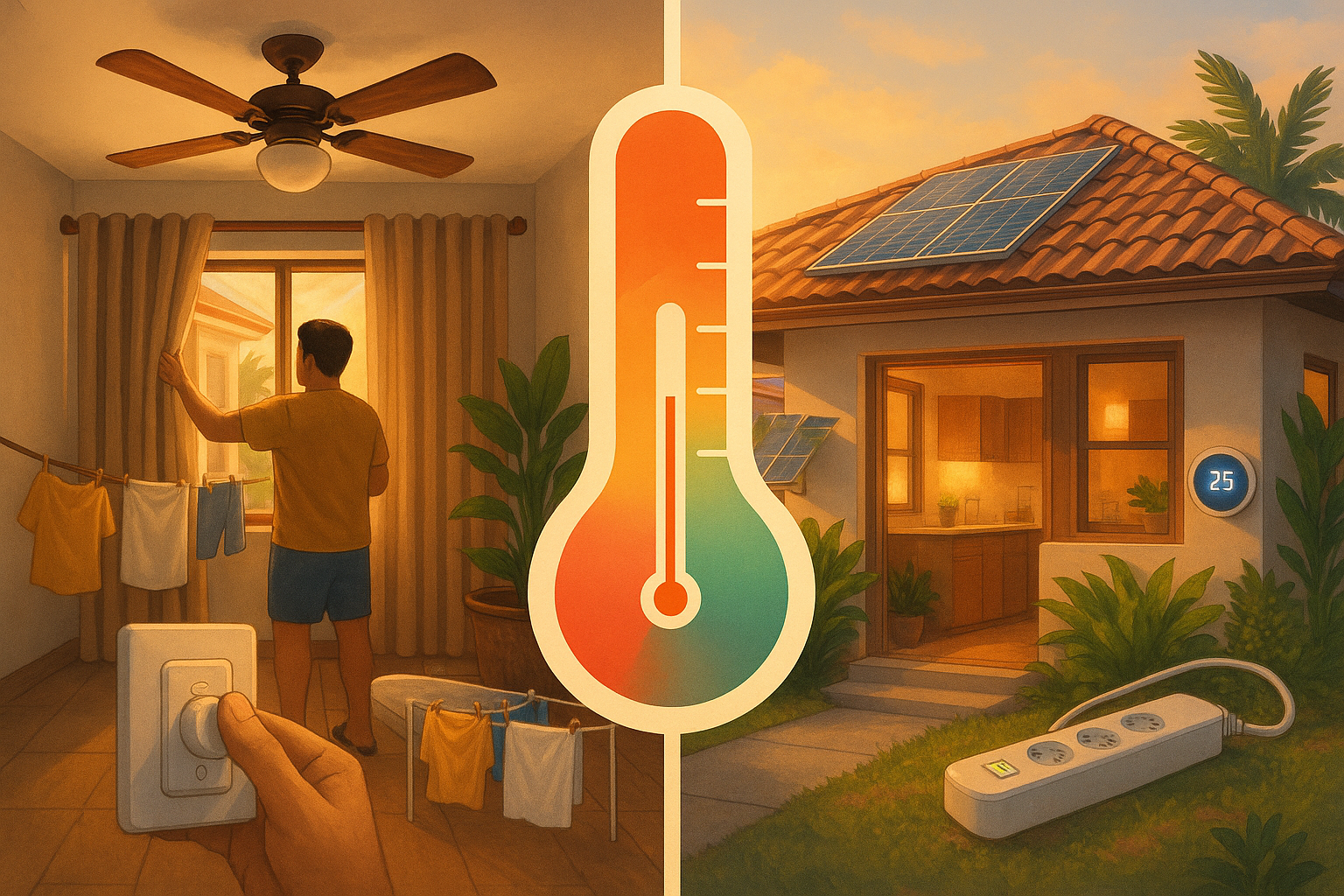
Philippine households and businesses face some of the highest electricity rates in Southeast Asia (current rates average PHP 9.75/kWh) alongside a hot, sunny climate that drives consistent air conditioning loads. While solar installations offer a clear solution, many Filipinos overlook simpler, non-technological ways to reduce consumption. These 10 strategies combine behavioral changes, smart appliances, and basic home upgrades to lower bills without compromising comfort or convenience.
10 Practical Electricity-Saving Strategies
1. Master Your Air Conditioner Usage
Optimize Temperature & Fan Settings
Set AC temperatures to 24-26°C for comfort and efficiency. Use fan settings on split-type units to circulate cool air rather than constantly lowering the thermostat. Ceiling fans (50-100 W) are more efficient than window units (1,500-3,000 W) for cooling larger areas.
Regular Maintenance Matters
Clean AC filters monthly and schedule annual deep cleaning with certified technicians. Dirty filters force units to work 15-30% harder, increasing consumption.
2. LED Lighting Over Traditional Bulbs
Immediate Savings Calculation
Replace standard 60W incandescent bulbs with 9-10W LED equivalents. You’ll save PHP 300-500 monthly per bulb in a well-lit home when running 6 hours daily. LEDs use 80% less energy and last 3x longer.
Smart Controls
Pair LEDs with motion-activated night lights or smart switches to automate lighting schedules.
3. Smart Appliance Scheduling
Avoid Peak Load Stress
Run washing machines/dishwashers only at off-peak hours (10 PM-6 AM) when grid demand is lower. Meralco’s night rate program saves an average household PHP 150/month.
Load Balancing Tips
Sequence high-consumption appliances: run the dishwasher before the washing machine, and avoid simultaneous operation during hot summer afternoons when AC loads peak.
4. Energy-Efficient Habit Shifts
AC Efficiency Habits
Use ceiling fans in rooms with 3+ hours of daily occupancy. Close curtains during the day to block heat gain, reducing AC runtime by up to 30%.
Refrigerator Management
Defrost freezers when ice builds to ⅙ inch thick. Keep fridge temperatures at 4°C and freezer at -18°C—adjusting these can save 6-12% on fridge energy use.
5. Smart Home Integration
Power Strip Solutions
Connect TVs, game consoles, and chargers to smart power strips that cut standby power (1-5W wasted per device). Many devices consume 10-20% more energy when off but plugged in.
Appliance Placement
Position refrigerators away from direct sunlight and cooking areas. Place ovens close to exhaust fans to expel heat outdoors efficiently.
6. Behavioral Audits & Changes
Conduct a Monthly Audit
Track appliance runtime with home monitoring kits (available through SolarInstallPH) or manual logs. Identify “energy vampires” like DVD players on standby.
Group High-Use Devices
Use power strips for groups of devices (e.g., TV+ sound system+game console) to control simultaneous power draws.
7. Laundry Optimization
Water Temperature Strategy
Wash clothes in cold water whenever possible—heated water accounts for 90% of washing machine energy use. Only use warm water for stains requiring pre-treatment.
Full Load First
Run full loads in washing machines and dishwashers to minimize cycles per item. Modern appliances use near-identical energy for half-full loads.
8. Home Insulation & Sealing
Air Leakage Fixes
Seal gaps around windows/doors with weatherstripping and caulking. Proper insulation reduces cooling/heating load by up to 20%.
Attic Ventilation
Install attic fans to exhaust heat into the atmosphere rather than forcing cooling systems to work against hot attic air.
9. Smart Lighting Schedules
Daylight Harvesting
Use daylight-responsive lighting controls in kitchens and garages to reduce artificial light usage during daytime.
Dimmer Switch Essentials
Install dimmer switches to lower light levels in living rooms, reducing consumption without compromising ambiance.
10. Educational Resource Utilization
Local Energy Audits
Schedule free or low-cost energy audits through DOE-accredited programs. Professionals can identify hidden inefficiencies like improper appliance sizing.
Government Rebates
Take advantage of PH government energy efficiency programs (check solarinstallph.com/gov-rebates for current options).
Common Mistakes To Avoid
Over-Reliance on Short-Term Savings
Focusing only on one strategy (e.g., LED lighting) while ignoring usage patterns reduces long-term impact.
Ignoring Appliance Age Effects
Older appliances (pre-2020) lose 1-2% efficiency annually. Consider replacement when budget allows.
How To Evaluate Your Situation
Calculate potential savings using our ROI calculator or:
- Log monthly bills for 3 months
- Identify dominant usage areas (e.g., AC, heating)
- Research replacement options for highest-consuming devices
- Combine behavioral changes with targeted upgrades
Conclusion
Electricity savings in the Philippines require integrating behavioral changes with smart technologies. Start with low-cost options like LED lighting and appliance scheduling, then progress to insulation and advanced controls. The key is systematic implementation—small changes compound into meaningful reductions over time.