
Philippines Commercial PV: ROI Insights Gathered
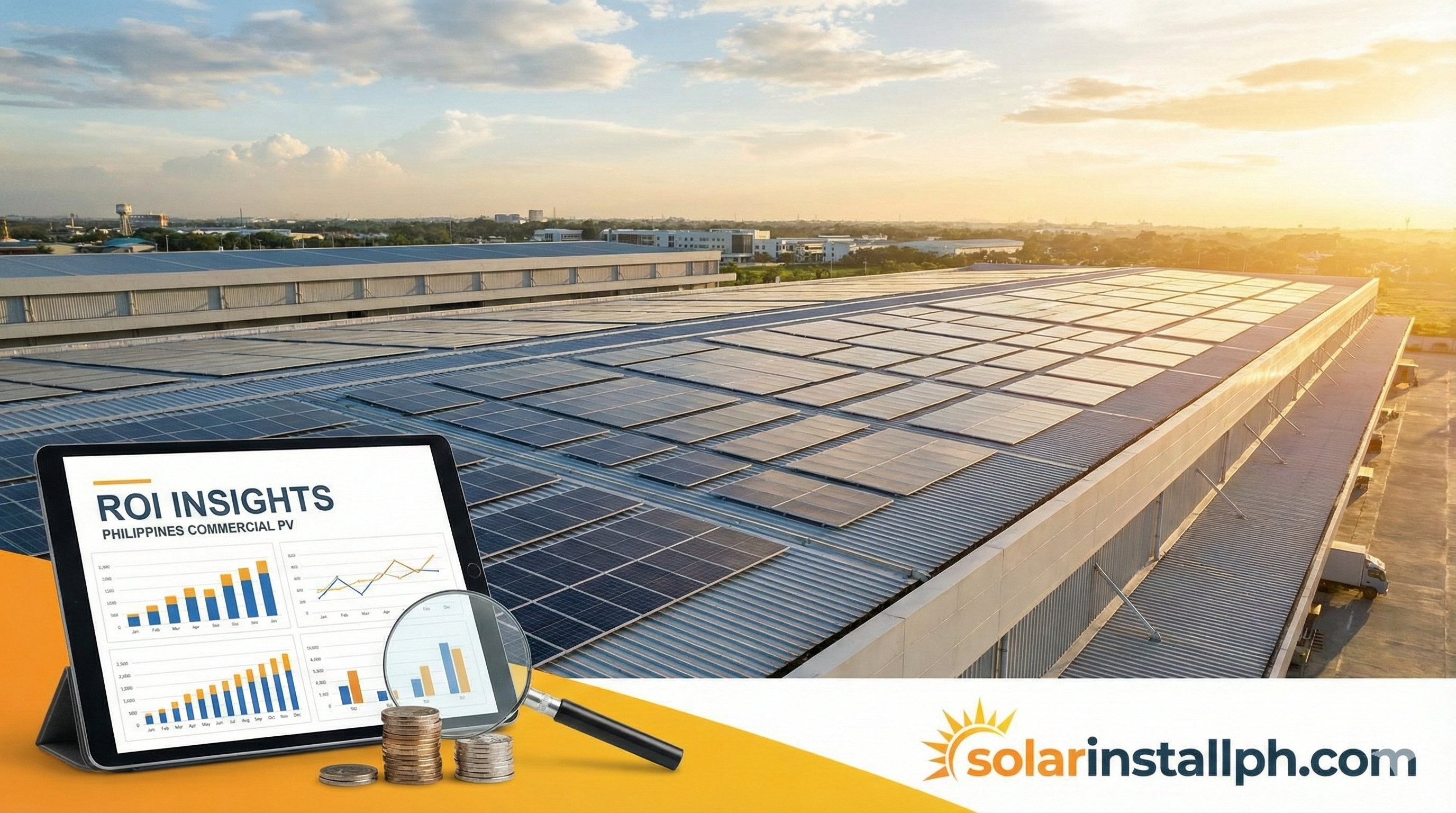
If you run a business in the Philippines—whether it’s a manufacturing plant in Laguna, a cold storage facility in Davao, or a mid-sized office in Makati—electricity is likely one of your top three operating expenses. With grid rates hovering between ₱10 and ₱13 per kWh depending on your region and peak usage, the business case for solar photovoltaic (PV) systems has shifted from "nice to have" to a financial necessity.
As of early 2025, the return on investment (ROI) for commercial solar is outperforming almost any other low-risk capital improvement you can make. This article breaks down the hard numbers, the regulatory hurdles, and the strategic realities of commercial solar adoption in the current Philippine market.
The ROI and Payback Math for 2025
The most common question we get is, "How fast will I get my money back?"
For most commercial entities in the Philippines, the payback period is now consistently between 3 to 5 years.
Here is why the math works so well right now:
High Grid Rates: Commercial rates remain volatile and high. Meralco and provincial electric cooperatives (ECs) pass on generation charges that fluctuate with global coal and gas prices. You are effectively avoiding a cost of ~₱11/kWh (blended average) for every kWh you generate.
Levelized Cost of Energy (LCOE): A well-installed commercial solar system in 2025 has an LCOE of roughly ₱3.00 to ₱4.50 per kWh over its 25-year life. You are generating power for a fraction of what the utility charges you.
Daytime Load Matching: Unlike residential users who are often away during the day, businesses typically operate from 8:00 AM to 5:00 PM—exactly when solar production peaks. This maximizes self-consumption, which is the most profitable way to use solar energy (avoiding the full retail rate).
If you purchase a system outright (Capex model), you can expect an Internal Rate of Return (IRR) of 20% to 30%. Few other business investments offer that kind of yield with such low risk.
Realistic Commercial System Costs
Pricing for commercial solar is significantly lower per watt than residential systems due to economies of scale. However, avoid the "race to the bottom" quotes that sacrifice safety for price.
For a turnkey, high-quality commercial rooftop system in the Philippines (Tier 1 panels, reputable inverters like Huawei, Sungrow, or SMA, and proper aluminum mounting), realistic pricing ranges are:
Small Commercial (15kW – 99kW): ₱45,000 – ₱55,000 per kWp.
Medium/Large Commercial (100kW – 500kW+): ₱35,000 – ₱48,000 per kWp.
Warning: If you see quotes below ₱30,000/kWp for a rooftop system, scrutinize the Bill of Materials (BOM). Often, these bids use undersized AC cable, non-UV rated conduits, or generic protection devices that will fail within 3 years under the Philippine sun.
For a deeper dive into pricing variables, you can read our breakdown of commercial solar costs to see where the money actually goes.
Regulatory Hurdles: Net Metering vs. Zero Export vs. GEOP
This is where Philippine solar gets technical. The size of your system dictates which regulatory bucket you fall into.
1. Under 100kW: Net Metering
If your system is below 100kW, you can apply for the Net Metering program. This allows you to export excess power to the grid and get credits on your bill.
Pro: You don't waste excess energy on weekends or holidays.
Con: The application process with the DU (Distribution Utility) and ERC can take months.
2. Over 100kW: The "Zero Export" Reality
For systems larger than 100kW, standard Net Metering is not available. While you can apply for the "Own-Use" scheme (certificate of compliance from the ERC), you generally cannot export power for credit.
The Solution: Most factories install Zero Export devices. These smart controllers throttle your inverters to ensure you never push power back to the grid, preventing penalties or transformer trips.
This setup requires careful sizing. You must size the solar array so that your minimum daytime load is always higher than your solar production, or accept that the system will throttle itself.
Learn more about how this technology works in our overview of zero export systems.
3. The Green Energy Option Program (GEOP)
If your monthly peak demand averages 100kW or higher, you have another option: GEOP. This government program allows you to detach from your local utility’s generation charge and buy 100% renewable energy directly from a licensed supplier (RES).
Advantage: You get renewable energy without installing panels on your roof (no Capex).
Disadvantage: You are still subject to transmission and distribution wheeling charges, and you don't own the asset.
Many large businesses use a hybrid approach: install rooftop solar for the immediate savings, and switch to GEOP for the remainder of their power needs. See our guide on the GEOP program to decide if you qualify.
Financing: Cash vs. Leasing vs. ESCO
You don’t always need to cough up ₱5 million in cash to go solar. The Philippine financing landscape has matured significantly.
Bank Financing
Major banks like BPI, BDO, and Security Bank now have specific "Green Financing" windows. Interest rates are competitive, and the solar system itself can sometimes serve as partial collateral. Since the monthly savings from solar are usually higher than the monthly loan amortization, the project can be cash-flow positive from Day 1.
Leasing and ESCOs
For very large roofs (typically 200kW+), you might encounter Energy Service Companies (ESCOs). They will install and maintain the solar system on your roof at zero cost to you.
The Deal: You sign a Power Purchase Agreement (PPA) to buy the solar power from them at a rate lower than the grid (e.g., ₱7/kWh instead of ₱11/kWh) for 15–20 years.
The Catch: You don't own the system, and your savings are lower compared to owning it outright. However, it preserves your capital for your core business operations.
Common Mistakes in Commercial Projects
We have audited dozens of commercial sites in Metro Manila and Calabarzon. These are the most frequent errors we see:
Ignoring Roof Condition: Solar panels last 25 years. If your GI sheet roof is already 15 years old and rusting, do not install solar over it. You will have to dismantle the entire array in 5 years to fix leaks. Replace or treat the roof first.
Neglecting O&M Paths: Commercial roofs need maintenance. If you cover every square inch with panels, your maintenance team cannot clean them or service AC units. Leave distinct walkways. Proper solar panel maintenance is the only way to hit that 5-year ROI.
Undersizing Inverters: In the Philippines, high ambient temperatures de-rate inverter performance. Using premium inverters with active cooling is crucial for factories where ambient rooftop temperatures can exceed 50°C.
Over-optimistic Production Estimates: Ensure your ROI calculation accounts for the rainy season (June–November). A realistic "specific yield" for Luzon is around 1,300 to 1,400 kWh per kWp per year. If a proposal promises 1,600+, they are likely exaggerating. Check our guide on solar ROI calculations to verify the numbers yourself.
Conclusion
The window for high-ROI commercial solar in the Philippines is wide open. The technology is mature, the banks are supportive, and the grid prices are undeniably painful.
For business owners, the decision usually comes down to: Do you want to prepay for 25 years of electricity at ~₱4.00/kWh, or continue renting it from the utility at ₱12.00/kWh?
Start by gathering your last 12 months of electricity bills to establish your load profile. Once you know your daytime peak usage, you can size a system that maximizes self-consumption and delivers the fastest payback. Just ensure you partner with an installer who understands the engineering realities of wind load and tropical heat—not just the sales pitch.