
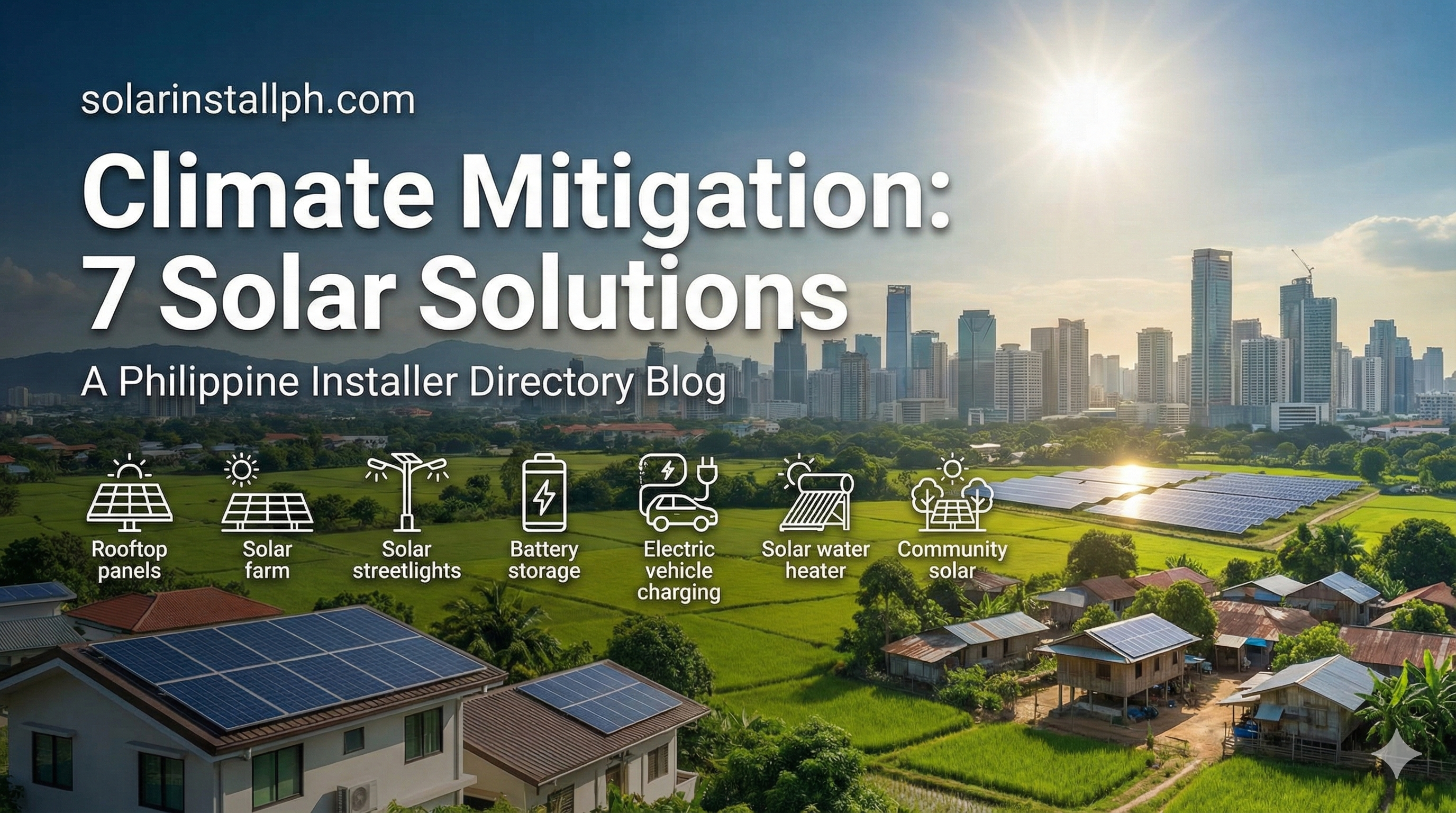
Climate Mitigation: 7 Solar Solutions
The Philippines is at a critical juncture in its energy evolution. As of early 2026, we are no longer just talking about "going green" to save the planet; we are deploying solar technology to mitigate the actual, physical risks that climate change poses to our archipelago. With electricity rates among the highest in Southeast Asia and a national grid often strained by intensifying typhoons, solar energy has transitioned from a niche environmental choice to a fundamental tool for Philippine climate resilience.
By mid-2025, the Department of Energy (DOE) reported that solar energy is officially the cheapest source of new electricity generation in the country. This shift is driving a 10-gigawatt (GW) target for solar capacity within the year, a move that directly supports our Nationally Determined Contribution (NDC) to reduce greenhouse gas emissions by 75% by 2030.
Here are seven practical solar solutions currently driving climate mitigation across the Philippines.
1. Rooftop Solar for Urban Heat Island Mitigation
Metro Manila and other high-density cities like Cebu and Davao suffer from the "urban heat island" effect, where concrete surfaces trap heat, driving up air conditioning demand. Rooftop solar solves two problems at once: it generates clean power and provides a physical shield for the roof, reducing the thermal load of the building below.
When you install a rooftop solar system, the panels absorb solar radiation that would otherwise hit your roof tiles or slab. This can lower indoor temperatures by several degrees, leading to secondary energy savings by reducing the work your AC units have to do. For homeowners, this contributes to a more attractive solar payback factor by slashing both the cost of power and the amount of power needed.
2. Solar-Plus-Storage for Grid Resilience
Climate mitigation also involves adapting to a more volatile environment. The traditional grid-tied system is efficient for cost-cutting, but it shuts down during brownouts for safety. In 2025, we are seeing a massive shift toward "hybrid" systems that include battery storage.
A solar backup power setup ensures that when typhoons disrupt the main transmission lines, critical loads—like refrigerators, medical equipment, and communications—remain operational. This decentralized approach reduces the "climate vulnerability" of Filipino households and businesses. By relying on stored solar energy rather than diesel generators during outages, users also avoid the heavy carbon emissions and localized air pollution associated with fossil-fuel-based backup.
3. Industrial Solar and Carbon Reporting
As of 2026, the Philippines has introduced mandatory carbon emissions reporting for publicly listed companies and large-scale manufacturing plants. This regulatory shift has made industrial solar a core business strategy. Factories in areas like Cavite, Laguna, and Batangas are covering their expansive rooftops with PV arrays to stabilize energy costs and meet these new disclosure requirements.
For many industrial firms, the initial barrier is the residential solar cost equivalent—the high upfront capital. However, through various financing models and "Solar-as-a-Service" agreements, businesses can now adopt solar with zero to minimal down payment. This allows them to future-proof their operations against potential carbon taxes while securing long-term price predictability.
4. Floating Solar (FPV) on Inland Waters
With land-use conflicts becoming more common in the Philippines, floating solar has emerged as a high-impact solution. By installing panels on the surface of lakes (like Laguna Lake) or irrigation reservoirs, we save valuable agricultural land.
Floating solar panels also benefit from the cooling effect of the water, which can increase their efficiency by up to 10% compared to land-based systems. From a climate mitigation perspective, these installations also reduce water evaporation from reservoirs—a critical benefit as El Niño events and prolonged dry seasons threaten our water security.
5. AgriSolar: Solar-Powered Irrigation
The agricultural sector is one of the most vulnerable to climate change. Traditional diesel-powered water pumps are expensive to run and emit significant CO2. "AgriSolar" or solar-powered irrigation systems (SPIS) allow farmers to draw water from wells or rivers using nothing but sunlight.
This solution directly mitigates climate impact by weaning the agricultural sector off fossil fuels. Furthermore, it improves food security by ensuring that crops can be watered even when fuel prices spike or delivery routes are blocked by storms. The government has recently integrated these systems into specialized auction rounds, signaling a long-term commitment to solarizing the Filipino countryside.
6. Community Solar and Microgrids for Off-Grid Islands
The Philippines consists of over 7,000 islands, many of which are not connected to the national grid. Historically, these areas relied on expensive, dirty "Bunker C" or diesel plants. Community-scale solar microgrids are now replacing these old systems.
By combining solar arrays with large-scale battery storage, entire barangays can achieve energy independence. This mitigates climate change by eliminating the carbon-heavy transport of fuel to remote islands. For developers, navigating the rooftop solar permits for these microgrids has become faster thanks to the Energy Virtual One-Stop Shop (EVOSS), which digitizes and accelerates the approval process.
7. Smart Net Metering and Energy Sharing
The final piece of the mitigation puzzle is making the most of every watt produced. The Net Metering program allows "prosumers" (consumers who also produce) to sell excess power back to Meralco or their local electric cooperative.
In 2026, new reforms have introduced "aggregate net metering," allowing a business or homeowner with solar in one location to use those credits to offset a bill at a different property. This flexibility encourages larger installations, which in turn feeds more clean energy into the national grid, displacing the need for coal-fired "peaker" plants that traditionally handle high-demand periods.
Common Mistakes to Avoid
In the rush to adopt climate-smart technology, many Filipinos fall into traps that can ruin their investment:
Skipping Permits: Many think they can save money by ignoring local LGU permits. This makes you ineligible for net metering and can lead to significant fines.
Underestimating Wind Load: Solar panels in the Philippines must be engineered for "wind load," meaning they need to withstand 250kph+ gusts. Using cheap, generic mounting hardware is a recipe for disaster during typhoon season.
Poor Battery Management: For those using storage, a cheap Battery Management System (BMS) can lead to premature battery failure. Always check that your inverter and battery brands are fully compatible and Tier 1 rated.
How to Evaluate Your Own Situation
The best way to start is with data.
Audit Your Bill: If your monthly Meralco bill is consistently above ₱6,000, you are in the "sweet spot" where solar provides the fastest ROI.
Check Your Roof: A solar system is a 25-year commitment. Ensure your roof structure is sound before installation.
Vet Your Installer: Only work with DOE-accredited installers. This ensures your system is safe, compliant, and able to be legally connected to the grid.
FAQ
Can solar really help during a total grid failure?
Only if you have a hybrid or off-grid system with batteries. A standard grid-tied system is designed to shut off during a brownout to prevent "islanding," which could injure utility workers repairing the lines.
Is solar efficient during the rainy season?
Yes. While output drops on very cloudy days, solar panels still generate power from diffused light. In the Philippines, the cooler temperatures during the rainy season can actually help the panels run more efficiently than in the blistering summer heat.
What is the average lifespan of a system?
Most Tier 1 solar panels come with a 25-year performance warranty. Inverters typically last 10–15 years, and modern lithium batteries are rated for 10 or more years depending on usage.
Climate mitigation in the Philippines is a collective effort. By adopting these solar solutions, we aren't just lowering our bills—we are building a more resilient, self-sufficient nation that is prepared for the environmental challenges of the 21st century.