
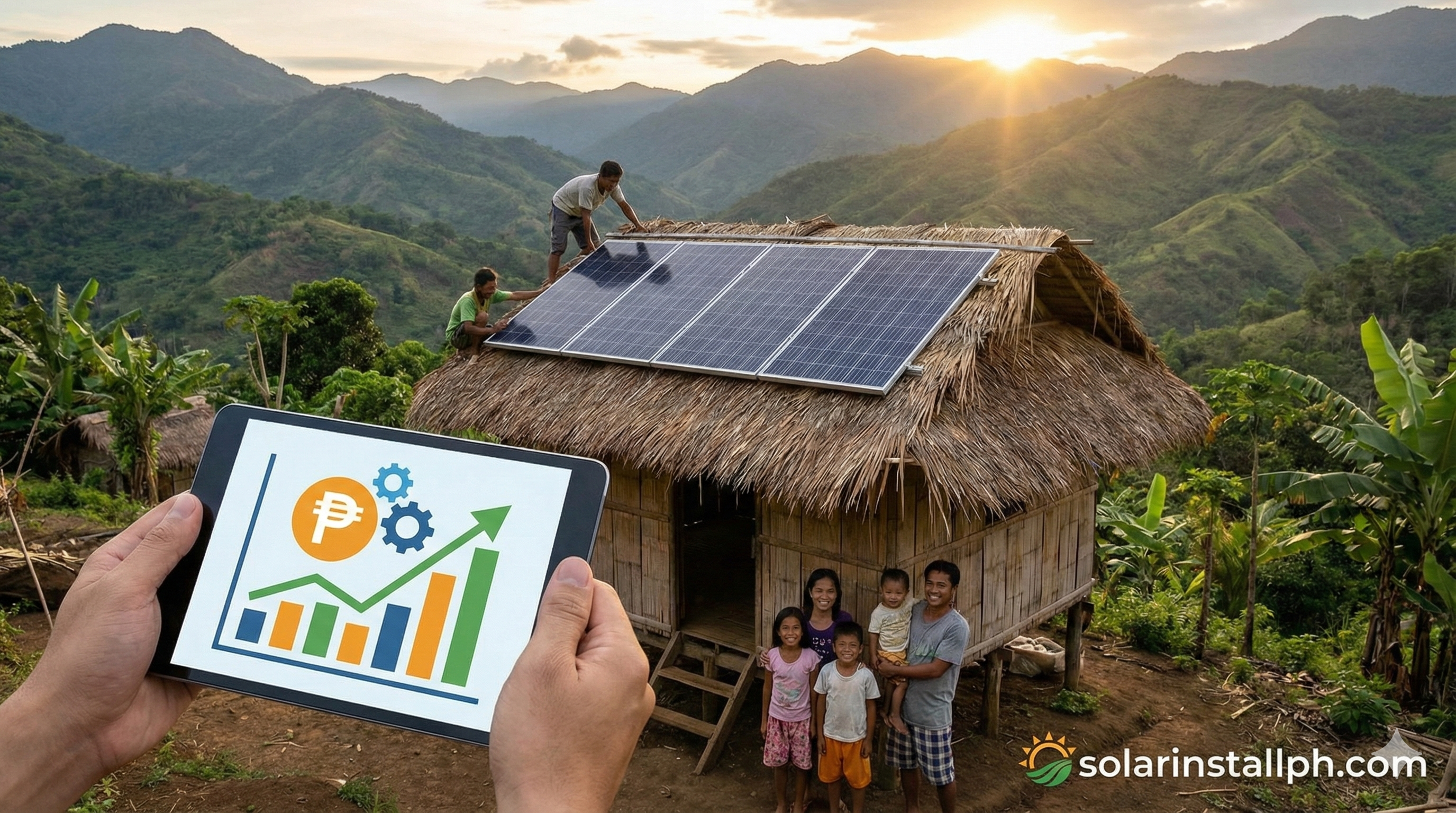
Powering Remote Areas: Funding Options Explored
If you own property in a remote part of the Philippines—whether it’s an island resort in Palawan, a farm in Bukidnon, or a vacation home in a mountain province—you know the struggle of the "last mile." Waiting for the local electric cooperative (EC) to extend a line to your doorstep can take years, if it happens at all.
In 2025, the technology to power these areas is mature. Solar-plus-storage systems are reliable and cheaper than running a diesel genset 24/7. The real barrier isn't the tech; it's the upfront capital.
Off-grid systems are front-loaded investments. You buy 25 years of electricity on Day 1. For many landowners, LGUs, and off-grid developers, the question is simple: Where do we get the money?
Here is a breakdown of the funding landscape for remote electrification in the Philippines right now.
1. Government-Backed Lending Programs (Landbank & DBP)
For commercial ventures and Local Government Units (LGUs), the "Big Two" government banks offer the most robust financing options. These aren't personal loans; they are project financing vehicles designed to hit national renewable energy targets.
Landbank’s REAL Energy Plus Program
Landbank has expanded its support for renewables through the REAL Energy Plus (Renewable Energy and Alternative Lending) program. This is specifically useful for:
LGUs wanting to electrify unserved sitios.
Agri-businesses needing reliable off-grid farm solar for irrigation or processing.
Resorts trying to cut diesel costs.
The Deal: They typically finance up to 80% of the project cost for private borrowers and up to 100% for LGUs. Interest rates are generally tied to the prevailing BVAL reference rate plus a spread, which often beats commercial bank rates. The tenure can go up to 15 years, which aligns well with the long lifespan of solar equipment.
DBP’s FUSED Program
The Development Bank of the Philippines (DBP) runs the Financing Utilities for Sustainable Energy Development (FUSED) program. This targets "developmental" energy projects. If you are a developer planning a micro-grid to serve a remote community, this is where you look. They focus heavily on electricity distribution and generation in unserved areas.
2. The "Total Electrification" Grants (DOE & NEA)
If you are looking at electrification from a community perspective—specifically for "missionary" areas—you are likely dealing with the Department of Energy (DOE) and the National Electrification Administration (NEA).
The Total Electrification Program (TEP) is the government’s push to reach 100% household electrification. While an individual homeowner cannot apply for a "grant" here, communities can lobby their ECs or LGUs to tap into these funds.
Sitio Electrification Program (SEP): NEA provides subsidies to electric cooperatives to extend lines to remote sitios.
PV Mainstreaming: For areas where line extension is physically impossible or too expensive, the DOE pushes for Solar Home Systems (SHS). These are often distributed via the local EC with heavy subsidies.
The Reality Check: These government-led rollouts are notoriously slow. If you are a private business or a homeowner who needs power now, you cannot rely on TEP. You need private capital.
3. Financing for Private Off-Grid Businesses
Let’s say you run a dive resort in Visayas that is currently burning Php 50,000 a month on diesel. You want to switch to a hybrid solar system, but the batteries are expensive.
Commercial banks have started to warm up to solar, but they often require hard collateral (Real Estate Mortgage) rather than accepting the solar equipment itself as collateral.
Green Financing Windows
Banks like BPI and BDO have "Sustainable Energy Finance" programs. To qualify, you usually need:
A feasibility study showing the ROI (diesel savings vs. loan amortization).
A reputable installer (accreditation matters here).
Clear title to the property.
Why this works: The ROI on displacing diesel is massive. Diesel electricity often costs Php 25–40 per kWh in remote areas. Solar generates power at a levelized cost of Php 6–9 per kWh. The cash flow savings can often cover the monthly loan amortization.
For a deeper dive into the requirements, read our guide on government and bank solar loans.
4. The Microgrid Systems Act (RA 11646)
This is a game-changer for larger remote areas. Passed to speed up electrification, Republic Act 11646 allows private "Microgrid Systems Providers" (MSPs) to enter unserved or underserved areas without needing a congressional franchise.
Previously, if an electric coop failed to serve an island, no one else could legally step in easily. Now, a private company can set up a solar-diesel hybrid plant and sell power directly to the community.
Subsidy Availability: These MSPs can even apply for the Universal Charge for Missionary Electrification (UC-ME) subsidy, allowing them to charge residents a subsidized rate while the government covers the difference.
Opportunity: This is a business model for developers, but it relies on strict compliance with current DOE solar policies.
5. Community-Based and Cooperative Models
For areas that are too small for big developers but too large for individual Solar Home Systems, community ownership is rising.
In this model, a cooperative (often an agricultural coop) takes out a loan to install a central solar hub. Members pay a monthly fee to connect. This shares the burden of the expensive components, specifically the energy storage.
Since solar batteries in the Philippines are the most capital-intensive part of an off-grid system, centralizing them in a community hub is often more efficient than every bahay kubo buying its own lithium-ion unit.
Common Pitfalls in Funding Applications
We have seen many funding applications get rejected. Here is why they fail:
Undersized Systems: Borrowers try to lower the loan amount by cutting corners on battery capacity. This leads to brownouts during rainy weeks, destroying the business case.
Ignoring Logistics Costs: Installing in remote areas (islands, mountains) involves massive logistics fees. If your loan application doesn't account for barging and hauling, you will run out of cash before the panels are mounted.
Lack of Maintenance Plan: Banks know that off-grid systems fail without maintenance. If you don't budget for a technician or a service contract, they view the loan as high-risk.
The "Shared Solar" Option
If you are in a semi-remote area (perhaps at the edge of the grid) with neighbors who also need power, you might consider a community solar setup. While less common in the PH than in the US, informal sharing arrangements—where one major system powers 2-3 nearby structures via sub-meters—are becoming a practical way to split the financing costs among neighbors.
Conclusion
Funding remote power is no longer just about charity or government grants. It is a viable investment. Whether you are using Landbank’s REAL program for a farm or a commercial green loan for a resort, the math works because the alternative—diesel—is simply too expensive.
The key is to present a project that is technically sound. Banks don't lend on good intentions; they lend on cash flow. Prove that your solar savings will pay for the loan, and the funding will follow.