
3 Best Portable Off-Grid Solutions
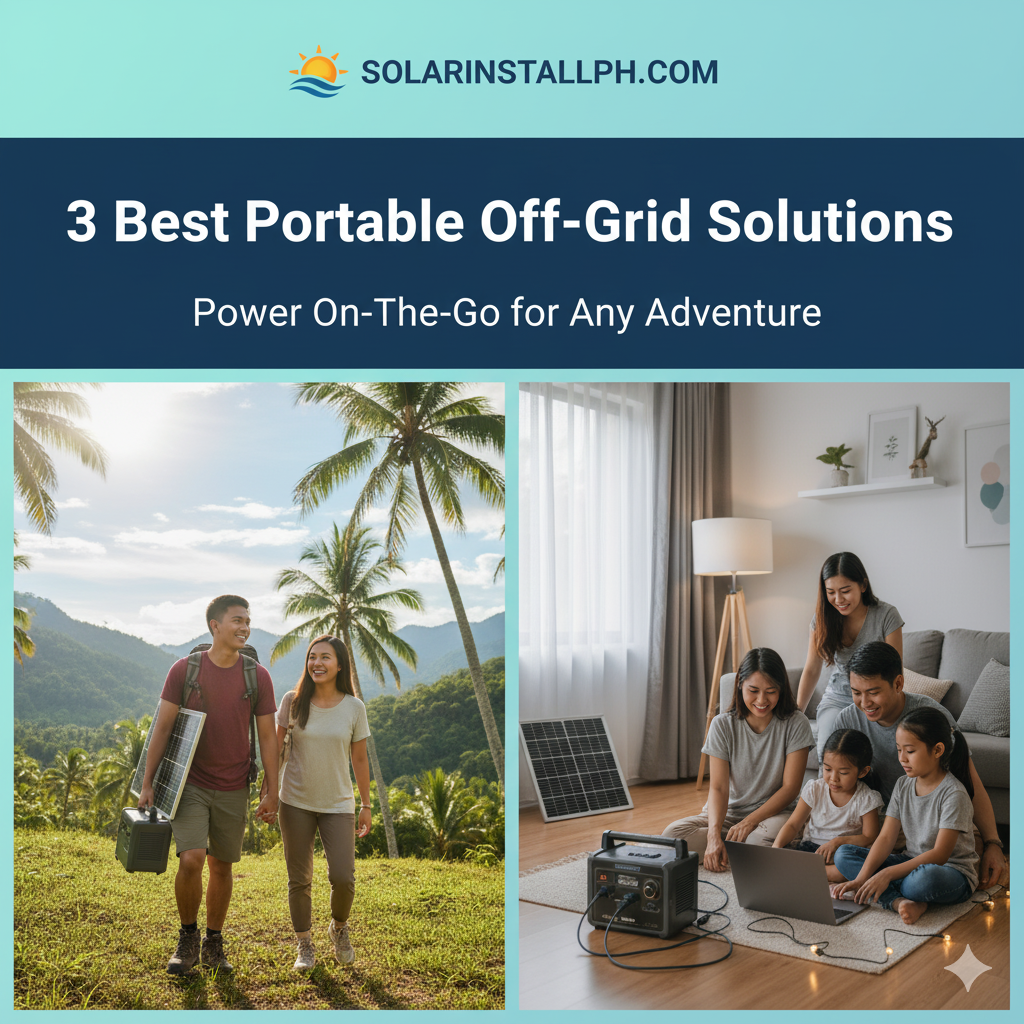
The dream of an off-grid life in the Philippines often conjures images of a permanently installed solar system on a remote beach house or a mountain cabin. But what about energy independence on the move? For weekend campers, adventurous digital nomads, or families needing a reliable backup during the inevitable brownouts, a full-scale, fixed installation is overkill. This is where the world of portable off-grid solutions comes in. These compact, all-in-one devices, often called "solar generators" or "portable power stations," offer a convenient and increasingly powerful way to bring your own electricity wherever you go.
In a country like the Philippines, with its stunning but often remote islands and its susceptibility to power disruptions, the value of portable power cannot be overstated. It's the freedom to work on your laptop from a beach in Zambales, to keep your essential medical devices running during a typhoon, or simply to power a fan and lights during a camping trip in Tanay. The technology has evolved rapidly, moving beyond simple power banks to sophisticated systems with impressive capacity and multiple output options. A comprehensive solar battery guide can help you understand the core technology that powers these devices.
Here, we explore three of the best types of portable off-grid solutions available in the Philippine market, each tailored to a different level of need and portability.
1. The Ultra-Portable Powerhouse: The Compact Solar Generator
This category is all about maximizing power in a small, lightweight package that you can easily carry in one hand or slip into a backpack. These devices have exploded in popularity, offering a significant step up from a standard power bank, with the ability to power not just USB devices, but also AC appliances.
What It Is: A compact solar generator is an all-in-one unit that contains a lithium-ion battery (increasingly the safer and more durable LiFePO4 chemistry), a built-in inverter to provide AC power, and a variety of DC and AC output ports. They typically have a capacity of 200Wh to 500Wh and an output of 300W to 600W. This is enough to run laptops, drones, cameras, small fans, and even a low-wattage rice cooker.
How It Works: These devices can be charged in multiple ways: by plugging them into a wall outlet at home, through a car’s 12V cigarette lighter port, or, for true off-grid use, with a portable solar panel. A 100W or 200W foldable solar panel can typically recharge one of these units in just a few hours of good sunlight, making it a truly sustainable power source for multi-day trips.
Best For:
Weekend Campers and Beach Goers: Perfect for powering lights, a small speaker, charging phones, and keeping a portable fan running through the night.
Digital Nomads and Remote Workers: Provides a reliable way to keep laptops, cameras, and other work essentials charged while working from a cafe, a co-working space, or a scenic outdoor spot.
Emergency Home Backup: In a brownout, it can keep your router, phones, and a few lights running for hours, ensuring you stay connected and comfortable.
Top Brands and Models in the Philippines:
Bluetti EB3A: A very popular choice in the Philippines, offering a 268Wh capacity and a 600W inverter. It's known for its fast charging and reliable LiFePO4 battery.
EcoFlow RIVER 2: Another strong contender, known for its rapid charging technology and lightweight design.
Jackery Explorer 300 Plus: Jackery is a well-established brand, and their smaller units are praised for their portability and user-friendly design.
Key Consideration: It’s important to manage your expectations. These compact units cannot run high-power appliances like air conditioners or large refrigerators. They are designed for essential electronics and small comforts. For those new to these systems, a look at some of the top solar battery brands will give an idea of the quality to look for.
2. The Mid-Range Workhorse: The Expandable Power Station
This category represents the sweet spot for many users, offering a significant boost in capacity and output without sacrificing portability entirely. These are the go-to solutions for more demanding off-grid adventures, longer power outages, or for those who want to run more than just the basics.
What It Is: A mid-range power station typically boasts a capacity of 1,000Wh to 2,000Wh and an inverter capable of delivering 1,500W to 2,400W of continuous power. This is enough to handle not just electronics, but also power tools, a portable refrigerator, a coffee maker, or even a microwave for short periods. The defining feature of many modern units in this class is expandability.
How It Works: Like their smaller cousins, they can be charged via AC, DC, or solar. However, their real strength lies in their ability to connect to one or more external expansion batteries. This allows you to start with a single, portable unit and add more storage capacity later as your needs grow. This modular approach is a game-changer for solar financial planning, as it allows you to spread out the investment.
Best For:
Overlanders and Car Campers: Ideal for powering a full camp kitchen, including a 12V fridge, for several days at a time.
Serious Home Backup: With enough capacity to run a full-size refrigerator, a fan, and medical devices like a CPAP machine through a prolonged power outage, it’s a serious piece of emergency equipment.
Small Off-Grid Cabins or "Bahay Kubo": For a weekend cabin, a unit in this class, paired with a couple of solar panels, could serve as the primary power source for lights, a fan, and entertainment. This is a simple entry point into the world of off-grid solar homes.
Top Brands and Models in the Philippines:
Bluetti AC180 / AC200P: The AC180 is a popular mid-range option with a 1,152Wh battery and 1,800W output. The AC200P is a classic workhorse with a 2,000Wh battery and 2,000W output, capable of running a huge range of appliances. The AC200PL offers expandability.
EcoFlow DELTA 2 / DELTA Pro: The DELTA series is renowned for its power and expandability. The DELTA 2 is a strong mid-range contender, while the DELTA Pro is a modular beast that can scale up to power an entire home.
Anker SOLIX C1000: Anker, a brand well-known for its power banks, has entered the power station market with strong offerings that are known for their reliability and long warranties.
Key Consideration: These units are significantly heavier than the compact models, often weighing 15-25kg. While they have handles and are "portable," they are not something you'd carry on a long hike.
3. The DIY Power Box: The Custom-Built Solution
For the hands-on enthusiast or the budget-conscious user who needs more power than a pre-built station can offer for the price, a DIY approach is a fantastic option. This involves assembling your own "power box" using individual components.
What It Is: A DIY power box typically consists of a large LiFePO4 battery, a pure sine wave inverter, and a solar charge controller, all housed in a sturdy, portable box (like a heavy-duty toolbox or a marine battery box). This approach allows for complete customization of capacity and power output.
How It Works: The components are wired together to create a self-contained power system. The solar charge controller (usually an MPPT type for best efficiency) manages the power coming from solar panels and charges the battery. The inverter converts the battery's DC power to AC power for your appliances. The box is fitted with the necessary outlets, switches, and displays. While it requires technical skill to build, the result is a system tailored precisely to your needs.
Best For:
Off-Grid Fishermen and Farmers: Ideal for powering pumps, lights, and tools in remote agricultural or fishing operations where a rugged, high-capacity system is needed.
Long-Term Van Lifers: For those living in a converted van or camper, a DIY system offers the best performance-to-cost ratio and can be perfectly integrated into the vehicle's electrical system. A proper solar assessment of your needs is crucial here.
Budget-Conscious Homeowners: A DIY power box can serve as an affordable, high-capacity backup power source for essential home appliances, often delivering more power for the peso than a branded, pre-built unit of similar capacity.
Key Components:
Battery: A 12V or 24V LiFePO4 battery is the heart of the system. Capacities of 100Ah to 200Ah are common.
Inverter: A pure sine wave inverter is essential to safely power sensitive electronics. An output of 1,000W to 3,000W is typical.
Solar Charge Controller: An MPPT controller is highly recommended to maximize the energy harvested from your solar panels.
Key Consideration: This is not a plug-and-play solution. It requires a solid understanding of electrical principles, wiring, and safety precautions. It is a project for the serious hobbyist or those willing to learn. However, the online community and resources for DIY solar in the Philippines are vast and supportive.
Whether you're a weekend adventurer, a digital nomad, or a homeowner preparing for the next brownout, there is a portable off-grid solution that fits your needs. By assessing your power requirements and understanding the options available, you can unlock a new level of freedom and resilience, powered by the sun.