
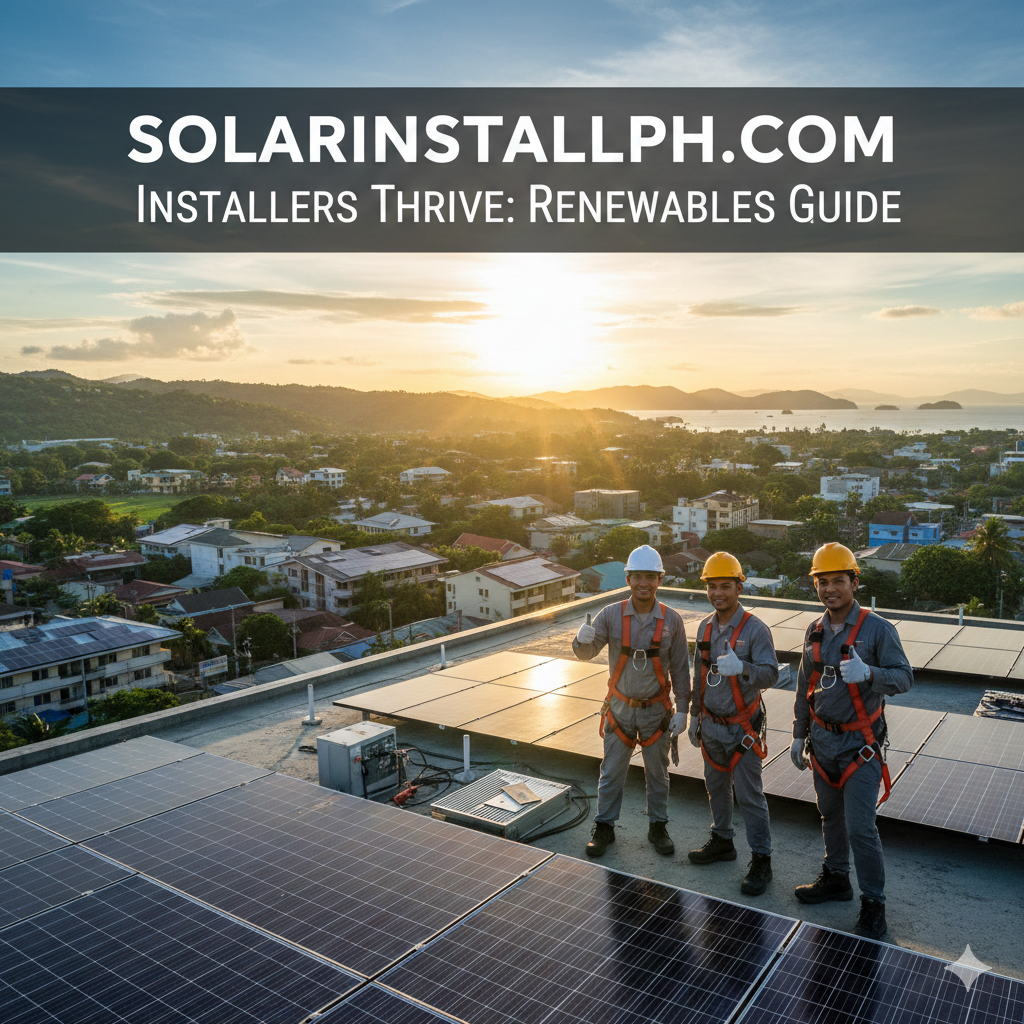
Installers Thrive: Renewables Guide
The Philippine solar landscape has shifted from a niche luxury to a mainstream financial necessity. As we move through 2025 and into 2026, the local industry is seeing a massive surge in volume driven by the brutal reality of high electricity rates and a more mature regulatory environment. For homeowners and businesses, the question is no longer whether solar works, but how to navigate a market teeming with new installers and evolving technologies.
This guide breaks down the current state of solar in the Philippines, helping you distinguish between sustainable investments and costly shortcuts.
Why This Topic Matters In 2025
The cost of electricity in the Philippines remains among the highest in Southeast Asia. This single factor has pushed solar adoption faster than any government subsidy could. In 2025, we are seeing residential grid-tied systems achieve a return on investment (ROI) in as little as 4 to 5 years. With Tier-1 solar panel prices reaching historic lows, the capital required to start is more accessible than ever.
However, a thriving market also brings noise. The "solar preneur" phenomenon has led to a flood of installers who may offer enticingly low prices but lack the technical depth to handle the Philippine climate. We are talking about typhoons that regularly pack winds exceeding 200 km/h and salt air that eats through substandard mounting rails in a matter of months. Understanding the long-term solar system lifespan is critical before signing any contract.
The Real Drivers Behind This Trend
Several factors have aligned to make 2025 a "goldilocks" year for Philippine solar installers and their clients:
Policy Maturity: The Department of Energy (DOE) and the Energy Regulatory Commission (ERC) have streamlined the Net Metering process. While it still requires patience, the path to getting credits for the excess power you export to the grid is now well-defined.
Grid Instability: Frequent "Red" and "Yellow" alerts on the Luzon grid have made battery storage more attractive. While pure grid-tied systems are still the most popular for ROI, hybrid systems with lithium-ion backup are becoming the standard for those who cannot afford downtime.
Financing Availability: Major Philippine banks like BPI, BDO, and Security Bank now have dedicated "Green Finance" lanes. You can often find a solar loan comparison that shows interest rates competitive enough to make the monthly loan amortization lower than the resulting savings on your Meralco bill.
Declining Hardware Costs: Global manufacturing efficiencies mean that high-efficiency N-type and bifacial modules are now standard. Even for smaller rooftops, you are getting more wattage per square meter than was possible just three years ago.
What This Means For Homeowners and Businesses
If you are evaluating a solar setup today, you need to look past the marketing fluff and focus on the technical reality of your roof and your load profile.
For Residential Users
Most Filipino households with monthly bills between ₱8,000 and ₱15,000 typically opt for systems ranging from 3kWp to 5kWp. In the current market, a high-quality 5kWp grid-tied installation generally ranges from ₱350,000 to ₱450,000, depending on the roof type and the complexity of the electrical work. It is essential to verify installer credentials to ensure they aren't skipping the necessary structural reinforcements required for our typhoon season.
For Commercial and Industrial (C&I)
Factories and warehouses are moving toward solar not just for the "green" image, but for operational resilience. Under the Green Energy Option Program (GEOP), large consumers can now choose their renewable energy suppliers more freely. The scale of these projects allows for even faster payback periods, often under 4 years, especially when paired with zero-export controllers that prevent power leakage back to the grid before a Net Metering agreement is finalized.
Common Mistakes To Avoid
The most expensive solar system is the one that stops working after the first major storm. Here are the pitfalls we see most often in the field:
Undersizing for the Sake of Price: Some installers will quote a smaller system to make the price look better. If your daytime load isn't covered, your ROI will stretch out much longer than promised.
Ignoring Wind Load Specs: Using generic aluminum brackets instead of specialized, high-tensile mounting systems is a recipe for disaster. Your installer should provide a typhoon mounting plan that details how the system is anchored to your specific roof structure.
DIY Safety Hazards: While DIY kits are available online, the Philippine electrical code is strict for a reason. Improper DC wiring is the leading cause of solar-related fires.
Skipping Permits: It is tempting to avoid the LGU and utility paperwork, but an "unauthorized" grid-tie system can lead to heavy fines or your utility meter "charging" you for the power you give away.
How To Evaluate Your Own Situation
Before calling an installer, do your homework. Look at your last six months of power bills to find your average daytime consumption. Solar only saves you money when the sun is up, unless you invest in expensive batteries.
If you live in a condo or a shared building, the rules are different. You’ll need to navigate the building's Master Deed and get board approval, which is why condo solar requires a more specialized approach compared to a standalone house.
Always ask for a site survey. A reputable installer will check for shading from nearby trees or buildings, the orientation of your roof, and the state of your current electrical panel. A "remote quote" based only on a photo of your bill is rarely accurate.
Conclusion
The solar industry in the Philippines has matured. We have moved past the era of "test projects" into a period of mass implementation. Whether you are looking at a small residential setup or a large industrial array, the technology is proven and the financial case is closed.
Success depends on choosing partners who prioritize structural integrity and long-term support over the lowest possible sticker price. By focusing on residential solar cost as a total 25-year investment rather than a one-time purchase, you set yourself up for decades of energy independence.
FAQ
Is solar still worth it if I’m not home during the day? Yes, but only if you apply for Net Metering. This allows you to sell your excess daytime production back to the utility (like Meralco) in exchange for credits that offset your nighttime usage. Without Net Metering or a battery, that daytime energy is simply wasted.
How often do panels need maintenance in the Philippines? Given our dust and occasional ashfall, a simple cleaning every 3 to 6 months is usually enough. However, after a major typhoon, you should always have a professional check the mounting bolts and electrical connections for any signs of movement or water ingress.