
Grid-Tied Solar: Cons & Caveats
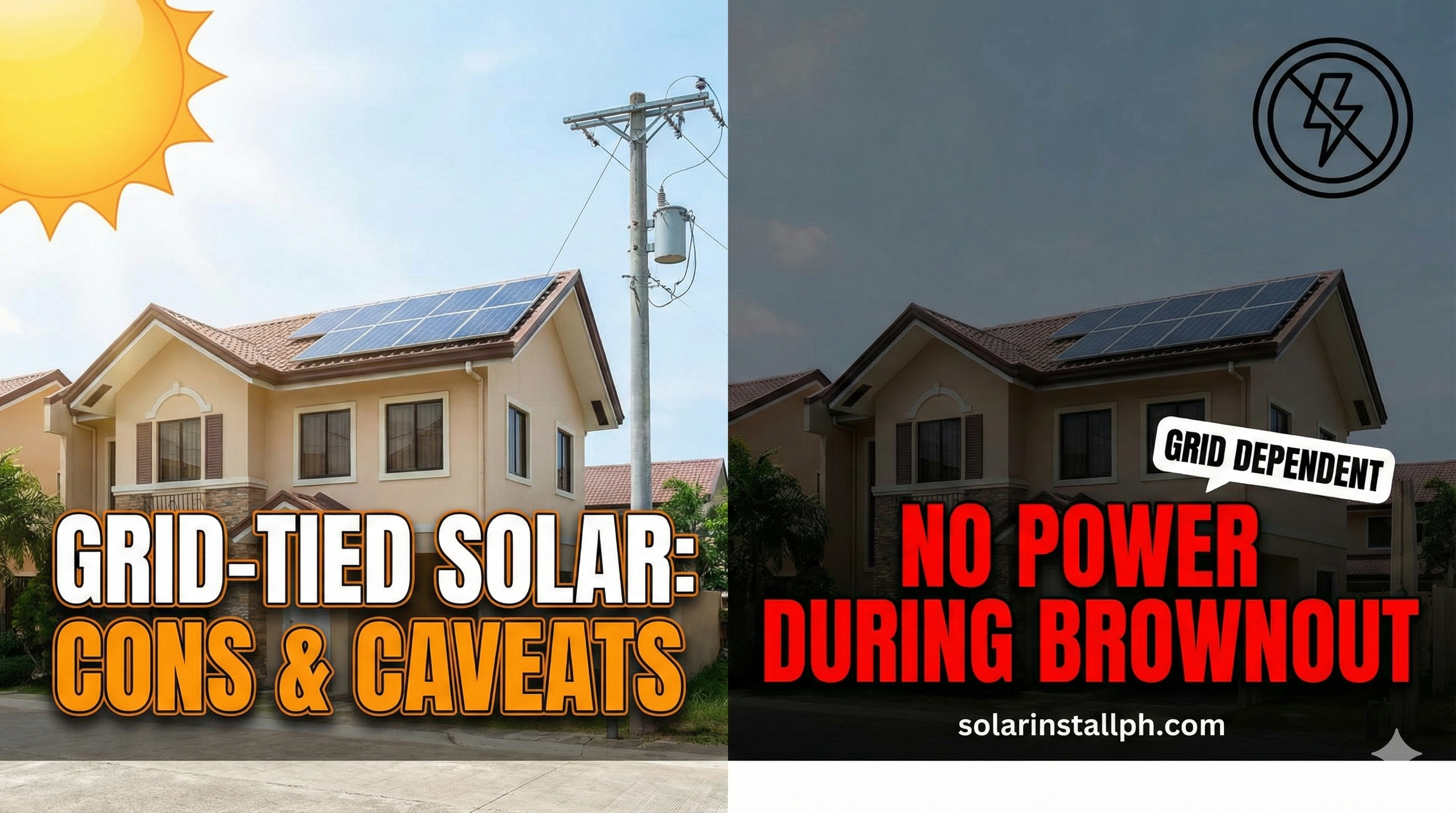
Grid-tied solar systems remain the most popular choice for Filipino homeowners due to their lower upfront costs and faster return on investment (ROI). However, as we move into 2026, the Philippine energy landscape is becoming increasingly nuanced. While the "Zero Bill" dream is enticing, grid-tied systems come with specific technical, regulatory, and environmental caveats that are often glossed over in sales pitches.
Why the "Most Popular" System Isn't Always the Best
A grid-tied system functions by synchronizing your solar panels with the utility grid—such as Meralco or local electric cooperatives—without the need for expensive battery storage. This simplicity is its greatest strength, but also its primary weakness in the Philippine context.
The Blackout Paradox
The most significant caveat of a grid-tied system is its total dependence on the grid. For safety reasons, these systems are designed to shut down immediately during a power outage. This prevents your solar panels from "back-feeding" electricity into the lines, which would pose a fatal risk to linemen attempting to restore power. For homeowners in areas prone to frequent brownouts, a grid-tied system will not provide any electricity exactly when you might feel you need it most.
The Net Metering Bottleneck
While RA 9513 (the Renewable Energy Act) encourages the use of Net Metering, the application process remains a significant hurdle. As of mid-2025, approximately 17,175 users were registered under the program, but many potential prosumers are deterred by lengthy processing times and red tape at the local government unit (LGU) level.
5 Critical Caveats for Grid-Tied Solar in 2026
1. The "Ghost" Export Penalty
If you install a grid-tied system without officially enrolling in a Net Metering program, you may experience higher electricity bills instead of lower ones. Most standard meters in the Philippines are unidirectional. When your solar system exports surplus energy to the grid, these older meters cannot distinguish between electricity "bought" and electricity "sold," often charging you for the power you actually gave away. For this reason, many installers now recommend a zero-export overview to avoid this financial trap while permits are pending.
2. Typhoon Vulnerability and Wind Loads
The Philippines experiences roughly 20 typhoons annually, making structural integrity a non-negotiable factor. Grid-tied systems are typically "flush-mounted" to your roof. Improper installation can lead to:
Structural Instability: Panels shifting or detaching during strong winds, which poses a danger to neighboring properties.
Roof Leaks: Incorrectly drilled mounting points that are not properly sealed can lead to water damage over time.
Clamping Failure: Inadequate clamping of the module frame to the racking system is a primary cause of damage during high-wind events like Typhoon Mawar.
To mitigate this, ensure your system uses typhoon-resistant mounting solutions designed to withstand winds of at least 250kph.
3. Sizing Errors and Load Profiling
A common mistake is sizing a system based on your total monthly consumption rather than your actual daytime load. Solar energy is generated during the day; if your household is empty during these hours and you lack a Net Metering agreement, your generated power is essentially wasted. Understanding solar sizing factors is crucial to ensure you don't over-invest in panels that will never pay for themselves.
4. Regulatory Paperwork and Fees
Going legal with a grid-tied system involves several hidden costs beyond the panels and inverter. These include:
Distribution Impact Study (DIS) Fees: Ranging from ₱1,900 to ₱17,000 depending on your utility.
LGU Permits: Obtaining a Certification of Final Electrical Inspection (CFEI) and an electrical permit from your City Hall.
ERC Certificate of Commerciality: Which currently costs approximately ₱1,500.
5. Maintenance and Efficiency Losses
While grid-tied systems require less maintenance than those with batteries, they are not "install and forget". High heat in the Philippines can actually reduce panel efficiency. Additionally, dust accumulation in urban areas like Metro Manila can cause significant performance drops unless regular cleaning is performed.
Grid-Tied vs. Hybrid: Which One Fits You?
Feature | Grid-Tied System | Hybrid System |
Upfront Cost | Lower (no batteries) | Higher (includes battery bank) |
Outage Support | None (shuts down) | Full support for critical loads |
ROI Period | 3 to 5 years | 7 to 10+ years |
Complexity | Simple installation | High (requires battery management) |
Maintenance | Minimal | Moderate (battery replacements) |
For those prioritizing financial returns, a grid-tied system remains king. However, those in areas with unreliable grids should consider our solar backup power guide to compare if the peace of mind of a hybrid system is worth the extra cost.
Conclusion: Don't Skip the Fine Print
Grid-tied solar is an excellent investment for reducing high Philippine electricity rates, but its success depends on doing the groundwork first. Skipping permits, ignoring wind load requirements, or failing to understand your distribution utility's rules can turn a smart investment into a legal and financial headache.
Before you commit, it is vital to verify installer credentials to ensure they have a track record of successful Net Metering applications and typhoon-ready installations.