
Cut Power Bills: 3 Tips
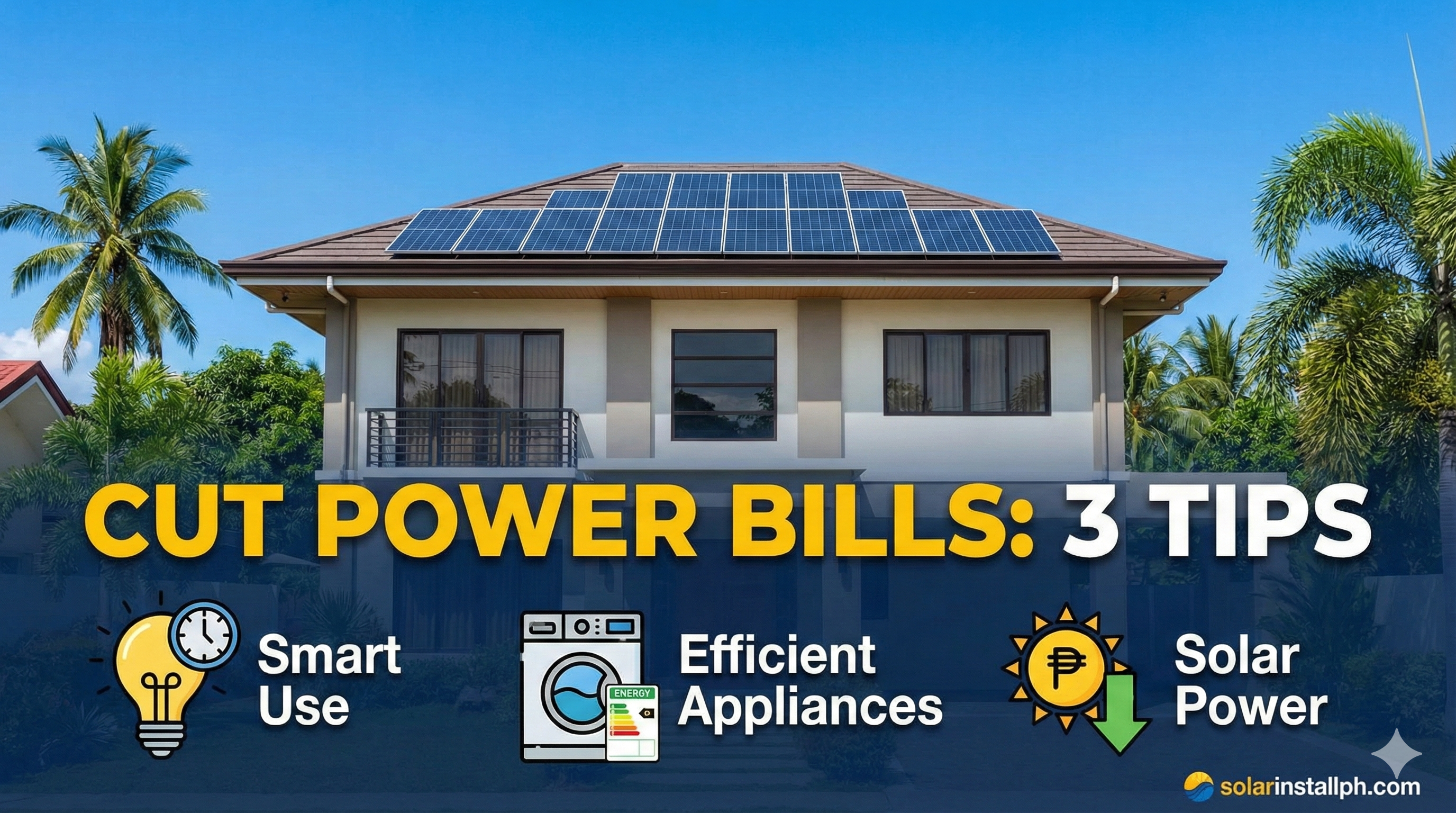
If you live in the Philippines, the arrival of the monthly electricity bill is rarely a happy occasion. With residential rates from distribution utilities like Meralco frequently hovering between ₱11.00 and ₱14.00 per kilowatt-hour (kWh), Filipino households pay some of the highest electricity prices in Asia.
The old advice of "turning off the lights" is no longer enough. A single 10-watt LED bulb left on for an hour costs mere centavos. Meanwhile, a non-inverter air conditioner fighting a hot tin roof can burn through hundreds of pesos a day.
To make a dent in a ₱5,000+ or ₱10,000+ monthly bill, you need to move beyond small habits and look at structural changes. You need to stop renting your energy and start managing it.
Here are three high-impact strategies to slash your power costs in 2025, ranked from behavioral fixes to hardware investments.
1. Attack the "Heavy Hitters" (AC & Refrigeration)
In the average Metro Manila household, cooling accounts for 50% to 60% of the total electricity bill. Your lights, TV, and phone chargers are negligible compared to the compressor in your air conditioner and refrigerator.
If you are serious about cutting costs, you must focus your efforts here.
The Inverter Mandate
If you are still running a window-type air conditioner that you bought 10 years ago, you are bleeding money. Older, non-inverter units operate on a "bang-bang" control system: the compressor runs at 100% power until the room is freezing, shuts off, waits for the room to heat up, and then kicks back to 100%. This spike in power consumption is expensive.
Modern inverter units vary the speed of the compressor to maintain a constant temperature. While they cost more upfront, the efficiency jump is massive.
The Math: Replacing a non-inverter 1HP unit with a high-efficiency inverter model can save ₱800 to ₱1,500 per month if used for 8-10 hours daily. The unit pays for itself in less than two years.
The Maintenance Factor
A dirty air conditioner is an inefficient one. In the dusty environment of Philippine cities, AC filters and condensers clog quickly. A clogged unit has to work 30% harder to push air through the dust, raising your bill without making the room any cooler.
Action: Clean filters bi-weekly. Schedule a professional deep cleaning (chemical wash) every 4 to 6 months.
2. Eliminate "Vampire" Loads and Heat Leaks
Once you have optimized your cooling, look at the invisible drains on your wallet.
Phantom Loads
"Vampire" or phantom loads refer to appliances that consume electricity even when turned off. In a modern home, these add up.
Culprits: Microwave ovens with digital clocks, gaming consoles in "standby" mode, desktop computers, and smart TVs.
The Fix: Use power strips with individual switches. When you are done using the computer or TV, kill the switch on the power strip. It sounds minor, but across a whole house, phantom loads can account for 5-10% of your usage.
The "Oven" Effect (Insulation)
Most Philippine homes are built with uninsulated GI sheet roofs. At noon, your roof temperature can exceed 60°C. This heat radiates down into your ceiling and living space, turning your home into an oven. Your air conditioner then has to fight this heat load.
The Fix: Install insulation foam (PE foam with foil) under your roof sheets.
The Benefit: By lowering the ambient temperature of your room by 2-3 degrees naturally, your AC compressor disengages sooner and runs at lower power.
Understanding your home's exposure to heat is critical. Just as solar panels rely on specific environmental factors, your home's efficiency depends on how it handles the sun. You can learn more about how sunlight intensity works in our guide to understanding peak sun hours, which explains the resource you are either fighting (heat) or harvesting (energy).
3. The "Kill Shot": Generate Your Own Power
The first two tips reduce your consumption. This third tip reduces the rate you pay for that consumption.
The most effective way to cut your bill permanently is to stop buying 100% of your power from the utility. By installing a grid-tied solar system, you generate your own electricity during the day—when rates are often highest due to demand.
How It Works
Daytime: Your solar panels power your fridge, wifi, fans, and daytime AC. You pay Meralco ₱0 for this energy.
Nighttime: You draw from the grid as usual.
The Savings: A standard residential solar setup typically slashes bills by 30% to 50%.
The Cost Reality
Solar is no longer a luxury toy. The price of panels has dropped significantly. A typical 3kW to 5kW system for a household is now an attainable investment with a realistic Return on Investment (ROI) of 3.5 to 5 years.
For a detailed breakdown of current market pricing, review our article on current residential solar pricing.
Financing is Available
If the upfront cash out is the barrier, you have options. Philippine banks have aggressively rolled out "Green Energy" loans with favorable terms. You can often structure a loan where the monthly payment is roughly equal to the savings on your electric bill—essentially swapping your expense for an asset. Check our guide on financing options for solar.
Don't Buy Junk
A warning: The solar market is flooded with substandard equipment. Installing cheap, unbranded panels might save money today, but they will degrade quickly in the Philippine heat and may even pose a fire risk. It is critical to understand the difference between price and value. Read our analysis on long-term value versus upfront cost to avoid expensive mistakes.
Conclusion
Reducing your electricity bill in the Philippines requires a mix of discipline and engineering.
Maintenance: Clean your ACs and switch to inverters.
Efficiency: Insulate your roof and kill phantom loads.
Generation: Install grid-tied solar to offset the high cost of daytime power.
The savings from these steps are cumulative. By combining an efficient inverter AC with a properly sized solar system, you can effectively immunize your household against future rate hikes.
To see exactly how much a solar system offsets a standard utility bill, look at our breakdown of how Meralco bill savings work. The math is simple: every kilowatt-hour you produce is one less you have to buy at premium rates.