
Off-Grid Power: Battery & System Choices
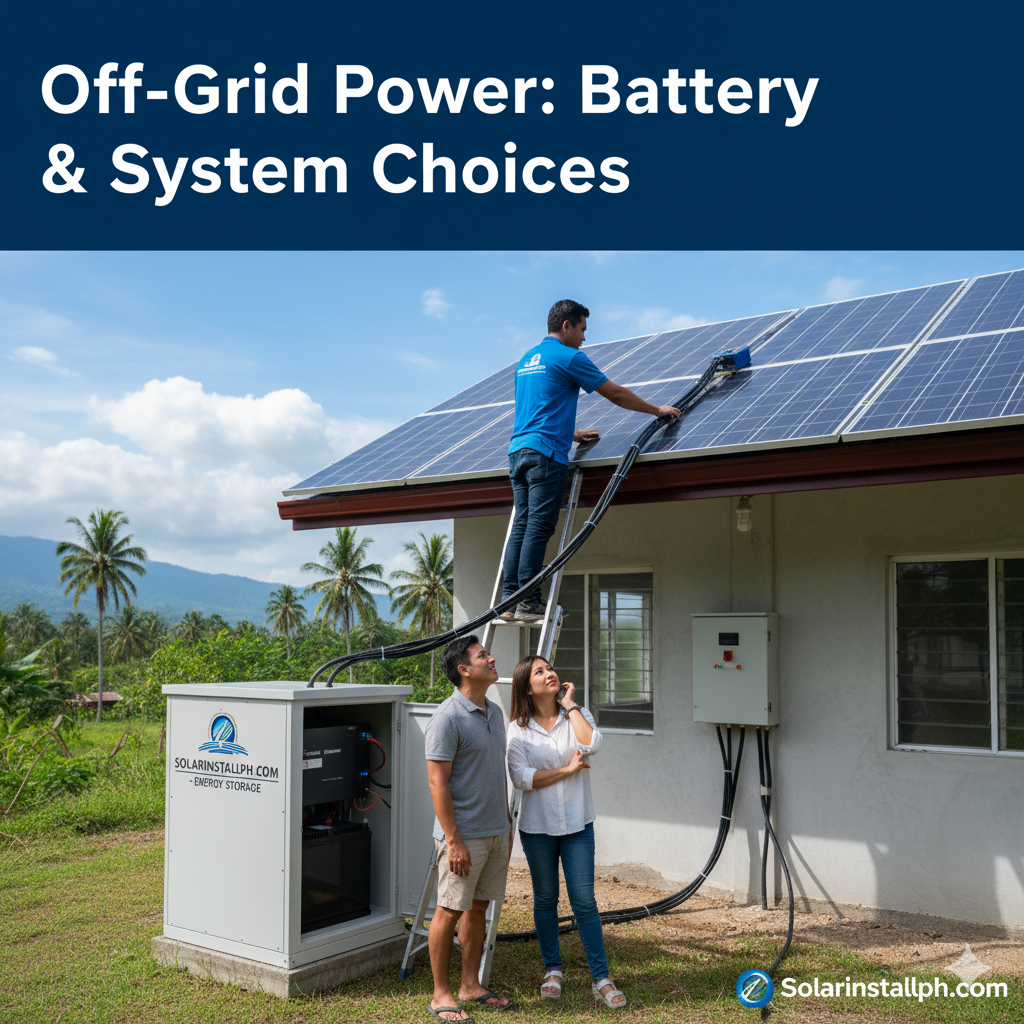
To live "off-grid" in the Philippines is to embrace a unique form of freedom. It’s the dream of a secluded beach house powered by the sun, a remote farmstead humming with self-sufficient energy, or simply a practical necessity in parts of the archipelago untouched by the national power infrastructure. To be off-grid is to be your own utility, to take complete control of your power generation, storage, and consumption. It is the ultimate expression of energy independence.
At the very heart of this independence lies the battery bank. It is the system's core, its reservoir of lifeblood. Unlike a grid-tied home where a battery is primarily for backup, in an off-grid scenario, the battery is the grid. It works tirelessly, day and night, storing the sun's energy and releasing it to power your life. This 24/7 reliance makes the choice of battery and the design of the system not just an important decision, but the most critical one you will make.
This guide delves into the essential choices for building a robust off-grid power system in the Philippines. We'll explore the critical role of the battery, the components that support it, and the distinct system philosophies that can shape your off-grid reality. This is your blueprint for creating a reliable, sustainable, and independent power source, a journey best started by understanding the fundamentals of off-grid solar systems.
The Off-Grid Mindset: More Than Just Equipment
Before diving into hardware, it's crucial to adopt the off-grid mindset. This isn't about replicating the unlimited, on-demand power of a Meralco connection. It’s about energy discipline. Living off-grid successfully means becoming acutely aware of your energy consumption. It’s a conscious partnership with your power system, where you learn to manage your loads, schedule heavy energy use for sunny days, and respect the limits of your stored power. It’s a shift from being a passive consumer to an active energy manager.
The Heart of Independence: Choosing Your Battery Bank
In an off-grid system, the battery bank isn't just for brownouts; it powers your entire life after sunset and through cloudy days. This constant, demanding cycle means the choice of battery technology is paramount.
The Traditional Workhorse: Lead-Acid Batteries
For decades, flooded lead-acid (FLA) batteries were the undisputed kings of off-grid power. These are the classic, deep-cycle batteries that require hands-on attention.
The Appeal: Their primary advantage is a lower upfront cost, which can be attractive when building a large battery bank. They are a known, robust technology, and with meticulous care, they can perform reliably.
The Reality: This affordability comes with a significant labor-of-love commitment. Lead-acid batteries require regular maintenance, including checking and topping up electrolyte levels with distilled water. They must be housed in a well-ventilated enclosure, separate from the main living area, as they release hydrogen gas during charging. They are also heavy, bulky, and have a lower "Depth of Discharge" (DoD) of around 50%, meaning you need a much larger bank to get the same usable energy as a lithium counterpart. Their lifespan is also shorter, typically 3-7 years, depending heavily on how well they are maintained.
The Modern Standard: Lithium-Ion (LiFePO4) Batteries
Lithium Iron Phosphate (LiFePO4) batteries have revolutionized off-grid living. While they come with a higher initial price tag, their long-term performance and convenience make them the superior choice for most modern off-grid systems.
The Appeal: LiFePO4 batteries are a "set it and forget it" solution. They are completely maintenance-free. They are significantly lighter and more compact, allowing for more flexible installation. They boast a very high DoD of 80-100%, meaning you can use nearly all the energy you store. Most importantly, they have an exceptionally long cycle life, often lasting 10-15 years or more, even with daily, deep cycling.
The Reality: The only real drawback is the higher upfront cost. However, when you factor in the longer lifespan, zero maintenance, and higher efficiency, the total cost of ownership for a LiFePO4 battery bank is significantly lower than for a lead-acid bank that will need to be replaced multiple times. A deep dive into a solar battery guide can further illuminate these differences.
Critical Decision: Sizing for Autonomy
Sizing an off-grid battery bank is far more demanding than sizing a backup battery. You must plan for "days of autonomy"—the number of consecutive cloudy or rainy days your system can sustain your home without any significant solar input. In the context of the Philippine climate, especially during the monsoon or typhoon season, planning for 2 to 3 days of autonomy is a standard professional recommendation. This means calculating your total daily energy needs and then multiplying that by 2 or 3 to determine the necessary usable capacity of your battery bank.
The Support System: Other Essential Components
A battery bank is useless without a robust system to charge it and deliver its power.
The Solar Array: Your Power Plant
Your solar array needs to be powerful enough to perform two jobs at once: meet your home's entire energy demand during the day while also fully recharging your battery bank from the previous night's use. As a rule of thumb, an off-grid solar array needs to be significantly larger—often 25-50% larger—than a comparable grid-tied array. This "oversizing" ensures that even on less-than-perfectly-sunny days, you can generate enough power to keep your batteries healthy and fully charged, which is crucial for their longevity. A quality solar panel guide is an invaluable resource at this stage.
The Inverter/Charger and Charge Controller: The Brains
An off-grid system requires a powerful, specialized inverter/charger. This device converts the battery's DC power to AC power for your home, but it also manages the charging process. It works in tandem with a solar charge controller, which takes the variable power from the solar panels and turns it into a stable voltage to safely charge the batteries. Modern MPPT (Maximum Power Point Tracking) charge controllers are the industry standard, as they can optimize the power harvest from the solar array, squeezing out every available watt—a critical function when you're 100% reliant on the sun.
The Backup Generator: The Ultimate Insurance Policy
For any serious off-grid system in the Philippines, a backup generator is not a luxury; it's an essential piece of insurance. No matter how well you plan, you may encounter a week of relentless typhoon rains that solar power simply cannot overcome. The generator acts as the ultimate safety net. Its job is not to power the house directly, but to run for a few hours to recharge the battery bank, ensuring your system stays alive and protecting your expensive batteries from being overly discharged, which can cause permanent damage.
System Choices: Two Philosophies
1. The Classic Homesteader: A Lead-Acid System
This system is built around a large bank of traditional flooded lead-acid batteries. It's for the hands-on off-gridder who enjoys the technical aspects of their power system and is prioritizing a lower initial capital outlay. It requires a dedicated, well-ventilated space and a commitment to a regular maintenance schedule. The return on investment here is measured in self-sufficiency achieved at a lower entry price, provided you are willing to invest your own time and labor.
2. The Modern Independent: A Lithium-Ion System
This system is built for performance, convenience, and longevity. Using a LiFePO4 battery bank, it's a powerful, compact, and maintenance-free solution. It's ideal for remote vacation homes where you want the power to be ready and waiting without any fuss, or for any off-grid dweller who values reliability and ease-of-use above all else. While the upfront cost is higher, the long-term solar ROI guide is superior when you factor in the battery's incredible lifespan and the complete absence of maintenance costs and labor.
The Final Word: Professional Design is Non-Negotiable
Living off-grid is an incredibly rewarding endeavor, offering a unique connection to your environment and your energy use. However, the design and installation of an off-grid power system is one of the most complex residential electrical projects. It is absolutely not a DIY undertaking.
The stakes are too high. A poorly designed system can lead to premature battery failure, insufficient power, and significant safety hazards. Working with professional, experienced solar installers is the only way to ensure your system is safe, efficient, and built to withstand the demands of 24/7 operation for many years to come. They will perform the detailed calculations, select the right components, and build the robust and reliable heart of your new, independent life.