
10 Best Local Installers Reviews
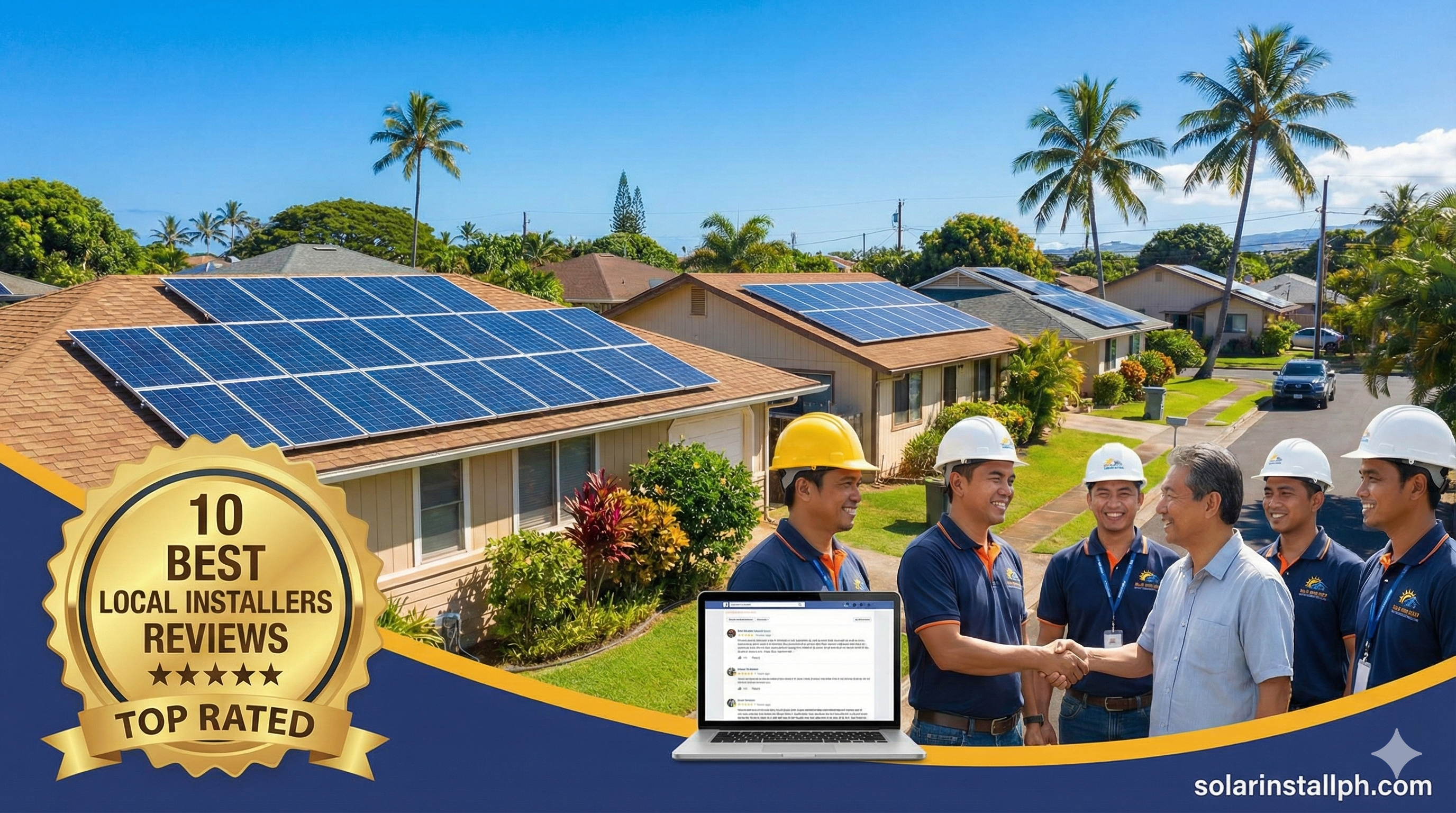
In the Philippine solar industry, the gap between a "good investment" and a "roof nightmare" is almost always the installer.
You can buy the most expensive SunPower or Jinko panels in the world, but if the installer uses undersized wires, cheap generic breakers, or mounts the rails incorrectly on your GI roof, your system will fail. Worse, it could become a fire hazard during the intense heat of April or fly off during a November typhoon.
Finding a reliable installer in 2025 is harder than it looks. The market is flooded with "fly-by-night" contractors who learned from YouTube and undercut prices by skipping safety standards.
We have analyzed the reputation, track record, and specialization of the top players in the country. Here is our review of the 10 best local installers to help you navigate the noisy Philippine market.
Why "Local" Expertise Matters
In the US or Europe, solar is often standardized. In the Philippines, it is a combat sport.
Grid Instability: Our voltage fluctuates. Brownouts are common. An installer needs to know how to set up inverters to handle "dirty" power from local cooperatives.
Typhoon Proofing: We are in the typhoon belt. Installers must strictly follow wind-load calculations (200kph+) for mounting kits.
Bureaucracy: Dealing with Meralco’s Net Metering team or a provincial electric coop (like BENECO or VECO) requires patience and inside knowledge of the paperwork.
How We Evaluated These Companies
We looked at three specific criteria relevant to Filipino homeowners:
Longevity: Have they survived at least 5 years? (Many warranties are worthless if the company closes shop).
Accreditation: Are they DOE-certified and PCAB-licensed?
Specialization: Do they actually install, or do they just sub-contract everything to freelancers?
The Top 10 Solar Installers in the Philippines
1. Solaric Philippines
Best For: Residential Grid-Tie & "Zero Bill" Goals
If you drive around Metro Manila’s villages (Ayala Alabang, Greenwoods, BF Homes), you will likely see a Solaric sticker on an inverter. They are arguably the most recognizable brand in residential rooftop solar.
The Good: They have massive scale. They claim to have installed over 50% of residential rooftop solar in the country. This means they have a deep supply chain and likely won't disappear overnight. They are experts at the "Turn on the Sun" philosophy—focusing on ROI and erasing your daytime bill.
The Bad: As a large company, some users report that scheduling can be tight, and personalized attention might vary compared to a boutique installer.
Verdict: The "safe" choice for standard residential grid-tie systems.
Learn More: Read our full profile on Solaric Philippines.
2. Solaren Renewable Energy
Best For: Commercial Projects & Provincial Reach
Solaren has built a reputation for strictly using in-house teams rather than subcontractors, which is rare in an industry that loves to outsource labor. They are PCAB and DOE accredited, which is a non-negotiable for big commercial builds.
The Good: They are strong in the provinces, not just Manila. If you have a resort in Cebu or a warehouse in Calamba, Solaren is a top-tier contender. They use premium brands and focus heavily on engineering safety.
The Bad: Their strict adherence to premium standards means they are rarely the "cheapest" quote you will receive.
Verdict: Excellent for business owners and homeowners who prioritize build quality over the lowest upfront price.
Learn More: See our listing for Solaren Energy.
3. Buskowitz Energy
Best For: High-End Residential & Leasing Options
Buskowitz is often associated with high-profile commercial projects (like Coca-Cola plants), but they have aggressive residential packages. They famously introduced "Solar Home" packages that simplify the buying process.
The Good: They offer financing and leasing models that many smaller installers can't match. Their "Solar Home Lite" to "Max" tiers make pricing transparent. They also pitch a 40-year vision, using high-end tech designed to last.
The Bad: Their premium branding and focus on "lifestyle" solar can make them pricier than a direct-to-installer freelancer.
Verdict: If you want a "turnkey" experience with financing options, Buskowitz is a polished, professional choice.
Learn More: Check out Buskowitz Energy.
4. SolarNRG
Best For: Longevity and Reliability
SolarNRG is one of the veterans, with over 20 years of industry experience. In a market where companies pop up and vanish in 2 years, surviving two decades is a massive green flag.
The Good: They have seen every type of Philippine roof and electrical quirk. They are known for steady, reliable work in both residential and industrial sectors.
The Bad: They may not market as aggressively on social media as newer brands, so they can be harder to "discover" for new homeowners.
Verdict: The "Old Reliable" of the bunch. Great for peace of mind.
5. PhilSolar
Best For: Hybrid & Off-Grid Systems
PhilSolar (PhilSolar Equipment and Trading) operates as both a distributor and installer. This gives them a unique advantage: they have direct access to hardware stocks (Victron, Jinko, etc.) without waiting for middlemen.
The Good: They are excellent for complex hybrid setups (batteries) or off-grid systems in remote areas (Mindoro, Palawan) where grid reliability is zero. They understand the nuances of battery management better than grid-tie-only installers.
The Bad: Their website and marketing are more technical/industrial, which might be intimidating for a casual homeowner just looking to save ₱2,000 on electric bills.
Verdict: The top pick for technical/battery-heavy projects.
6. Solar Pinoy
Best For: Cost-Effective Engineering
Solar Pinoy positions itself as an engineering-first group. Their branding emphasizes "cost-effective pricing" without sacrificing engineering standards.
The Good: They are transparent about the engineering side—sizing the system correctly so you don't overpay for capacity you can't use. This is crucial for avoiding the "oversizing trap" many sales agents push.
The Bad: Smaller marketing footprint means fewer public reviews compared to giants like Solaric.
Verdict: A smart choice for budget-conscious homeowners who still want an engineer-led install.
7. WeGen Energy
Best For: Island Resiliency & Next-Gen Tech
WeGen focuses heavily on distributed energy and resiliency. They operate across the archipelago, including regions often ignored by Manila-centric installers (like Zamboanga and Bicol).
The Good: They are forward-thinking regarding battery integration and "distributed" grids. If you are in a typhoon-prone area and want a system designed to keep the lights on when the grid fails, WeGen’s philosophy aligns with yours.
The Bad: Their focus on advanced tech and storage can mean a higher initial price point than a simple grid-tie setup.
Verdict: The best bet for provincial homeowners needing energy security.
8. Solaready Inc.
Best For: Premium Tech Enthusiasts
Solaready markets itself aggressively as the home of "high-tech" solar, often featuring US or Japanese brands (like Panasonic) and high-end inverters.
The Good: They focus on "zero maintenance" promises and high-quality hardware. Their marketing is educational and helps homeowners understand the value of premium components.
The Bad: Premium components come with a premium price tag.
Verdict: If you are the type of person who buys an iPhone Pro Max for the specs, Solaready is your installer.
9. MetroGreenTech
Best For: Urban/Metro Manila Specialists
MetroGreenTech has carved a niche in the dense urban jungle of NCR.
The Good: They understand the specific headaches of Manila installations: townhouse limitations, strict HOA rules, and Meralco’s specific Net Metering quirks in the city.
The Bad: Less visibility in the deep provinces compared to Solaren or WeGen.
Verdict: A solid, no-nonsense choice for city dwellers.
10. Go Gridless
Best For: DIY Enthusiasts & Portable Power
While not a traditional "installer" in the sense of bolting panels to your roof, Go Gridless deserves a spot for serving a massive, unaddressed market: renters and DIYers.
The Good: They specialize in portable power stations (EcoFlow, Bluetti) and plug-and-play kits. If you live in a condo or rent an apartment where you cannot drill holes, they are your only real option.
The Bad: You generally won't hire them to wire a 10kW system into your main breaker.
Verdict: The king of "Solar for the Rest of Us" (Renters/Condo owners).
Red Flags: Who to Avoid
While we have listed the best, you must also know how to spot the worst. In 2025, beware of these three red flags:
1. The "FB Marketplace" freelancer
If their only presence is a personal Facebook profile and they ask for a 50% downpayment via GCash before a site visit, run. These "installers" often vanish when warranty issues arise.
2. The "Too Good to Be True" Price
If the average cost is roughly ₱50,000 per kW, and someone offers you ₱30,000 per kW, they are cutting dangerous corners. They might be using undersized AC wires (fire risk) or non-galvanized mounting rails (rust risk). Always check our guide on solar panel installation costs to know the realistic pricing baseline.
3. "No Permit Needed" Claims
If an installer tells you, "Don't worry about Meralco, just install it, they won't know," they are putting you at legal risk. Illegal grid-tying can get your meter confiscated and your service disconnected. Legitimate installers will always offer to handle or assist with the DOE and LGU permitting process.
How to Choose the Right One for YOU
The "best" installer depends on your specific goal:
Goal: "I just want to lower my Meralco bill and forget about it."
Go with Solaric or SolarNRG. They have standardized processes for grid-tie systems that just work.
Goal: "I run a business/resort and need a heavy-duty system."
Call Solaren or Buskowitz. They understand commercial loads and tax incentives.
Goal: "I live in a brownout-prone province."
Look at WeGen or PhilSolar. You need their expertise in batteries and off-grid logic.
Conclusion
The solar industry in the Philippines has matured. In 2025, you no longer have to settle for a guy with a ladder and a prayer. The 10 companies listed above represent the professional tier of the industry—companies with offices, engineers, and reputations to protect.
Don't just look at the price tag at the bottom of the quote. Look at the warranty terms, the brand of the inverter, and the track record of the team installing it. A solar system is a 25-year marriage to your roof; make sure you choose a partner you can trust.
Next Step
Are you ready to start vetting these installers yourself? Would you like me to give you a specific list of "Interview Questions" to ask these companies to test their technical knowledge before you sign a contract?