
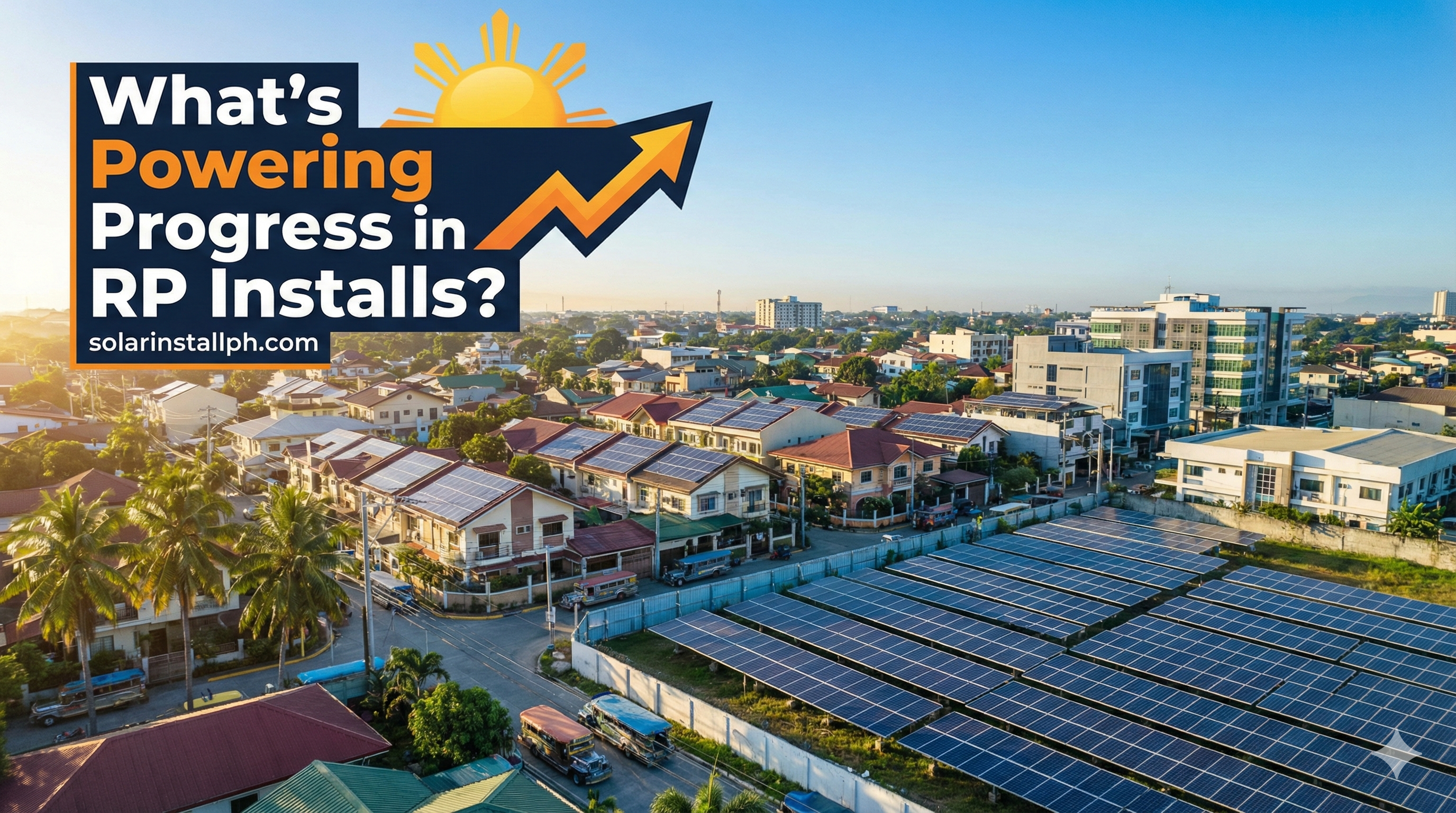
What's Powering Progress in RP Installs?
In 2025, the "solar revolution" in the Philippines has moved past the early-adopter phase and into a period of aggressive mainstream growth. For the average Filipino household or business owner, the question is no longer if solar works, but how fast they can get it installed. The country is currently adding renewable capacity at a record-breaking pace, with nearly 800 MW of new green energy added in 2024 alone—surpassing the combined additions of the previous three years.
This surge isn't accidental. It is the result of a specific "perfect storm" of high electricity prices, landmark policy changes, and hardware that is more resilient than ever. Here is a breakdown of the primary drivers fueling the growth of solar installations in the Republic of the Philippines today.
1. The High Cost of the "Traditional" Grid
The most powerful driver for solar in the Philippines remains the monthly electric bill. As of late 2024, the Philippines continues to have some of the highest power rates in the ASEAN region, trailing only Singapore. Because over half of the country’s generation still relies on imported coal and LNG, consumers are directly exposed to global price volatility and the weakening of the peso against the dollar.
For a typical household with a monthly bill of PHP 10,000, switching to solar isn't just about sustainability; it's a strategic financial hedge. With residential solar costs in the Philippines stabilizing in 2025, the payback period for a well-designed system has dropped to a predictable 4 to 7 years.
2. Policy Decarbonization and the 35% Target
The Department of Energy (DOE) has set a non-negotiable target: 35% renewable energy share by 2030, rising to 50% by 2040. To hit these numbers, the government has removed significant "red tape" that previously stalled progress:
Foreign Ownership Reform: In a massive move, the government now allows 100% foreign ownership of solar and wind projects, unlocking billions in international capital.
EVOSS Integration: The Energy Virtual One-Stop Shop (EVOSS) has digitized the permitting process, reducing the time it takes to get a Meralco net metering application approved from months to weeks.
RPS Mandates: Distribution utilities are now legally required to source a growing percentage of their power from renewable sources, creating a guaranteed market for solar developers.
3. The Rise of "Solar + Storage"
One of the biggest shifts in 2025 is the normalization of batteries. Previously, solar was seen only as a daytime solution. However, with lithium-ion cell prices falling by nearly 75% over the last decade, "hybrid" systems are now the standard for progress in RP installs.
The government’s Green Energy Auction Program (GEAP) now specifically prioritizes projects that include energy storage. This allows solar to act as "baseload" power, providing clean energy even after the sun goes down. For homeowners, this means that a system paired with the top solar batteries of 2025 can provide 24/7 energy security, a critical feature in provinces prone to rotational brownouts.
4. Hardware Innovation: N-Type TOPCon and Bifacial Panels
The technology arriving on Philippine shores in 2025 is significantly more efficient than the panels sold just three years ago. We are seeing a massive shift toward N-type TOPCon cells, which offer up to 25% efficiency.
These panels perform better in the high-heat environment of the Philippines and have lower degradation rates over 25 years. Furthermore, bifacial panels—which capture light from both sides—are becoming popular for commercial rooftops and ground mounts. When you look at the best solar panels for Philippine homes, you’ll find that these efficiency gains mean you can generate more power using less of your precious roof space.
5. Mainstreaming "Green" Financing
A few years ago, solar was a "cash-only" game. Today, the Philippine banking sector has fully embraced the transition. Major institutions like BPI, BDO, and Security Bank now offer specialized "Solar Loans" or allow solar systems to be bundled into home mortgages.
Even more significant is the Pag-IBIG Fund's support, which allows members to use home improvement loans for solar installations. This has democratized access, allowing middle-income families to pay for their system through the savings on their monthly bill. This financial accessibility is a core reason why residential rooftop installs are projected to grow at over 30% annually through 2031.
6. Grid Resilience and Typhoon-Ready Engineering
Progress in RP installs is also defined by improved engineering standards. After several major typhoons, the local industry has moved away from "one-size-fits-all" mounting. Professional installers now use rail systems and fasteners specifically rated for wind loads of up to 250 kph.
For many, the solar system has become a survival tool. In the aftermath of a storm, a solar setup paired with a portable power station or a hybrid battery ensures that communication devices, lights, and small appliances stay running while the main grid is being repaired.
Common Mistakes to Avoid
Ignoring the COC: A solar installation isn't "finished" until you have your Certificate of Compliance (COC) from the ERC. Operating without one can lead to legal issues and prevents you from benefiting from net metering.
Undersizing for the Future: Many homeowners size their system for their current bill without accounting for the fact that they will likely buy an Electric Vehicle (EV) in the next 5 years.
Cheap Mounting: Never compromise on the mounting kit. In the Philippines, the mounting is just as important as the panels.
FAQ
Is solar really the cheapest source of electricity now?
Yes. According to BloombergNEF, the levelized cost of solar in the Philippines is now significantly lower than the cost of building new coal or gas-fired power plants.
What is GEOP and can I join?
The Green Energy Option Program (GEOP) allows large power users (100kW peak demand) to choose their own renewable supplier. While currently for big businesses, there are plans to lower this threshold for smaller users soon.
The momentum behind solar in the Philippines is now irreversible. By combining smart policy, better financing, and typhoon-hardened technology, the country is finally turning its "abundant sunshine" into a permanent economic advantage.