
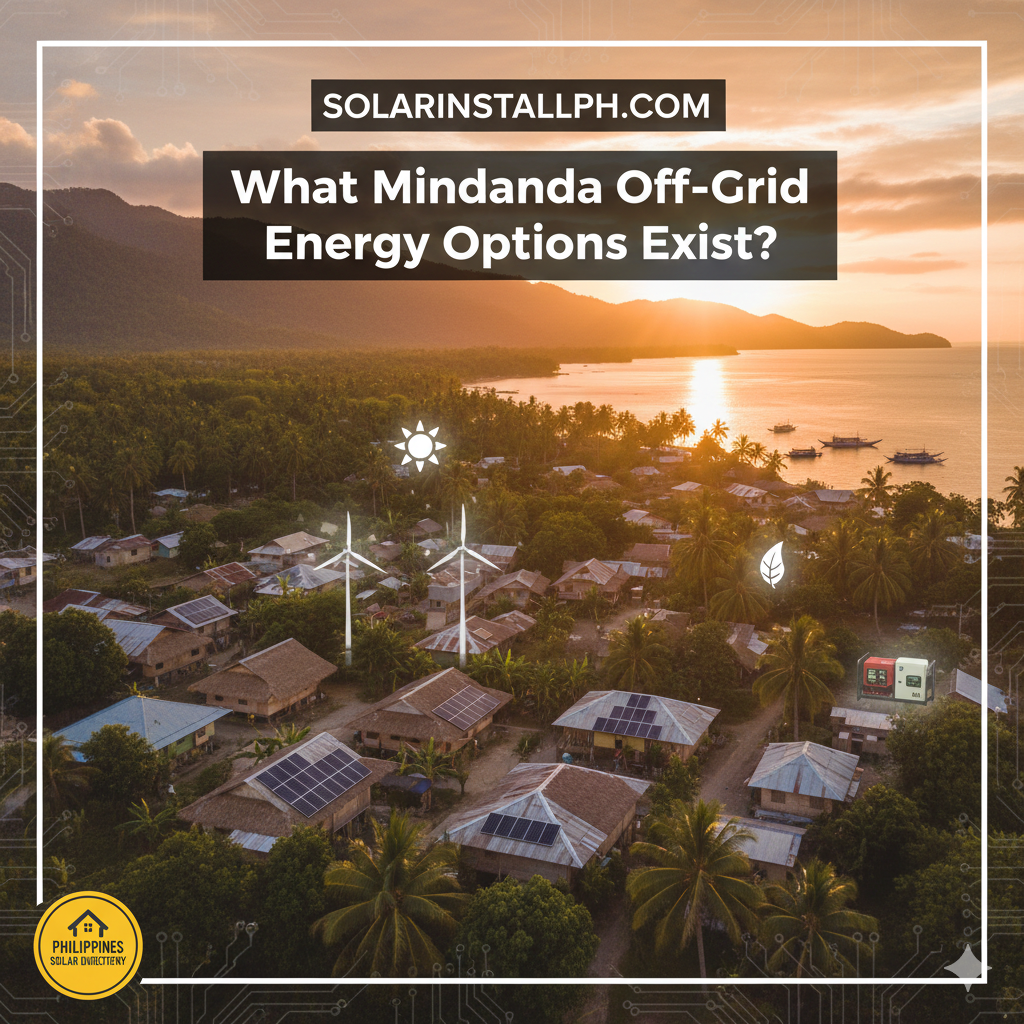
What Mindanao Off-Grid Energy Options Exist?
Mindanao presents a unique energy landscape. While the main grid is famously anchored by the Agus and Pulangi hydropower complexes, significant portions of the region—particularly remote islands in the Bangsamoro Autonomous Region in Muslim Mindanao (BARMM) and isolated mountain barangays—remain disconnected from the high-voltage backbone.
In 2026, the strategy for "missionary electrification" has shifted from a total reliance on expensive diesel to a diversified portfolio of decentralized energy. For homeowners and businesses in these areas, several robust off-grid options now exist to provide reliable power.
1. Solar-Hybrid Microgrids (HRES)
The most significant advancement in Mindanao’s off-grid sector is the Hybrid Renewable Energy System (HRES). These systems combine solar panels with battery storage and a backup diesel generator.
Under the Microgrid Systems Act (RA 11646), private companies known as Microgrid System Providers (MGSPs) are now incentivized to install these systems in "unserved and underserved" areas.
How it works: Solar handles the bulk of daytime demand and charges the batteries.
The Diesel Role: The generator only runs during heavy monsoon rains or peak night loads when battery levels are low, reducing fuel costs by 20–30%.
Regional Context: In Tawi-Tawi and the Dinagat Islands, these hybrids are replacing aging, unreliable diesel-only plants.
2. Distributed Biomass Generation
Mindanao’s status as the Philippines' agricultural powerhouse makes biomass a highly viable off-grid option. Electric cooperatives in Northern Davao and Sultan Kudarat are increasingly exploring biomass for dependable base-load power.
Agricultural Residues: Rice husks, coconut shells, and corn cobs are processed to produce steam or gas for electricity.
Local Economy: Unlike solar, biomass creates a secondary income for farmers who sell their agricultural waste to the power plant.
Reliability: Biomass provides 24/7 power, making it a "firm" energy source compared to the intermittent nature of wind or solar.
3. Small Hydropower (Run-of-River)
While large dams power the main grid, "Run-of-River" hydro is a key solution for Mindanao’s mountainous interior.
Low Impact: These systems do not require large reservoirs. Instead, they divert a portion of a river's flow through a turbine before returning it downstream.
Efficiency: They are ideal for remote communities near waterfalls or fast-moving streams.
Longevity: Hydro remains one of the options with the longest solar system lifespan equivalent in terms of mechanical durability, often lasting 40+ years with proper maintenance.
4. Off-Grid Solar Home Systems (SHS)
For individual households far from any community cluster, a standalone Solar Home System is often the only choice.
Components: A typical setup for a Mindanao home includes 1–3 kW of solar panels and 5–10 kWh of Lithium batteries (LiFePO4).
Portable Solutions: High-capacity portable power station units are now popular as "all-in-one" off-grid kits that can run refrigerators and fans without complex wiring.
Cost Management: While the upfront cost is higher than being on-grid, users avoid the residential solar cost associated with long distribution line extensions.
5. Tidal and Ocean Energy
With the removal of nationality restrictions on RE development in late 2022, foreign investors are now looking at the San Bernardino Strait and the waters around Zamboanga for ocean energy.
Current Status: These technologies are currently in the pilot phase but offer immense potential for coastal communities that experience strong tidal currents.
Navigating the Challenges
Implementing off-grid energy in Mindanao isn't without hurdles. High capital costs and complex land acquisition for larger solar farms remain barriers. Furthermore, systems must be built to withstand the humid, salt-air environment of the islands, requiring specialized solar mounting and NEMA-rated enclosures.
Homeowners should also be aware of the solar payback factors in off-grid settings. While payback is often faster due to the high cost of diesel, the lack of a "grid safety net" means that system sizing must be much more precise to avoid mid-night blackouts.
Conclusion
Mindanao is at the forefront of the Philippine energy transition. From massive 99 MW solar projects breaking ground in Tantangan to micro-hydro systems in the mountains, the options for off-grid energy are expanding. For those living "beyond the wires," the future is no longer a choice between candles or expensive diesel, but a diverse mix of green, local power.