
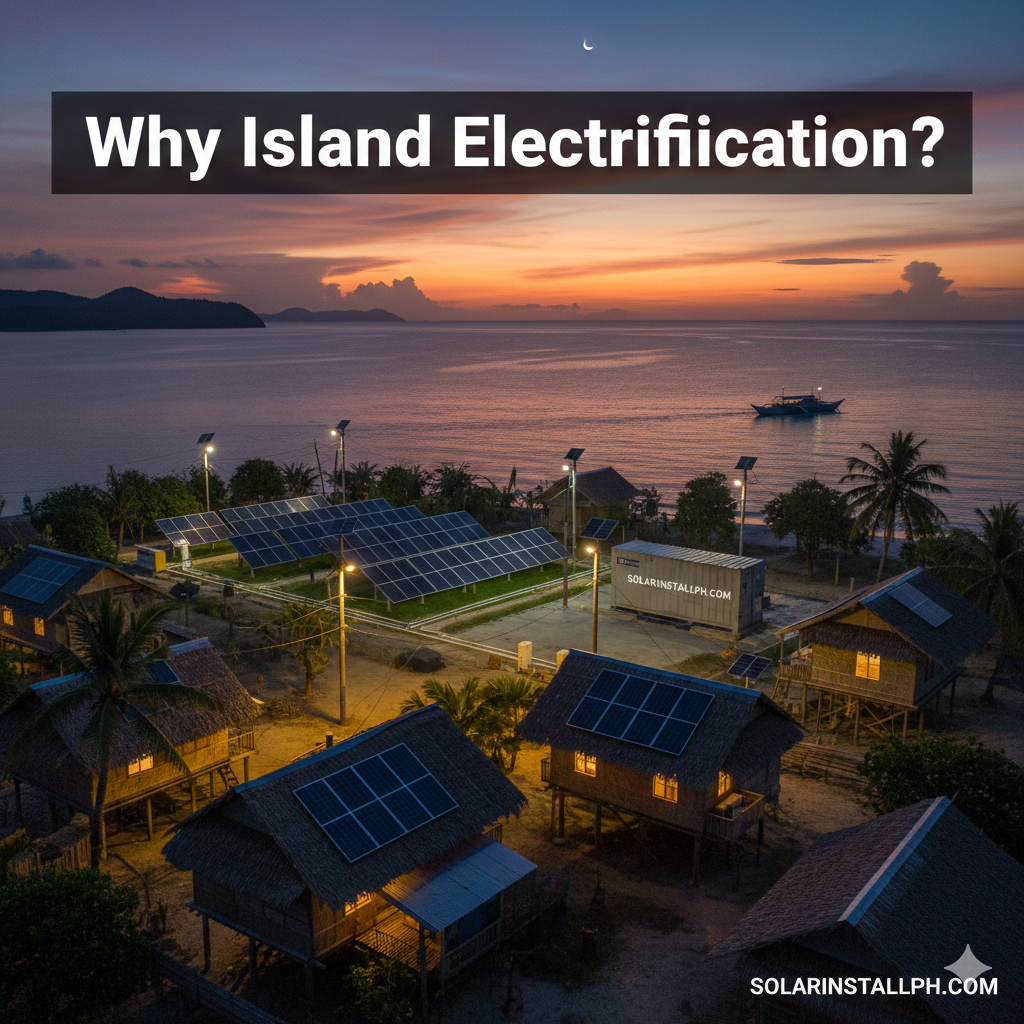
Why Island Electrification?
The Philippines is an archipelago of over 7,600 islands, a geographic reality that makes a single, unified power grid nearly impossible. For decades, remote island communities have relied on the Small Power Utilities Group (SPUG) managed by the National Power Corporation (NPC) or small scale diesel generators maintained by local electric cooperatives. However, the paradigm is shifting. As of 2025, island electrification is no longer just about stringing wires; it is about localizing power generation to solve the chronic issues of high costs and unreliable service.
The Diesel Dependency Trap
Historically, island power has meant diesel power. This creates a "dependency trap" where electricity is both expensive and intermittent. In many off-grid areas, generation costs can exceed ₱20 per kWh, significantly higher than the ₱10 to ₱12 per kWh seen in Meralco-served areas of Luzon.
This cost gap is currently bridged by the Universal Charge for Missionary Electrification (UCME), a subsidy paid by all grid-connected Filipinos. But with rising fuel prices and logistical hurdles in transporting drums of diesel to remote ports, the UCME is being stretched thin. Furthermore, diesel generators are prone to mechanical failure and require specialized maintenance that is hard to find in isolated barangays. This often results in "limited hour" electricity, where homes only have power from 6:00 PM to 10:00 PM, stifling local economic growth.
The Shift to Solar Microgrids and Hybrids
The Department of Energy (DOE) and various private developers are moving toward renewable energy (RE) hybrids. A solar microgrid—combining solar panels, battery storage, and a backup diesel generator—is proving to be the most viable solution for the Philippine context.
Cost Reduction: Modern hybrid systems can reduce the levelized cost of electricity (LCOE) by 20% to 30% compared to pure diesel systems.
Reliability: With solar as the primary source during the day, fuel is saved for night use or cloudy periods. This allows many communities to transition from 4-hour or 8-hour service to 24/7 power.
Resilience: Unlike a central grid that can be taken down by a single fallen pylon on a main transmission line, decentralized microgrids are easier to restore after a typhoon.
For those looking into how these systems are maintained or set up, our detailed guide on solar panel maintenance explains the long-term care required to keep these assets productive in harsh, salty environments.
Economic Drivers for Island Homeowners and Resorts
Electrification changes the socio-economic fabric of an island. For homeowners, it means the ability to use basic appliances like refrigerators, which are crucial for food preservation in fishing communities. For the tourism sector, it is a game-changer.
Resorts in areas like Palawan, Siargao, or the smaller islands of the Visayas often face the choice between noisy, expensive generators or investing in their own power systems. A well-sized off-grid solar setup allows a resort to market itself as "eco-friendly" while drastically cutting operational expenses. The payback period for these systems in island settings is often faster than on the main grid (roughly 3 to 5 years) because they are displacing the high cost of diesel rather than the subsidized rate of a distribution utility.
Practical Impact on Local Business
Fishing: Cold storage facilities powered by solar allow fishermen to store their catch, reducing spoilage and allowing them to sell when market prices are better.
Tourism: Reliable 24/7 power allows for air conditioning and stable Wi-Fi, which are non-negotiable for modern travelers.
Education: Schools can finally utilize computers and digital learning tools without worrying about the power cutting out mid-lesson.
Regulatory Support and Policy Framework
The push for island electrification is backed by the Renewable Energy Act of 2008 (RA 9513) and the more recent Microgrid Systems Act (RA 11646). These laws encourage private sector participation through the "Qualified Third Party" (QTP) scheme, allowing private companies to provide electricity in unserved or underserved areas.
Furthermore, the DOE’s Missionary Electrification Development Plan (MEDP) for 2024–2028 explicitly prioritizes RE integration to phase out diesel. This policy environment has opened doors for developers to install large-scale solar farms that serve entire island municipalities, rather than just individual homes.
Overcoming Structural and Environmental Challenges
Installing solar in the Philippine islands is not without difficulty. Equipment must be built to withstand the specific environmental stressors of an archipelagic nation.
Typhoon Resistance
The Philippines faces an average of 20 typhoons a year. Any island installation must prioritize typhoon-resistant mounting systems. This isn't just about using more bolts; it involves engineering the tilt and the structural integrity of the racking to handle wind loads that can exceed 250 kph in regions like Bicol or Eastern Samar.
Salt Air Corrosion
Islands are high-corrosion environments. Aluminum frames and stainless steel mounting hardware are mandatory. Using standard galvanized steel in an island setting is a recipe for system failure within 24 months. Proper solar wiring and sealed enclosures for inverters and batteries are also critical to prevent salt-laden air from short-circuiting sensitive electronics.
How to Evaluate an Island Solar Project
If you are a resort owner or a local government unit looking to electrify a remote area, the process involves more than just buying panels.
Load Analysis: You must accurately track how much power is needed. Sizing an off-grid system based on guesswork leads to either frequent blackouts (undersized) or wasted capital (oversized).
Battery Sizing: In island settings, batteries are the heart of the system. Lithium Iron Phosphate (LiFePO4) has become the standard in 2025 due to its longer lifespan and better heat tolerance compared to lead-acid.
Local Logistics: Factor in the cost of shipping. Moving 100 panels and 20 batteries to a remote island often requires private barge rentals, which can significantly add to the residential solar cost or commercial project budget.
FAQ
Is off-grid solar cheaper than a diesel generator?
Initially, no. The upfront cost of a solar-plus-storage system is higher. However, when you calculate the cost over 5 to 10 years, solar is significantly cheaper because the "fuel" (sunlight) is free, whereas diesel prices are volatile and shipping is expensive.
Can a solar microgrid power heavy appliances like air conditioners?
Yes, provided the system and the battery bank are sized correctly. Most modern island microgrids use hybrid inverters that can manage high-surge loads like AC units or water pumps.
What happens during the rainy season?
A well-designed island system is "hybridized." While solar provides the bulk of the power, the existing diesel generator remains as a backup for long periods of heavy rain or consecutive cloudy days to ensure the batteries do not deplete.
Conclusion
Island electrification is the front line of the Philippines' energy transition. By moving away from a centralized, diesel-dependent model toward localized solar microgrids, the country is addressing energy poverty while improving climate resilience. For island residents and business owners, the shift to solar is no longer a luxury—it is a practical necessity for economic survival and a higher quality of life.