
7 Best: Off-Grid Pump Systems for Island Homes
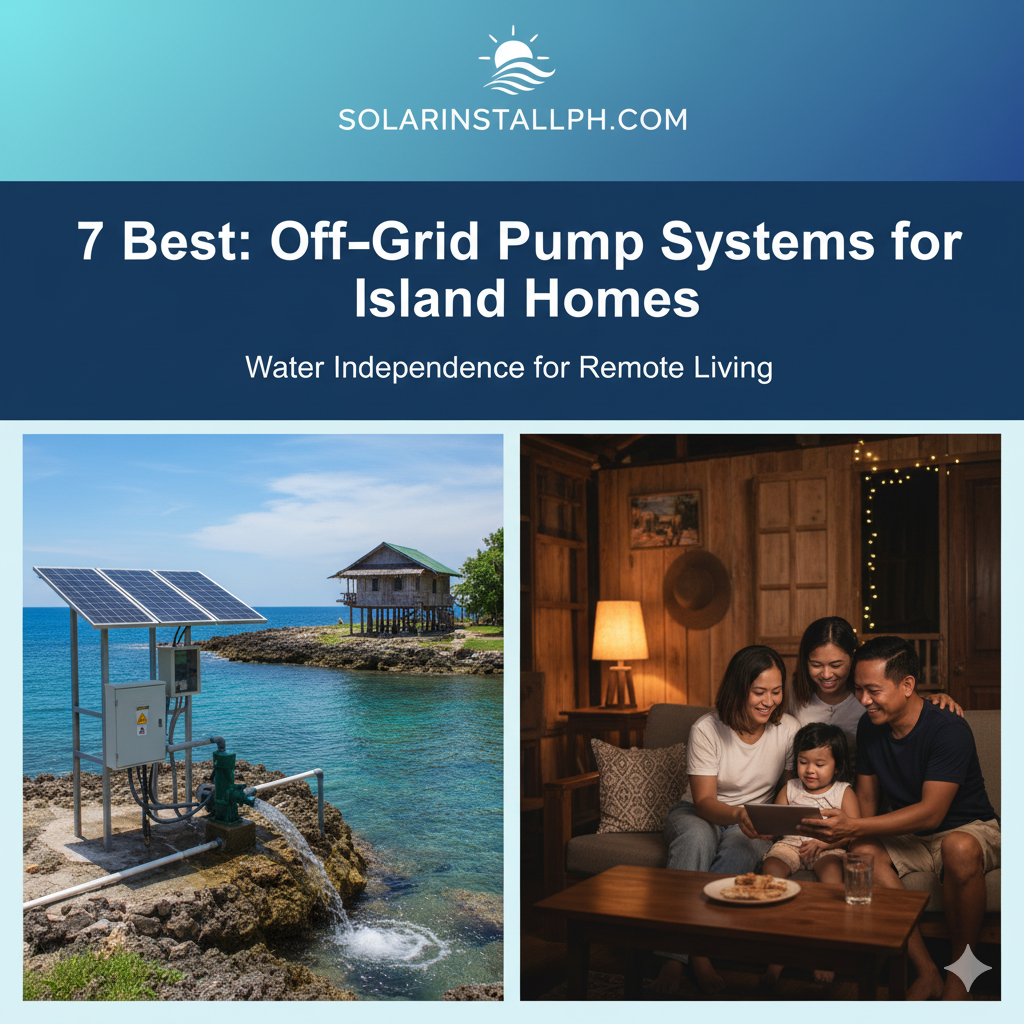
For anyone dreaming of an off-grid home in the Philippines, securing a reliable source of electricity is only the first step. The second, equally vital challenge is water. In an archipelago blessed with abundant rainfall and surrounded by the sea, the irony is that clean, usable water is not always easy to access. For a disconnected island home, a robust water pump system is the lifeline that makes daily life possible, transforming a remote plot of land into a habitable sanctuary. When you're completely independent of public utilities, your water system can't just be an afterthought; it needs to be as resilient and self-sufficient as your solar power setup.
This is where solar-powered water pumps come in. By harnessing the same free and abundant resource—the sun—these pumps provide a sustainable and cost-effective solution for moving water from its source to your home, garden, or livestock. In a nation where energy costs are high and grid stability can be uncertain, using solar to power your water needs is a natural and logical extension of the off-grid ethos. But with various water sources and pump technologies available, choosing the right system is crucial. The perfect pump for a deep well in Batangas might be unsuitable for a rainwater harvesting system in Siargao. A professional solar assessment is often the best first step to understanding your specific needs.
Here, we explore seven of the best off-grid pump systems tailored for the unique challenges and opportunities of island living in the Philippines.
1. The Deep Well Workhorse: AC Submersible Pump with a Dedicated Solar Inverter
For properties with access to a deep underground aquifer, a submersible well pump is the most powerful and reliable solution. These pumps are installed deep within the well, pushing water up to the surface from significant depths. While many traditional well pumps run on AC electricity from the grid, an excellent off-grid solution involves pairing a high-quality AC submersible pump with a dedicated solar water pump inverter.
How it Works: Solar panels are wired directly to a special pump inverter. This device converts the DC power from the panels into the precise AC voltage and frequency the pump needs to operate. This setup often runs without a battery bank, simplifying the system and reducing cost. The pump operates when the sun is shining, filling a large storage tank (a cistern) with water. This tank then provides water pressure for the house, day and night.
Best For: Properties with a drilled deep well (over 30 meters) that need to move large volumes of water efficiently. This is the go-to system for ensuring a consistent and plentiful water supply for a full-sized home and garden. This approach is highly effective for off-grid farms that need reliable irrigation.
Key Consideration: The initial cost of drilling the well can be substantial. However, the long-term benefit is a drought-proof water source. Brands like Lorentz are market leaders in this space, known for their efficiency and durability.
2. The Shallow Well Specialist: DC Surface Pump
If your water source is a shallow well, a nearby spring, or a river, a surface pump is a more practical and cost-effective option. As the name suggests, these pumps are installed on dry land and pull water from the source through an intake pipe. DC-powered surface pumps are particularly well-suited for off-grid solar applications.
How it Works: These pumps are designed to run directly off the DC power produced by solar panels, often without needing an inverter. A simple charge controller can manage the power flow. For 24/7 water pressure, the pump can be connected to your main off-grid battery bank. During the day, it fills a pressure tank, which then supplies water on demand.
Best For: Homes with a water source that is less than 8 meters deep. They are perfect for smaller households, vacation cabins, or as a dedicated pump for garden irrigation. Their simplicity and lower power draw make them easy to integrate into a modest off-grid solar setup.
Key Consideration: Surface pumps can lose their prime if air gets into the intake line, requiring manual repriming. They are also less powerful than submersible pumps and are not suitable for deep wells.
3. The Rainwater Harvester’s Ally: On-Demand Booster Pump
Rainwater harvesting is an increasingly popular and sustainable water source for island homes, especially in regions with distinct wet and dry seasons. This system involves collecting rainwater from your roof and storing it in a large cistern. To get that water into your home, you need a booster pump.
How it Works: A booster pump is a type of surface pump that doesn't pull water from a source but rather increases the pressure in a line that is already filled with water. It is installed after your rainwater storage tank and is connected to a pressure switch. When you open a tap in the house, the pressure in the pipes drops, and the switch automatically turns the pump on, delivering pressurized water.
Best For: Any home utilizing a rainwater harvesting system as its primary or secondary water source. They are essential for turning a passive collection system into a modern, pressurized water utility.
Key Consideration: The system requires a good filtration setup between the tank and the pump to prevent debris from damaging the pump and to ensure water quality. Many homeowners wonder, "Is rainwater safe to drink?"—and the answer depends heavily on the quality of your filtration system.
4. The Budget-Friendly Option: 12V DC Diaphragm Pump
For very small-scale water needs, such as in a tiny cabin, a boat, or for a simple outdoor kitchen, a 12-volt DC diaphragm pump is an incredibly versatile and affordable solution.
How it Works: These compact pumps run on 12V DC power, meaning they can be powered by a single solar panel and a small battery. They are self-priming and can run dry without damage, making them very forgiving. They work by using a flexible diaphragm to pull and push water through the pump chamber.
Best For: Low-flow applications like supplying a single sink, an outdoor shower, or a small drip irrigation system. Their low power consumption makes them ideal for minimalist off-grid setups.
Key Consideration: These pumps provide a lower flow rate and pressure compared to centrifugal pumps. They are not designed to supply a whole house but are perfect for specific, localized tasks.
5. The Direct-Drive Solution: DC Submersible Pump
While AC submersible pumps are powerful, their DC counterparts offer simplicity and efficiency, especially for moderate-depth wells.
How it Works: Like its AC cousin, a DC submersible pump is placed inside the well. However, it is designed to run directly on DC power from solar panels, managed by a specialized controller. This eliminates the need for a large, expensive inverter. The controller often includes features like dry-run protection and the ability to optimize the pump's speed based on the amount of available sunlight.
Best For: Wells of a moderate depth (10 to 50 meters) where the goal is to fill a storage tank during the day. They are extremely efficient and a popular choice for agricultural use and for homeowners who prefer a simpler, battery-free water pumping system.
Key Consideration: The pump's performance is directly tied to the sun's intensity. On cloudy days, the water flow will be reduced. Therefore, having an adequately sized storage tank is crucial to ensure a consistent water supply. Proper solar sizing for the pump's panel array is essential.
6. The Hybrid Powerhouse: AC/DC Hybrid Solar Pump
For critical applications where water is needed 24/7, regardless of weather, a hybrid pump system offers the ultimate in reliability.
How it Works: These advanced systems can be powered by both DC solar energy and an AC backup source. The pump's intelligent controller will prioritize solar power whenever it's available. If the sun isn't shining and the pump needs to run, it can automatically switch to draw power from the main off-grid battery bank (via the inverter) or even from a backup generator.
Best For: Off-grid businesses, large households with high water demand, or any situation where water supply cannot be interrupted. This is the gold standard for resilience.
Key Consideration: Hybrid systems are more complex and expensive due to the advanced controller. However, they provide unparalleled peace of mind, blending the cost savings of solar with the on-demand reliability of a conventional system.
7. The Gravity-Fed System: Low-Power Transfer Pump
Sometimes the simplest solution is the most elegant. A gravity-fed system uses a low-power pump to do one job: move water from your source to a large storage tank located at the highest point of your property.
How it Works: A small, efficient solar pump runs during the day, slowly filling a large elevated tank. Once the tank is full, the pump shuts off. The water supply for the entire house is then delivered by gravity alone. The height of the tank creates the water pressure—every 10 meters of elevation provides about 1 bar (14.5 PSI) of pressure.
Best For: Properties with a natural high point or where an elevated tank stand can be easily constructed. This system is incredibly energy-efficient, as it decouples water pressure from pump operation.
Key Consideration: The upfront work of setting up the elevated tank can be significant, and the water pressure will be lower than what a modern booster pump can provide. However, the system is mechanically simple, highly reliable, and uses minimal energy.
Choosing the right pump system is a foundational decision for any off-grid island home in the Philippines. By carefully matching the pump technology to your water source and daily needs, you can create a resilient and self-sufficient water supply that complements your energy independence, allowing you to truly enjoy the tranquility of your private oasis.