
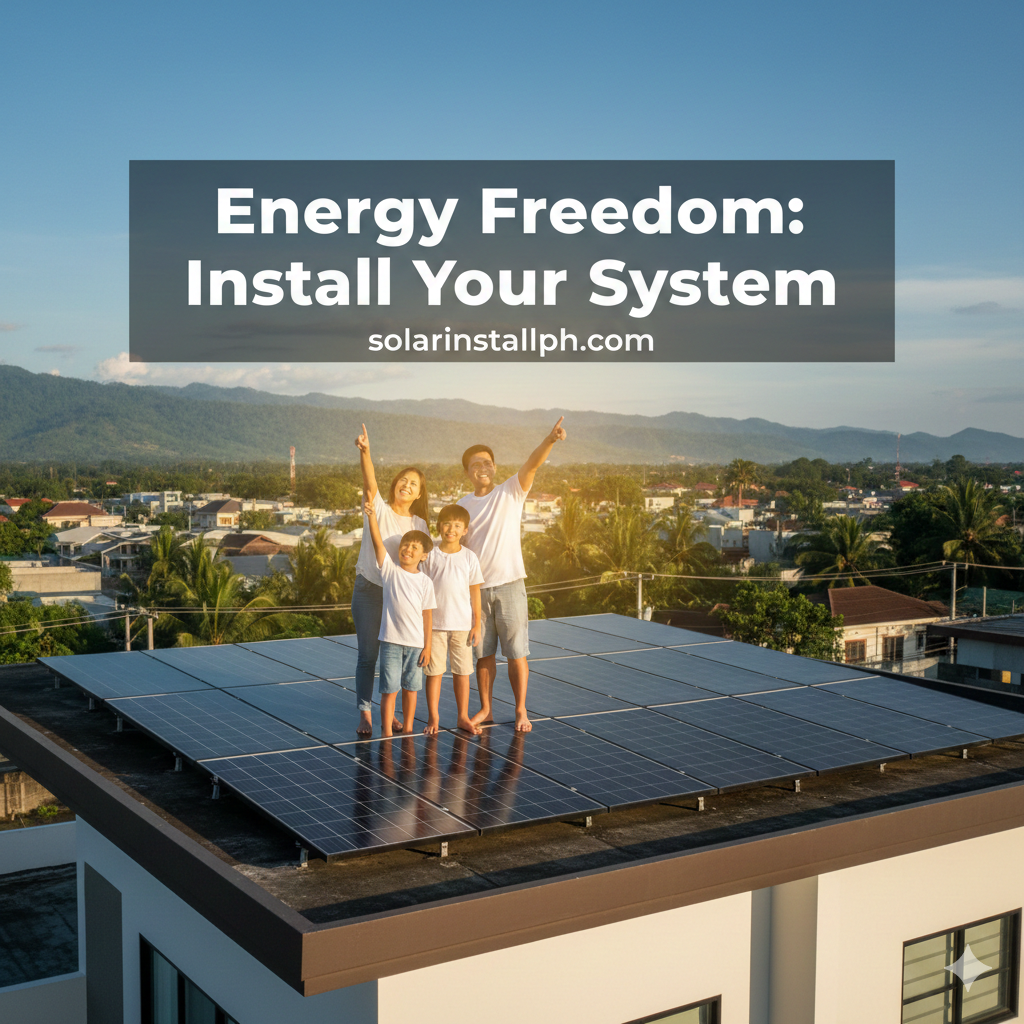
Energy Freedom: Install Your System
The Philippine energy landscape in 2025 is a study in volatility. If you are a homeowner in Metro Manila or a business owner in Cebu, you already know the routine. Monthly power bills fluctuate based on generation charges, global fuel prices, and the efficiency of a grid that often struggles to keep up with demand. Achieving energy freedom through solar power is no longer just a trend for the eco-conscious. It is a calculated move to hedge against rising utility rates that often exceed 11 or 12 pesos per kilowatt-hour.
Energy freedom means taking control of your consumption and generation. It means knowing that even if the utility grid faces a red alert, your essential appliances will keep running. This guide breaks down the technical, financial, and regulatory realities of installing a solar system in the Philippines today.
Why Energy Freedom Matters In 2025
The cost of electricity in the Philippines remains among the highest in Southeast Asia. This is largely because the country relies heavily on imported fossil fuels. When global oil or coal prices spike, your bill reflects that increase almost immediately.
Beyond the cost, grid reliability is a persistent issue. Maintenance shutdowns and weather-related outages are common. For many, energy freedom is about more than just saving money. It is about continuity. Whether you are running a home office or keeping a small cold storage facility operational, being tethered solely to the grid is a significant risk.
By installing a solar system, you are essentially pre-paying for your electricity for the next 25 years at a fixed, much lower rate. Current market data suggests that the current solar installation costs in the Philippines have stabilized, making the return on investment faster than it was five years ago.
Deciding Between Grid-Tied, Hybrid, and Off-Grid Systems
The first step toward independence is choosing the right system architecture. Many people assume solar automatically works during a brownout, but that depends entirely on the type of system you install.
Grid-Tied Systems
This is the most common and affordable setup. Your panels generate power for your home, and any excess is sent back to the grid. The main drawback is that if the grid goes down, your solar system shuts off for safety reasons. This prevents your panels from sending electricity into lines that utility workers might be repairing.
Hybrid Systems
For those seeking true energy freedom, hybrid systems are the gold standard in the Philippines. These systems are connected to the grid but also include a battery bank. During a brownout, the system automatically switches to battery power, keeping your lights and appliances on. As the market evolves, comparing different solar battery brands has become essential to ensure you get a unit that can handle the cycling required by the local climate.
Off-Grid Systems
These are typically reserved for remote areas where the utility grid does not reach. They require large battery banks and significant over-sizing of the solar array to ensure power during consecutive rainy days. Unless you are in a truly isolated location, an off-grid setup is usually more expensive and less efficient than a hybrid system.
The Reality of Solar Savings and Payback
A typical residential grid-tied system in the Philippines now sees a payback period of between 4 to 7 years. Given that panels are rated to last 25 to 30 years, you are looking at nearly two decades of essentially free electricity.
Your savings will depend on your daytime consumption. Solar power is most effective when you "use what you produce" in real-time. If your house is empty during the day, you will rely heavily on the Net Metering program to get credits for the power you export. This is where navigating the Meralco net metering application becomes a critical part of the installation process. Without Net Metering, the excess power your system generates is essentially given to the utility for free, which significantly extends your ROI period.
Realistic Pricing per Kilowatt
In 2025, a high-quality residential installation using Tier 1 panels and reputable inverters generally costs between 50,000 to 85,000 pesos per kilowatt peak (kWp) for grid-tied systems. Hybrid systems are more expensive due to the cost of lithium iron phosphate (LiFePO4) batteries and hybrid-specific inverters.
Technical Considerations for the Philippine Environment
The Philippines presents unique challenges for solar hardware. We have high humidity, salt air in coastal regions, and some of the strongest typhoons in the world.
Typhoon Resilience and Mounting
A solar system is only as good as its mounting structure. Standard rails may not be enough in provinces like Cagayan or Bicol. Ensuring your installer uses high-quality aluminum rails and stainless steel fasteners is non-negotiable. Furthermore, securing panels for typhoon-level wind loads requires specific engineering, such as using more attachment points and ensuring the roof structure itself can handle the added weight and uplift forces.
Heat and Efficiency
Solar panels actually lose efficiency as they get hotter. In a tropical climate, airflow under the panels is vital. Cheap installers often mount panels too close to the roof to save on brackets, which traps heat and kills performance. A professional installation maintains a gap of at least 10 to 15 centimeters to allow for natural convection.
Salt Air Corrosion
If you live within 5 kilometers of the ocean, salt air can corrode your inverter's internal components and the panel frames. In these areas, look for hardware with high IP ratings and "salt mist corrosion resistance" certifications.
The Regulatory Path to Energy Freedom
You cannot just slap panels on your roof and call it a day if you want a legal, grid-compliant system. The Philippines has strict regulations under Republic Act 9513, also known as the Renewable Energy Act of 2008.
LGU Permits and the Bureaucracy
To get your system officially recognized, you need a building permit and an electrical permit from your Local Government Unit (LGU). This often requires signed and sealed blueprints from a Professional Electrical Engineer (PEE). Skipping this step can lead to fines or, worse, your utility company refusing to connect your system to the grid.
The Certificate of Compliance (COC)
For systems that will export power, the Energy Regulatory Commission (ERC) requires a Certificate of Compliance. Your installer should handle this paperwork, but it is your responsibility as the owner to ensure it is completed. Without this, your Net Metering agreement cannot proceed.
Common Mistakes to Avoid
The surge in solar demand has led to a rise in "fly-by-night" installers. These are often individuals who have watched a few tutorials but lack the engineering background to design a safe system.
Undersizing the Inverter: Some installers try to save money by using an inverter that is too small for the panel array. While "over-clocking" is a legitimate technique, doing it excessively leads to clipping and shortens the lifespan of the electronics.
Poor Cable Management: DC electricity from solar panels is dangerous. If cables are left resting on a sharp metal roof or are not housed in proper conduits, they will eventually fray, leading to arc faults and fire risks.
Mixing Panel Brands or Specs: You should never mix different types of panels in the same string. This causes the entire string to perform at the level of the weakest panel, wasting your investment.
Ignoring Shading: Even a small shadow from a chimney or a nearby tree can significantly drop the output of an entire string of panels. A proper site visit with a shading analysis is mandatory before any parts are ordered.
Evaluating and Selecting Your Installer
Because a solar system is a 25-year commitment, your choice of contractor is the most important decision you will make. You are not just buying hardware, you are buying a long-term service agreement.
You should prioritize selecting a DOE-accredited solar installer to ensure that the company follows national standards and has the necessary insurance and certifications. Ask for a portfolio of local projects and, if possible, talk to their previous clients. A reputable company will be transparent about their pricing and won't make "too good to be true" promises about zeroing out your bill if your roof doesn't have the space for it.
Questions to Ask a Potential Installer
Are you a registered business with a physical office and a track record of at least 3 years?
Do you have an in-house Professional Electrical Engineer to sign the plans?
What is your specific protocol for waterproofing roof penetrations?
What is the warranty claim process if an inverter fails in year four?
Do you provide a monitoring app so I can see my production in real-time?
Maintenance for Long-Term Freedom
Solar is low-maintenance, but it is not "no-maintenance." In the Philippines, dust and bird droppings are the primary enemies. In urban areas like Quezon City, smog and soot can create a film on the panels that reduces output by 10% to 15% over a few months.
Cleaning: You should have your panels cleaned at least twice a year, or more frequently during the dry season. Use plain water and a soft brush. Never use harsh chemicals or pressure washers, as these can damage the anti-reflective coating on the glass.
Inverter Check: Keep the area around your inverter clear of clutter. Inverters need airflow to stay cool. Periodically check the cooling fins for dust or insect nests.
Annual Inspection: Once a year, have a technician check the torque on the mounting bolts and the integrity of the electrical connections. The heat cycles of the Philippine sun can cause metal to expand and contract, which may loosen fittings over time.
Conclusion
Energy freedom in the Philippines is a practical response to a difficult energy market. While the upfront cost can be significant, the long-term benefits of price stability and reliability are undeniable. By understanding the technology, respecting the regulatory requirements, and choosing the right partners, you can transform your rooftop into a private power plant.
The journey toward independence starts with a clear look at your current power bill. Determine your daytime baseload, evaluate your roof's orientation toward the south, and begin the process of moving away from total grid dependence. In a country with some of the best solar resources in the world, there is no reason to remain a passive consumer of expensive electricity.
FAQ
Is solar worth it if I have a small roof?
Even a small system can make a dent in your bill. A 1.5 kWp system only requires about 8 to 10 square meters of space but can cover the daytime usage of a standard refrigerator, some lights, and a laptop. Every watt you produce yourself is a watt you don't have to buy from the utility.
What happens to the panels during a super typhoon?
If they are installed correctly with proper wind load engineering, they should stay attached. Most Tier 1 panels are tested to withstand wind speeds of up to 240 kilometers per hour. The risk is usually not the wind itself, but flying debris from other people's roofs hitting your panels.
Can I run my air conditioner on solar?
Yes, but you need to size the system correctly. A typical 1.0 HP inverter air conditioner draws about 700 to 900 watts while the compressor is running hard. A 3 kWp or 5 kWp system is usually sufficient to run one or two air conditioners during the day without drawing from the grid.