
What Battery Storage for Disconnected Homes?
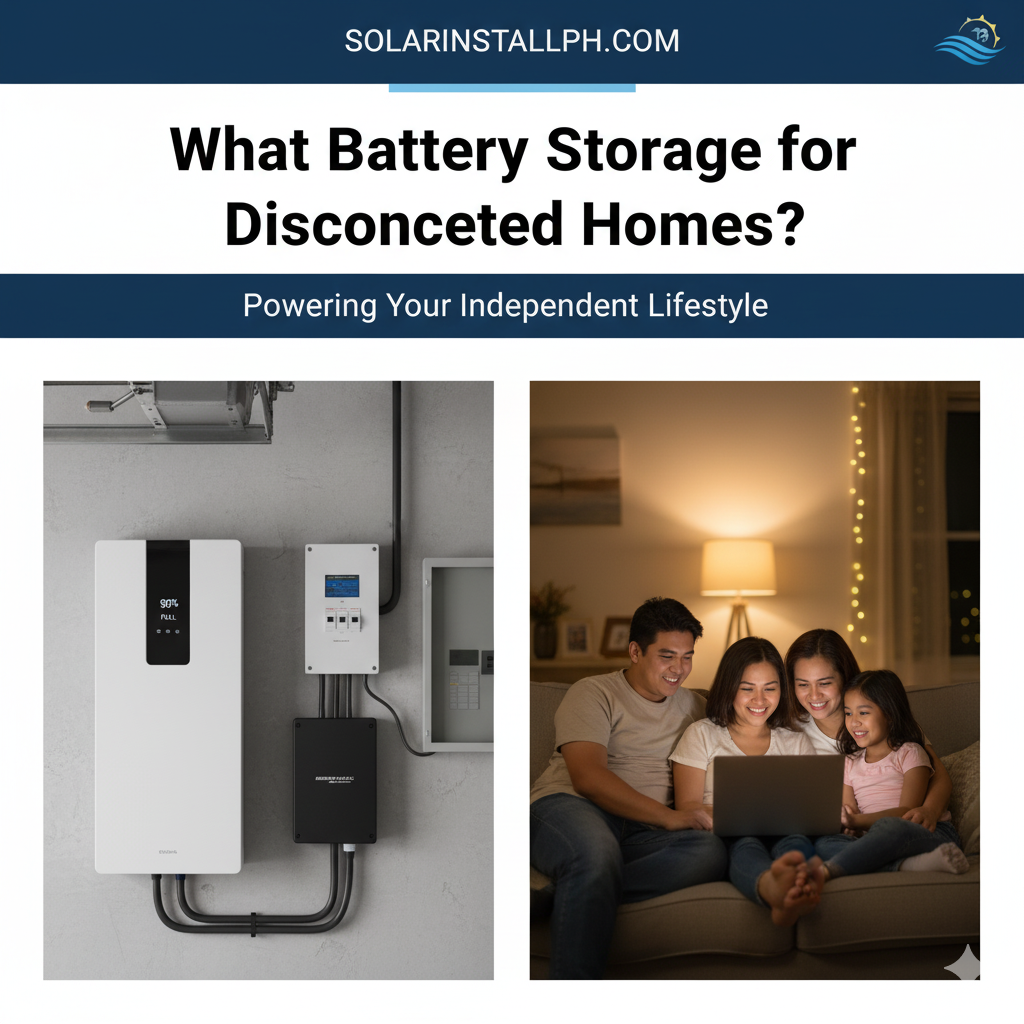
For any Filipino building a home entirely disconnected from the grid, the solar panel array is only half of the equation. While panels generate power when the sun is shining, it is the battery bank that works tirelessly through the night, during overcast days, and in the midst of a typhoon’s downpour. The battery is the heart of an off-grid solar system, the reservoir of energy that provides true independence and resilience. Choosing the right battery technology is arguably the most critical decision in designing a self-sufficient home, directly impacting its performance, longevity, and long-term cost.
In the context of the Philippines—with its tropical heat, humid climate, and need for steadfast power—this decision carries even more weight. The market offers a range of options, but the choice primarily boils down to a classic battle: the old, established technology of lead-acid versus the modern, high-performance challenger, lithium-ion. Understanding the fundamental differences between them is the first step toward building a reliable and cost-effective off-grid sanctuary. For those new to this, a comprehensive solar battery guide can provide an essential overview of the landscape.
The Two Main Contenders: Lead-Acid vs. Lithium-ion
For decades, lead-acid batteries were the undisputed standard for off-grid energy storage. They are a proven, reliable technology that has powered remote homes and businesses across the archipelago. This category includes traditional Flooded Lead-Acid (FLA) batteries, which require regular maintenance like topping up with distilled water, and the more convenient sealed versions, known as Absorbed Glass Mat (AGM) and Gel batteries, which are maintenance-free. The primary appeal of lead-acid has always been its low upfront cost, making it an accessible entry point for those on a tight budget.
On the other side is lithium-ion technology, specifically Lithium Iron Phosphate (LiFePO4), which has become the dominant chemistry for residential energy storage. While known for powering our phones and electric vehicles, its application in home solar has revolutionized off-grid living. Lithium-ion batteries offer a significant leap in performance across almost every metric: they are lighter, more compact, more efficient, and last substantially longer than their lead-acid counterparts. This superior performance comes at a higher initial price, a factor that has, until recently, been a major barrier for many. However, a deeper look into the lead-acid vs. lithium debate reveals that the upfront cost doesn't tell the whole story.
Decoding Performance: What Really Matters in a Battery
When comparing batteries, several key performance indicators determine their real-world value, especially in an off-grid setting where reliability is non-negotiable.
1. Depth of Discharge (DoD): This refers to the percentage of the battery's total capacity that can be safely used without causing damage. Lead-acid batteries have a limited DoD, typically around 50%. This means that to get 5 kWh of usable energy, you need to install a 10 kWh lead-acid battery bank. Regularly discharging them further significantly shortens their lifespan. Lithium-ion batteries, in contrast, boast a DoD of 80% to 100%, meaning you can use almost all the energy they store. A 10 kWh lithium battery provides 8 to 10 kWh of usable power, making it far more efficient in its capacity.
2. Lifespan and Cycle Life: A "cycle" is one full charge and discharge of the battery. A battery's lifespan is measured in the number of cycles it can endure before its capacity degrades to a certain point. A typical lead-acid battery bank might last for 500 to 1,500 cycles, translating to a service life of 3 to 5 years in a daily-use off-grid system. A quality lithium-ion battery, on the other hand, can deliver 4,000 to 10,000 cycles, giving it a lifespan of 10 to 20 years or more. This longevity is a critical factor in its long-term value.
3. Efficiency: Round-trip efficiency measures how much energy you get out for every unit of energy you put in. Lead-acid batteries have an efficiency of around 80-85%, meaning 15-20% of the solar energy is lost during the charging and discharging process. Lithium-ion batteries are much more efficient, at over 95%, ensuring that more of the precious solar power you generate is available for your home.
4. Maintenance and Safety: Flooded lead-acid batteries require regular monitoring of electrolyte levels and cleaning of terminals to prevent corrosion—a demanding task in a remote setting. Sealed lead-acid (AGM and Gel) and lithium-ion batteries are virtually maintenance-free. In terms of safety, while all battery systems require proper installation and management, LiFePO4 chemistry is known for its stability and is considered the safest of the lithium-ion family, with a very low risk of thermal runaway. Top-tier solar battery brands often incorporate advanced safety features and management systems.
Sizing Your Power Reserve: How Much Battery Do You Need?
Determining the right size for your battery bank is a crucial step that requires a detailed analysis of your energy consumption. This is not a place for guesswork; undersizing will lead to frequent power shortages, while oversizing means you’ve overspent on capacity you don’t need.
The process begins with an energy audit. You must calculate your total daily electricity consumption in watt-hours (Wh). This involves listing every single appliance and light you plan to use—from your refrigerator and television to your water pump and rice cooker—and multiplying its power consumption (in watts) by the number of hours you expect to use it each day. For example:
Refrigerator (150W) x 8 hours of runtime = 1,200 Wh
5 LED Lights (10W each) x 6 hours = 300 Wh
Television (80W) x 4 hours = 320 Wh
Summing up all these values gives you your total daily energy requirement. Once you have this figure, you can use a formula to determine the necessary battery capacity:
Battery Capacity (kWh) = (Daily Energy Usage in kWh x Days of Autonomy) / Depth of Discharge
"Days of autonomy" is a critical factor for off-grid systems in the Philippines. It refers to the number of consecutive days you want your system to be able to power your home with little to no solar input—for instance, during a prolonged period of cloudy, rainy weather brought by a typhoon. A standard recommendation is 2 to 3 days of autonomy for resilience.
Using this formula, you can see how the choice of battery technology dramatically impacts the required size. For a home that consumes 5 kWh per day and needs 2 days of autonomy, the calculation would be:
With a Lead-Acid Battery (50% DoD): (5 kWh x 2 days) / 0.50 = 20 kWh of total capacity required.
With a Lithium-ion Battery (90% DoD): (5 kWh x 2 days) / 0.90 = 11.1 kWh of total capacity required.
The lithium-ion system requires a significantly smaller battery bank to provide the same amount of usable energy, which also translates to less space and a simpler installation. Proper solar sizing is a complex but vital process, and it's highly recommended to work with a professional installer to get it right.
The Financial Equation: Upfront Cost vs. Lifetime Value
For many Filipinos, the final decision comes down to cost. There is no denying that lead-acid batteries have a much lower initial purchase price. For a small, basic off-grid setup, such as for a weekend rest house with minimal power needs, this can make the project financially viable.
However, the true cost of a battery is not just its purchase price but its total cost of ownership over its lifespan. When you factor in the much shorter lifespan of lead-acid batteries, they will likely need to be replaced two, three, or even four times over the lifespan of a single lithium-ion battery bank. Each replacement involves not just the cost of new batteries but also shipping and installation labor.
When you consider the higher efficiency, deeper depth of discharge, and vastly longer lifespan, the lifetime cost of lithium-ion batteries is almost always lower than that of lead-acid. The higher upfront investment pays for itself through longevity, superior performance, and peace of mind. Investing in a quality battery from the start is one of the wisest solar financial decisions you can make for an off-grid home.
Ultimately, for a modern, disconnected home in the Philippines designed for long-term living, lithium-ion (LiFePO4) technology is the superior choice. It aligns with the goals of reliability, resilience, and long-term value. While the initial investment is higher, the "set-and-forget" convenience, extended lifespan, and unmatched performance provide a level of energy security that is essential for a true cabin oasis. This decision is the foundation of your energy independence—invest wisely to ensure your home is powered safely and reliably for decades to come.