
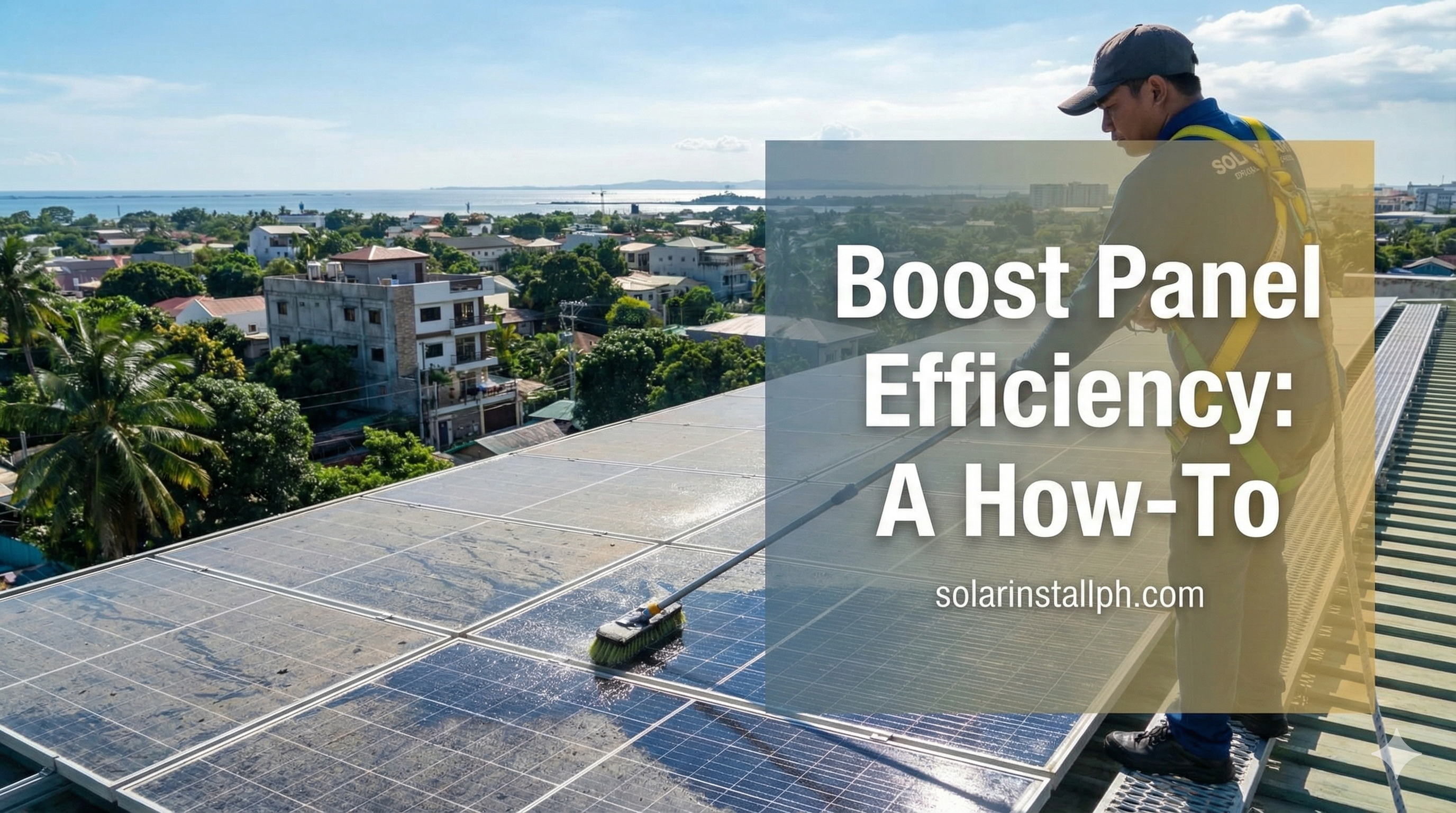
Boost Panel Efficiency: A How-To
In the Philippines, solar energy is more than a trend; it is a strategic defense against some of the highest electricity rates in Asia. However, simply installing panels is not enough. To truly win, you must maximize every ray of sunlight that hits your roof. From the salt air of our coastal towns to the intense heat of a Manila summer, local conditions require a specific approach to maintenance and optimization.
Here is your practical guide to boosting panel efficiency in the Philippine setting.
1. Master the Tilt and Orientation
In the Philippines, which sits above the equator, your panels should ideally face True South to capture the maximum amount of sunlight as the sun moves across the southern sky.
The Ideal Angle
While the "perfect" angle can change slightly depending on your exact latitude (e.g., 14.5°N for Metro Manila), a general rule for Philippine installations is a tilt of 10° to 30°.
Dry Season (Low Angle): A tilt of 10° to 15° is highly effective when the sun is higher in the sky.
Rainy Season (Steeper Angle): Increasing the tilt toward 20° to 30° helps during the monsoon months by promoting water runoff and allowing rain to naturally wash away debris.
Facing panels East or West can still work, but expect a 3% to 10% reduction in efficiency compared to a south-facing setup.
2. Fight the "Heat Penalty"
It is a common misconception that more heat equals more power. In reality, solar panels harvest sunlight, not heat. High temperatures actually reduce a panel's ability to convert energy. For every degree above 25°C, a panel can lose roughly 0.5% efficiency.
Cooling Strategies
Ventilated Mounting: Ensure there is a gap of a few inches between your roof and the panels to allow for convective air flow.
Bypass the "Hot Roof" Effect: Avoid mounting panels directly against dark, unventilated surfaces that trap heat.
High-Quality Cells: Monocrystalline panels generally have a better temperature coefficient than polycrystalline ones, meaning they perform more reliably during our extreme summer months.
3. Implement a Strict Cleaning Schedule
Dust, bird droppings, and even volcanic ash can reduce your solar output by as much as 25%. In the Philippines, the combination of humidity and urban pollution can create a "grime" that standard rain cannot wash away.
Best Practices for Cleaning
Frequency: Clean your panels every 3 to 6 months. If you live near the ocean or a high-traffic area, you may need to do this more often.
Timing: Only clean in the early morning or late afternoon. Cold water hitting a hot panel at noon can cause the tempered glass to crack.
Tools: Use a soft brush or non-abrasive cloth with mild soap and low-pressure water. Never use a high-pressure washer as it can damage the seals or cells.
For more on managing long-term costs and upkeep, check out our detailed guide on residential solar costs.
4. Eliminate Shading Obstructions
Even a small shadow from a nearby tree or a Meralco pole can disproportionately slash your power production. This is because cells are often connected in series; if one cell is shaded, it can act like a bottleneck for the entire string.
Solutions for Shaded Roofs
Vegetation Management: Regularly trim trees that have grown since your initial installation.
Advanced Hardware: If shading is unavoidable, consider using microinverters or DC optimizers. These allow each panel to operate independently, ensuring one shaded panel doesn't drag down the performance of the rest.
5. Monitor and Calibrate
You cannot fix what you do not measure. Most modern systems in the Philippines come with smartphone apps that allow you to track real-time production.
What to Look For
Unusual Drops: If your output is significantly lower on a clear day compared to the same time last month, it is time to check for dirt or technical faults.
Professional Health Checks: It is wise to have a DOE-accredited installer perform an annual inspection to check for loose wiring or saltwater corrosion.
FAQ
Is it worth getting a solar tracker in the Philippines?
While solar trackers can increase production by 25% to 35%, they are often too expensive and mechanically complex for residential roofs. Most Filipino homeowners find better value in simply adding one or two more fixed panels.
Does the rainy season make solar useless?
No. Even on cloudy days, panels can still generate energy from reflected light. However, you should factor in a lower "peak sun hour" average when calculating your ROI. For a better understanding of how these variables affect your savings, see our comprehensive solar ROI guide.
How do I know if my panels are dirty enough to clean?
If you can see a visible layer of dust or bird droppings from the ground, your efficiency has likely already dropped by 5% to 10%. For more information on what to expect, read about the top solar trends for 2025.
Where can I find a list of legitimate companies for maintenance?
You can consult the DOE solar directory to find registered service providers in your area. For more information on the legal side of things, read our net metering application process guide.