
Home Power: Good for Your Home?
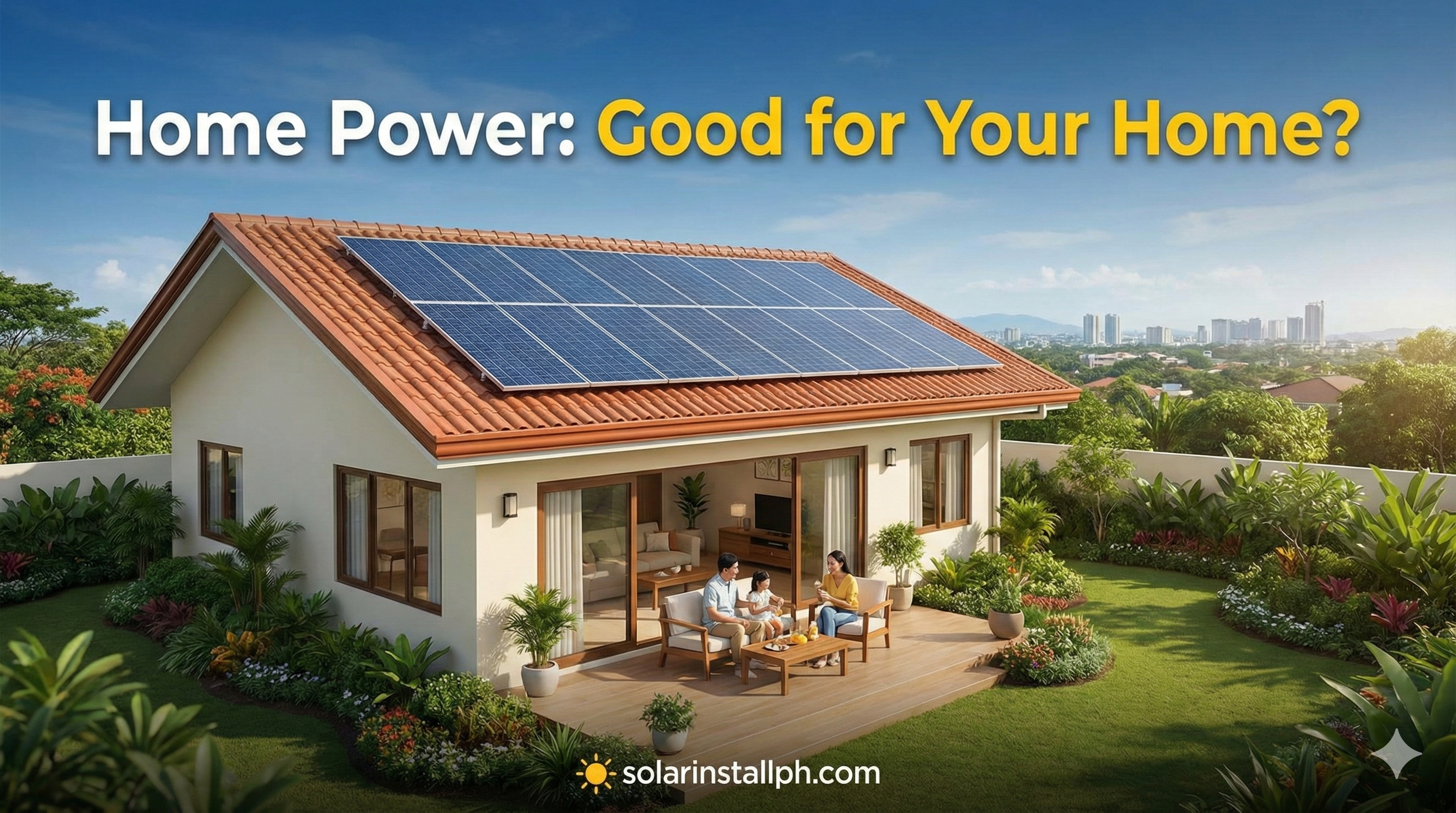
In the Philippines, the decision to install solar panels used to be an emotional one. You did it because you "loved the environment" or you wanted to be the first tech-forward neighbor in your subdivision.
In 2025, the conversation has shifted entirely. With residential electricity rates from Meralco and provincial cooperatives averaging between ₱12.00 and ₱16.00 per kilowatt-hour (kWh), solar is no longer an eco-statement. It is a financial defense strategy.
But is it actually "good" for your home? Beyond the monthly savings, does bolting 200 kilograms of glass and aluminum to your roof make sense structurally and financially? Does it add value, or is it a liability waiting to leak during the next typhoon?
This article strips away the marketing fluff to evaluate the real impact of home solar on your property, your wallet, and your daily life in the Philippine context.
The 2025 Reality Check
Let’s start with the baseline. If you own a home in Metro Manila, Cebu, or Davao, you are paying some of the highest electricity rates in Southeast Asia.
The Grid Reality: Rates are volatile. A heatwave spikes demand in the Luzon grid, triggering WESM (spot market) price surges that appear on your bill as "Generation Charge" adjustments.
The Solar Reality: The cost of solar hardware has stabilized. A standard 3kW to 5kW residential system—enough for a typical middle-class Filipino family—now costs significantly less than it did five years ago.
The gap between what you pay the utility (inflationary) and what it costs to generate your own power (deflationary) has never been wider.
1. The Financial Impact: Asset vs. Liability
Most home improvements are liabilities. A swimming pool costs money to maintain. A kitchen renovation looks nice but doesn't pay you back monthly.
Solar is different. It is likely the only home improvement that generates tax-free cash flow.
The Return on Investment (ROI)
For a standard grid-tied system (no batteries, just panels and inverter), the math in 2025 is compelling.
System Cost: Approx. ₱180,000 – ₱300,000 (depending on size/quality).
Monthly Savings: ₱3,000 – ₱6,000.
Payback Period: 3.5 to 5 years.
After the system pays for itself, it continues to generate free electricity for another 20 years. That is a better return than any time deposit or government bond currently available.
To see the specific numbers for different system sizes, review our breakdown of residential solar costs.
Property Valuation
In the US and Europe, studies prove that homes with solar sell faster and for a premium. In the Philippines, this trend is just starting. A home with a "₱0 electric bill" is a massive selling point in a market sensitive to inflation. Smart buyers view a pre-installed, working solar system as a discount on their future living expenses.
2. The Structural Impact: Will It Ruin My Roof?
This is the most common fear among Filipino homeowners. Our roofs are typically made of Galvanized Iron (GI) sheets ("yero") or ceramic tiles. The idea of drilling holes into them is terrifying, especially in a country with 20+ typhoons a year.
The Leaking Myth
Solar panels do not cause leaks if installed correctly. In fact, they protect the portion of the roof they cover from direct UV exposure and rain impact.
However, "installer error" causes leaks.
The Wrong Way: Using simple silicone sealant around a screw hole. The silicone dries out in the tropical heat, cracks, and leaks within 2 years.
The Right Way: Using proper L-feet with EPDM rubber gaskets and flashing. The rubber creates a watertight compression seal that outlasts the roof itself.
Wind Load and Typhoons
Philippine solar installations must be rated for wind speeds of 200 to 250 kph.
Standard mounting rails are not enough.
Installers must screw the mounting feet into the purlins (the structural skeleton), not just the thin roof sheet.
Panels should be clamped securely with correct torque settings.
When done right, a solar array adds structural rigidity. When done cheap, it’s a kite. You can learn more about the mechanics of a safe installation in our guide to grid-tied pros and cons, which discusses the structural trade-offs.
3. The Lifestyle Shift: Living with Solar
Is solar "good" for your daily routine? That depends on your expectations.
If you install a standard grid-tied system (without batteries), you need to understand two things:
It does not work during a brownout. For safety reasons (anti-islanding), the inverter shuts off when the grid goes down. If you need backup power, you need a Hybrid system, which costs 30-50% more.
You must shift your usage. To maximize savings, you should run high-draw appliances (washing machine, pool pump, dishwasher, ironing) between 10:00 AM and 3:00 PM.
The Net Metering Advantage
What happens to the power you generate but don't use? Without Net Metering, it is wasted.
Net Metering allows you to export that excess energy to Meralco (or your DU). They buy it from you and give you bill credits. This is crucial for households that are empty during the day. It effectively turns the grid into your battery.
For a detailed explanation of how these credits attack your bill, read our analysis of Meralco solar savings.
4. The Aesthetic Argument
Let’s be honest: some Homeowners Associations (HOAs) hate solar panels. They think they look industrial or messy.
However, modern "Full Black" or "All Black" monocrystalline panels look sleek and premium. They blend seamlessly with dark asphalt shingles or modern gray metal roofs.
Design Tip: Ask your installer for a layout plan that aligns the panels symmetrically. Avoid the "Tetris" look where panels are scattered randomly to avoid vents. A clean, rectangular array looks intentional and high-end.
5. Financial Accessibility: You Don’t Need Cash
In 2025, liquidity is key. Many homeowners hesitate because they don't want to burn ₱200,000 of savings in one go.
The good news is that Philippine banks have aggressively entered the "Green Energy" market. BPI, BDO, and Security Bank offer specialized solar loans.
The Strategy: Structure the loan so that your monthly amortization is lower than your current electric bill.
The Result: You are cash-flow positive from Day 1. You essentially swap a permanent expense (electric bill) for a temporary one (loan payment) that eventually goes to zero.
Check out the current loan options in our guide to solar bank loans.
6. The Risk of Going Cheap
Is solar good for your home? Only if you buy equipment that lasts.
The Philippine market is currently flooded with "B-grade" panels and generic inverters sold on social media marketplaces. These units often fail after 3-5 years due to delamination (plastic peeling off) or inverter burnout from the humidity.
If you install junk, you create a liability. You will spend more on repairs and removal than you saved on electricity.
Stick to Tier 1 Brands: Longi, Jinko, Trina, Canadian Solar, JA Solar.
Inverters: Huawei, Sungrow, Growatt, Fronius, SMA.
Understanding the difference between upfront price and long-term value is critical. Read our comparison on solar value vs. cost to avoid the "cheap solar" trap.
Conclusion
Is home power good for your home?
From a financial perspective, the answer is an unequivocal yes. The ROI is unbeatable, the hedge against inflation is powerful, and the financing options make it accessible.
From a structural perspective, the answer is yes, but only if installed professionally. A DIY job or a "lowest bidder" contractor can compromise your roof. A certified installer protects it.
From a lifestyle perspective, it requires a small adjustment (shifting loads to daytime) but rewards you with the peace of mind that comes from energy independence.
In the Philippines of 2025, solar is not just for the wealthy or the eco-conscious. It is for anyone tired of renting their power at a premium rate.
Next Step: Look at your roof. Is it in good condition? Look at your bill. Is it over ₱4,000? If the answer to both is yes, you are ready to start.