
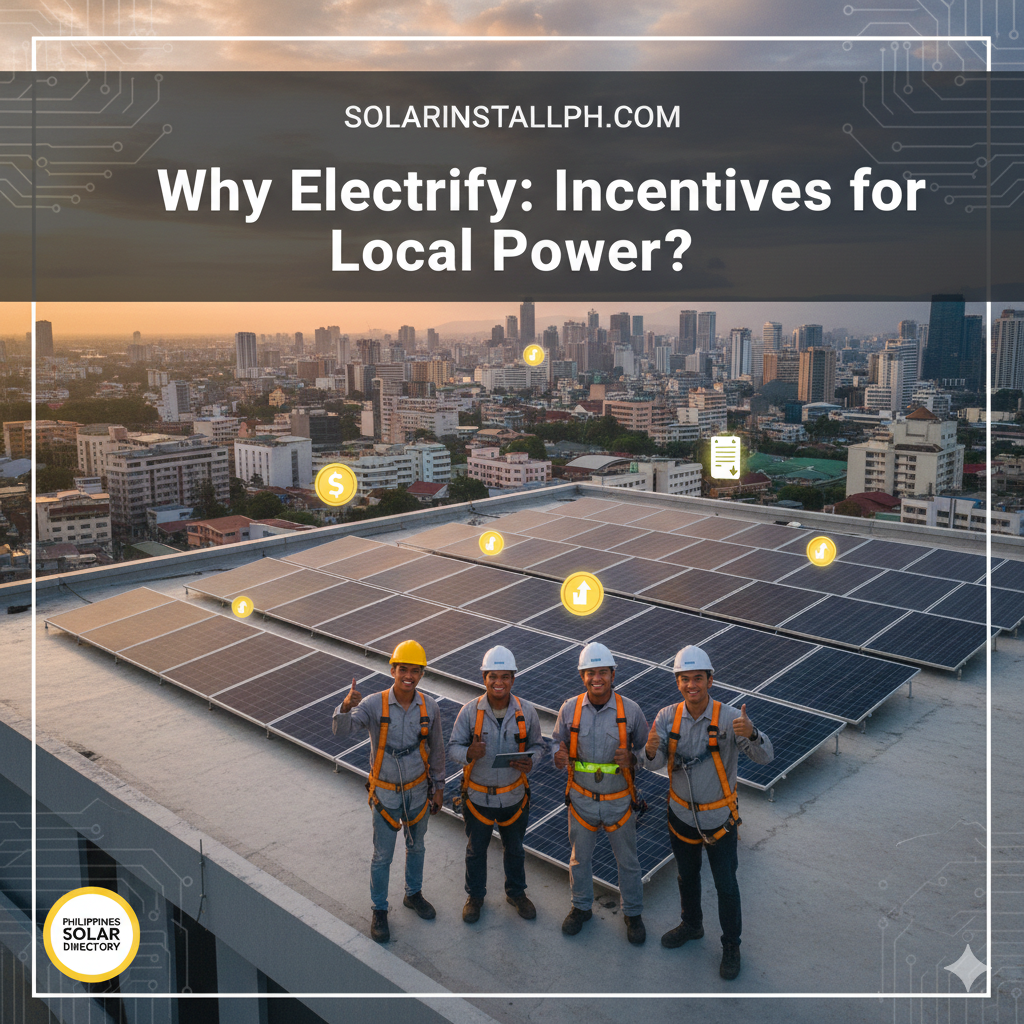
Why Electrify: Incentives for Local Power?
The Philippines is currently navigating a pivotal shift in how it powers its communities. As of early 2026, the nationwide electrification rate has reached approximately 95 percent, driven largely by the aggressive expansion of renewable energy (RE) sources. For local governments, businesses, and homeowners, the question is no longer just about getting "connected" to a central grid that often fluctuates, but rather about why local, decentralized power is the smarter financial and operational choice.
Local power—specifically solar-hybrid microgrids and distributed generation—is being incentivized at a level never seen before in the country. With electricity prices in off-grid areas still reaching as high as ₱16 to ₱25 per kWh, the push for "energy freedom" is backed by substantial government support, tax breaks, and direct community funding.
The 2026 Shift: Five-Fold Benefits for Host Communities
A major turning point for local electrification arrived in January 2026 with the expanded Energy Regulation (ER) Program No. 1-94. Historically, communities hosting power-generating facilities received a small fraction of a centavo per kilowatt-hour. Under the new Department of Energy (DOE) circular, this financial benefit has increased five-fold, from 0.5 centavos to 2.5 centavos per kWh.
What This Means for Local Government Units (LGUs)
Direct Funding: These funds are deposited into dedicated trust accounts for livelihood development, reforestation, and health projects.
Lower Power Rates: LGUs now have the option to use these allocations specifically to lower electricity rates for their constituents.
Project Autonomy: Host LGUs and indigenous communities can identify and approve priority projects through local council resolutions, ensuring the money stays where the power is made.
This policy ensures that hosting a local solar farm or microgrid is not just a service to the national grid but a direct engine for local prosperity. For instance, a 100-MW solar plant can now generate approximately ₱5.5 million per year in direct benefits for its host community.
Fiscal Incentives: Why Businesses Are Switching
For the commercial and industrial sectors, local power generation is a hedge against the volatile prices of the Wholesale Electricity Spot Market (WESM). The Board of Investments (BOI) and the DOE have streamlined a suite of incentives under the RA 9513 solar benefits framework to lower the barrier to entry.
Key Financial Advantages for 2026
Income Tax Holiday (ITH): Registered RE developers enjoy a 100% exemption from corporate income tax for the first seven years of operation.
VAT Zero-Rating: The purchase of local goods and services—including the residential solar cost of equipment and installation—is exempt from the 12% value-added tax.
Duty-Free Importation: Solar panels, inverters, and specialized batteries can be imported without customs duties for the first ten years of a project's life.
Net Metering: This remains the most popular incentive for smaller setups, allowing owners to sell excess daytime power back to the grid to offset their nighttime bills.
These incentives significantly shorten the solar payback factors, often bringing the return on investment down to less than five years for high-consumption facilities like cold storage or manufacturing plants.
Empowering the "Unviable" Areas
One of the most persistent challenges in the Philippines is "missionary electrification"—the provision of power to remote islands and mountain barangays where traditional grid extension is too expensive. The government's solution is a "Green Energy" push that rewards those who provide power in these gaps.
Developers who implement off-grid solar systems in these unviable locations are eligible for cash incentives equivalent to 50% of the Universal Charge for Missionary Electrification (UC-ME). This effectively subsidizes the cost of providing 24/7 power to communities that previously relied on expensive, part-time diesel generators. By choosing a reputable solar company that understands these specific rural regulations, local developers can tap into these subsidies to make remote projects commercially viable.
Practical Steps for Local Implementation
Starting a local power project in the Philippines requires navigating specific regulatory pathways. Whether you are an SME looking to lower costs or a community leader aiming for energy independence, the process is now more digital and transparent thanks to the "Green Lane" initiative for expedited permitting.
Essential Evaluation Criteria
Site Assessment: Use a solar site prep guide to ensure your location has the structural integrity and sun exposure needed for a multi-decade system.
Credential Verification: Only work with DOE-accredited installers to ensure your system qualifies for the tax incentives and net metering programs.
Financing: Explore "Green Bonds" or specialized solar mortgages offered by local banks, which often have lower interest rates for renewable energy projects.
Conclusion
The incentives for local power in 2026 have moved beyond mere environmental "goodwill" into the territory of hard economic necessity. With tripled community investment funds and a robust list of tax exemptions, local electrification is the most viable path toward lowering the Philippines' high electricity costs.
By generating power where it is consumed, we reduce transmission losses, empower local economies, and build a more resilient nation that is no longer at the mercy of global fuel price spikes.