
10 Best: Inspecting Solar Systems: How Often?
10 Best Practices: Inspecting Solar Systems & How Often?
If you have solar panels on your roof in the Philippines, you likely enjoy the lower electricity bills and the feeling of energy independence. But there is a dangerous myth in the solar industry: "Set it and forget it."
While solar PV systems are low-maintenance compared to a car or a generator, they are not no-maintenance. In our tropical climate, your system faces extreme heat, torrential typhoon rains, urban pollution, and salty coastal air. Neglecting your system can lead to "soiling losses" of 15% to 25% and, in rare cases, fire hazards from loose connections.
So, how often should you really inspect your system? And what exactly should you be looking for?
This guide breaks down the 10 best inspection practices and a realistic schedule to keep your Philippine solar investment safe and efficient.
The "How Often" Matrix
Before we dive into what to check, let's establish when to check it. This schedule assumes a typical residential grid-tied system in the Philippines.
Frequency | Action | Who Does It? |
Daily | Check monitoring app & inverter lights | Owner |
Monthly | Visual scan for debris/damage | Owner |
Quarterly | Detailed cleaning (if needed) & ventilation check | Owner or Helper |
Annually | Electrical & structural integrity inspection | Professional |
Post-Typhoon | Physical mount & panel check | Owner (Visual only) |
The 10 Best Inspection Practices
1. Daily App Monitoring (The "Pulse" Check)
The easiest way to inspect your system is through your phone. Most modern inverters (Huawei, Growatt, Solis, Deye, etc.) come with a monitoring app.
What to look for: Check your daily production graph. It should look like a smooth bell curve. If you see jagged "teeth" on a clear sunny day, you might have a voltage issue or intermittent shading.
The "Zero" Check: Ensure the system is actually on. It is surprisingly common for a breaker to trip during a brownout, and the owner doesn't realize the solar has been off for weeks until the next Meralco bill arrives.
2. Inverter Health: Screens and Fans
Your inverter is the brain of the system, and it is also the component most likely to fail first.
Ventilation: In the Philippines, heat kills electronics. If your inverter is outdoors, ensure the heat sink (the metal fins on the back) isn't clogged with spiderwebs or dust. If it has fans, listen—are they spinning smoothly or making a grinding noise?
Error Codes: Look at the LED indicators. Solid green is good. Red or orange usually means a fault. If you see a fault light, take a photo of the error code immediately and consult a guide on deciphering inverter error codes before calling tech support.
3. Panel Soiling: Dust vs. Urban Grime
How often you clean depends entirely on where you live.
Provinces: If you are in a clean province, heavy rains might do most of the work for you.
Metro Manila/Cebu: If you live near EDSA or a busy road, you will get a sticky, oily film from vehicle exhaust. Rain cannot wash this off. You need to scrub it.
The Test: Wipe a finger along the bottom edge of a panel. If it comes up black and oily, it’s time to clean. For a deeper dive on schedules, read our analysis on how often to clean your panels.
4. Shading Evolution (Trees Grow!)
When your installer first surveyed your roof, that mango tree might have been short. Two years later, it could be casting a shadow right across your prime string of panels between 10 AM and 2 PM.
The Check: Go outside at 9 AM, 12 PM, and 3 PM. Look at the roof. If shadows are touching the glass, you are losing power. Even shading just 10% of a panel can drop the output of the entire string by 30% or more depending on the technology. Trim those branches.
5. Wiring and Rodent Damage
This is a major issue in the Philippines. Rats and squirrels love to chew on solar cables (PV wire) because the insulation is soy-based or simply provides good texture for their teeth.
The Danger: Exposed copper wires on a metal roof are a fire and shock hazard.
The Check: Look under the panels (safely, from the ground or a ladder). Do you see dangling wires? Are the conduits (pipes) cracked or broken? If you see any wire touching the roof surface, call a pro to fix the cable management. Proper solar wiring should always be tucked away and off the roof deck.
6. Typhoon Aftermath: Structural Integrity
After a major storm, do not assume everything is fine just because the panels are still there.
Clamps: High winds can vibrate the aluminum clamps loose. A loose panel might survive one typhoon but fly off during the next one.
debris: Look for impact cracks from flying branches or rocks. A micro-crack can turn into a "hotspot" over time, eventually burning through the backsheet.
7. Roof Penetrations and Leaks
Solar installations involve drilling into your roof. Over time, the sealant (usually Sikaflex or silicone) can degrade due to UV exposure.
The Check: Inspect your ceiling inside the house, directly below the solar array. Do you see any water stains? These often start small. Catching a leak early prevents expensive roof repairs later.
8. Connector Safety (The Thermal Check)
Solar panels are connected using plastic clips called MC4 connectors. If these are not crimped perfectly tight, electricity can arc inside them, creating intense heat.
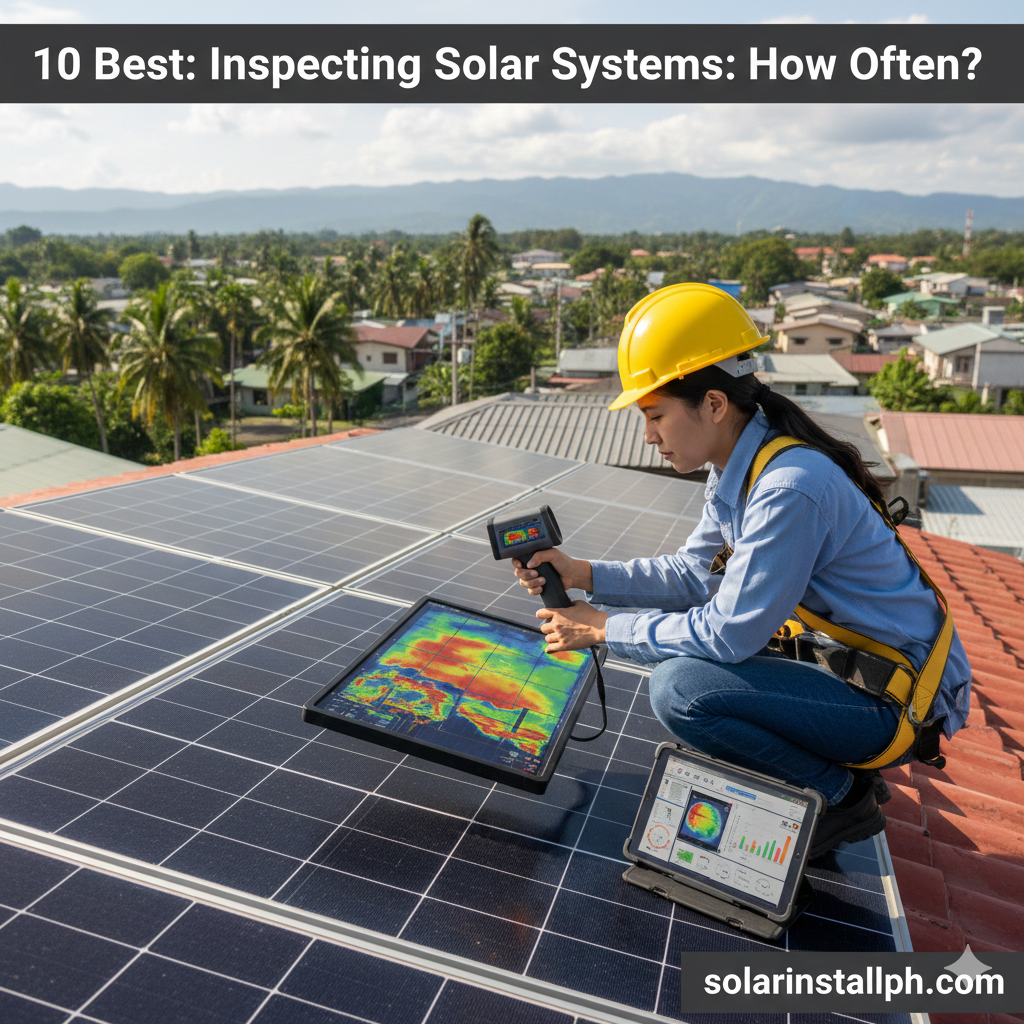
Professional Tip: During your annual professional maintenance, ask the technician to use a thermal camera. They can scan the array in minutes. A bright white/red spot on a connector indicates dangerous heat buildup that needs immediate replacement to prevent fire.
9. Labeling and Safety Switches
Over 3–5 years, the sun fades the red safety labels on your AC and DC disconnect switches.
Why it matters: In an emergency (like a house fire), firefighters need to know exactly where to shut off the solar power. If the labels are white and unreadable, it’s a safety risk.
The Action: Replace faded labels. Also, toggle your DC and AC isolators off and on once a year (during maintenance) to ensure they haven't seized up from corrosion.
10. The "Bill Test" (Financial Reality)
Sometimes the equipment looks fine, but the numbers don't add up.
The Check: Compare your Meralco bill from May 2024 to May 2025. If your lifestyle hasn't changed but your bill jumped by ₱2,000, your system efficiency has dropped.
Degradation: Remember that panels degrade naturally by about 0.5% to 0.8% per year. A 1% drop is normal; a 20% drop is a failure. Understanding solar panel maintenance can help you distinguish between normal aging and a system fault.
DIY vs. Professional: When to Call for Help
You can DIY if:
You have a flat roof deck or a safe, low-slope roof.
You are only doing cleaning (water + soft brush).
You are visually inspecting from the ground.
Call a Professional if:
You need to walk on a steep or slippery metal roof.
You see exposed wires.
You need to open the electrical panel or inverter.
You suspect your system lifespan is being compromised by a warranty issue.
How Much Does Pro Maintenance Cost?
In the Philippines (2025 rates), a professional "cleaning + health check" package for a standard 5kW residential system typically costs between ₱3,500 and ₱6,000. This usually includes:
Panel washing.
Inverter error log analysis.
Tightening of clamps and bolts.
Voltage and amperage testing.
Conclusion
You spent hundreds of thousands of pesos on your solar system. Protecting that capital requires more than just hoping for rain. By following this "10 Best" inspection guide, you ensure your system maximizes its ROI and keeps your home safe.
Start today: Open your monitoring app. Is everything green? If yes, you’ve just done step one.