
Why Power Your Pad?
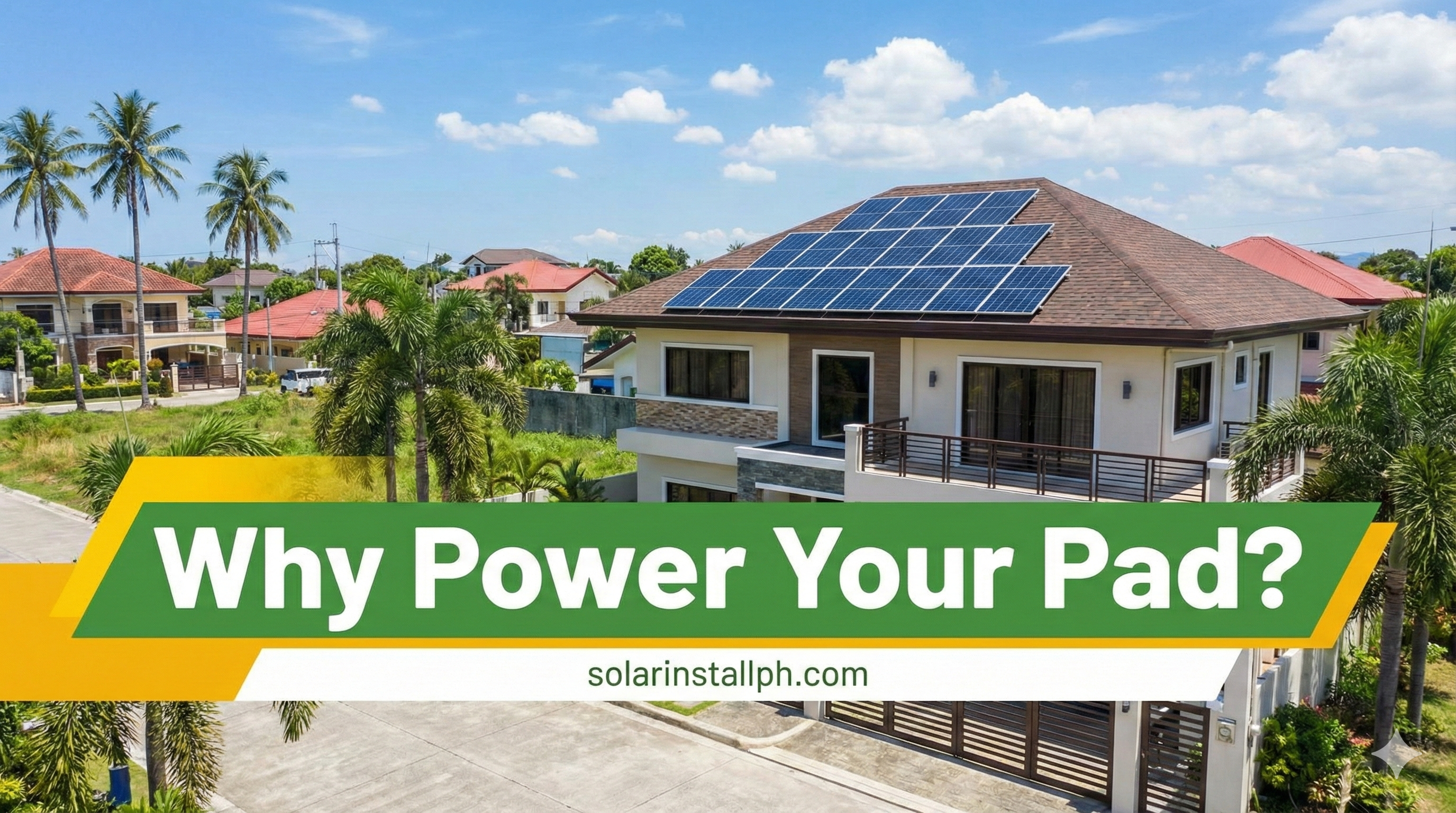
If you own property in the Philippines, you are sitting on an unutilized asset. No, it’s not the spare bedroom you’re renting out or the parking slot you’re not using—it’s your roof.
For decades, Filipino homeowners have viewed electricity as a fixed monthly "tax" paid to Meralco or the local coop. You use power, you pay the bill, you complain about the rate hike, and you repeat the cycle. But the energy landscape in 2025 has shifted. Solar technology, policy changes, and real estate market dynamics have turned that empty roof space into a potential income-generating machine.
Why bother powering your own pad? Beyond the obvious environmental "feel-good" factor, there are hard financial and practical reasons to make the switch. Here is the practitioner’s case for why you should own your power.
1. The Defensive "Moat" Against Inflation
Electricity prices in the Philippines are volatile and historically upward-trending. We recently saw rates dip slightly only to climb back up due to generation charges and exchange rate fluctuations. When the Peso weakens against the Dollar, your electricity bill goes up because our fuel is imported.
Installing solar is effectively "pre-paying" for 25 years of electricity at today’s price.
Fixed Cost vs. Variable Cost: Once you pay for the system (or finish your loan payments), your cost for that portion of energy is essentially zero. While your neighbors are panicking over a ₱13/kWh rate hike, your daytime cost remains constant.
The Inflation Hedge: As grid rates rise (historically 3-5% annually), your savings actually grow. The higher Meralco rates go, the more money you "make" by not paying them.
To see how these numbers stack up for a typical Filipino household, check our breakdown of residential solar costs.
2. Increasing Property Value (The Hidden Equity)
In the US and Europe, "green homes" sell faster and for higher premiums. This trend is now taking root in the Philippine real estate market.
A home with a functional, permitted solar system is a more attractive asset than a comparable home without one.
The Buyer's Perspective: If a buyer is choosing between two identical houses in a subdivision, but one comes with a guaranteed ₱0 or ₱500 monthly electric bill while the other comes with a ₱10,000 liability, the choice is obvious.
Appraisal Value: While local banks are still catching up, savvy appraisers are beginning to factor in the "income potential" of a solar roof when valuing properties. It’s an upgrade that pays for itself, unlike a swimming pool which costs money to maintain.
For a deeper dive into the economics of solar investment, read our analysis on solar value vs cost.
3. Reliability in an Unstable Grid
Let’s be blunt: The Philippine grid struggles. We face "Red" and "Yellow" alerts during the summer months when demand peaks.
While a standard grid-tie system shuts off during a blackout (a safety requirement), a Hybrid System keeps your lights on.
The "Brownout" Solution: By adding a battery to your setup, you gain energy security. When the neighborhood goes dark, your essential loads—wifi, fridge, lights, fans—stay running.
Work From Home (WFH) Continuity: For freelancers and remote workers, power reliability isn't a luxury; it's income protection. A solar-plus-battery setup is often cheaper in the long run than running a noisy, gas-guzzling generator.
Understand the financial implications of adding batteries in our guide on hybrid financial sense.
4. Net Metering: The Grid as Your Battery
If you are on the grid, you don't need expensive batteries to save money. You can use the Net Metering program.
This is a mandate under the Renewable Energy Act (RA 9513). It allows you to "sell" your excess daytime power to the utility.
How it works: When you are at the office, your panels are still generating power. Instead of wasting it, it flows into the grid. Meralco/DU measures this export and gives you peso credits.
The Offset: These credits offset your nighttime usage. In cooler months, you might even zero out your bill completely. It turns the grid into a virtual battery that stores your financial credits.
We have a specific guide for Meralco customers on how to maximize these Meralco solar savings.
5. It’s Not Just for House and Lot Owners
A common myth is that you need a sprawling roof to go solar. While it's harder for condo dwellers, it is not impossible.
Condo Restrictions: Most condos have strict rules about exterior modifications. You usually cannot install panels on a shared roof.
The Portable Solution: Balcony solar setups or portable power stations charged via foldable panels are becoming viable for renters and condo owners. They won't power your whole unit, but they can offset specific loads or provide emergency backup.
Advocacy: Some progressive condo corporations are now installing solar on common areas (gyms, hallways) to lower association dues for everyone.
If you live in a high-rise, read our realistic take on condo solar before buying any equipment.
The Verdict
Powering your pad is no longer a science experiment for the wealthy. It is a pragmatic financial decision for any property owner tired of renting their energy.
You have the space. The sun is free. The technology is mature. The only question left is: why are you still paying full price for power?