
Clean Panels: Expert Local Help
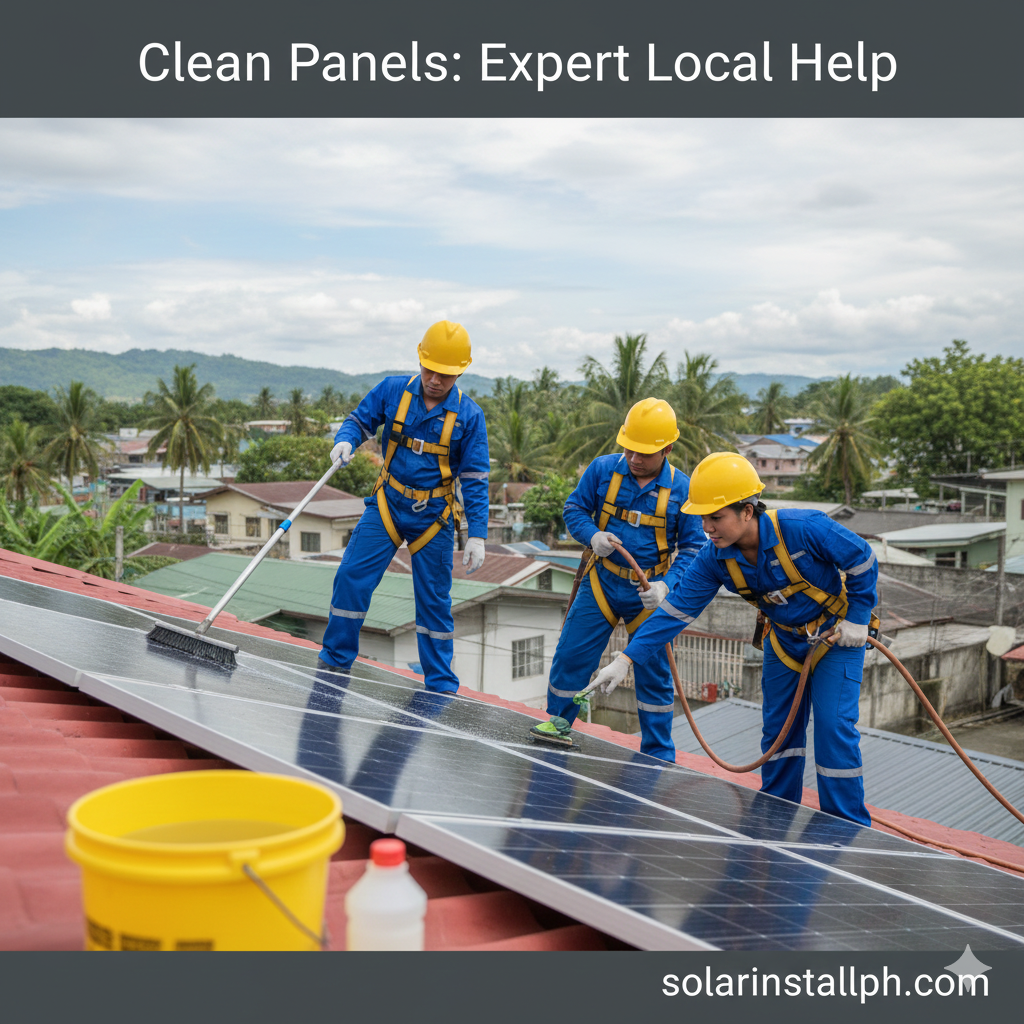
You see it every time you drive down SLEX or look out a high-rise window: solar panels coated in a thick, gray film of dust. In the Philippines, we have a habit of letting things slide until they break. With cars, we wait for the engine to knock. With air conditioners, we wait for the ice to form.
But with solar panels, the "breakdown" is silent. There is no smoke, no noise. You just quietly lose money.
A dirty solar array in Metro Manila or a dusty province like Pampanga can lose 15% to 25% of its energy production. On a standard 5kW system, that’s hundreds of pesos wasted every month. While many homeowners attempt the "DIY hose-down," there is a strong case to be made for hiring expert local help.
The reality of Philippine roofs—steep, slippery, and baking hot—makes professional cleaning not just a convenience, but a safety necessity. Here is why you should consider calling in the pros, and how to find the right ones in your barangay.
Why "Just Hosing It Down" Fails
There is a misconception that the Philippine rainy season acts as a free car wash for your roof. While a heavy typhoon downpour can knock off loose leaves and dry dust, it fails miserably against the real enemy: cementing.
The "Manila Grime" Factor
In urban centers like Quezon City, Makati, and Cebu, the dust isn't just dirt—it is a mix of soil, diesel exhaust particulates from jeepneys, and construction dust. When this mix gets wet from light rain or morning dew, it turns into a paste. As the sun hits the panel and heats it to 60°C, that paste bakes onto the glass.
A garden hose cannot remove this. It requires mechanical agitation (scrubbing). However, using the wrong scrubber—like a stiff floor brush or a kitchen sponge—can scratch the anti-reflective coating on your panels, permanently lowering their efficiency.
Bird Droppings and Tree Sap
If you have mango trees nearby, you know the sticky sap they drop. Combine that with bird droppings (which are highly acidic), and you have "hard shading." This opaque gunk blocks sunlight completely in small spots, which can cause solar panel degradation through hotspots—where the blocked cell overheats and burns out the backsheet.
Professional cleaners use specialized chemicals that dissolve these organic bonds without eating away the panel's protective coatings.
The Safety Reality: Don't Be a Statistic
The most compelling reason to hire a professional has nothing to do with electricity and everything to do with gravity.
Philippine roofs are notoriously difficult to navigate. Unlike American homes with asphalt shingles that offer grip, most Filipino homes use Galvanized Iron (GI) sheets or ceramic tiles.
The Slide Risk: Wet GI sheets are like ice. If you are up there in flip-flops or sneakers trying to drag a heavy hose, one slip can send you sliding off the edge.
The Structural Risk: Do you know exactly where the trusses and purlins are? Stepping in the wrong spot on an older roof can dent the metal or, worse, put your foot right through a rusted section.
The Electrical Risk: Solar panels are always "live" during the day. If you accidentally spray water into a cracked connector or a frayed wire chewed by a rat, the water stream can conduct electricity back to you.
Professional cleaners come equipped with harnesses, lifelines, and non-slip boots. They understand rooftop cleaning safety protocols that a casual DIYer simply isn't trained for. Saving ₱3,000 on a cleaning service is not worth a broken leg—or worse.
What Professional Cleaning Actually Looks Like
When you hire a legitimate solar cleaning service (not just the neighborhood handyman), you are paying for more than just labor. You are paying for equipment that protects your investment.
1. De-ionized (Pure) Water
Tap water in the Philippines is often "hard," meaning it contains minerals like calcium and magnesium (especially in provinces with deep wells). If you let tap water dry on your panels, it leaves white water spots—mineral deposits that block light just as badly as the dust you washed off.
Pros use De-ionized (DI) or Reverse Osmosis (RO) water systems. This pure water acts like a "dirt magnet" and dries spot-free, ensuring maximum transparency.
2. Rotating Brushes
You might see pros using long carbon-fiber poles with rotating brush heads. These brushes are designed specifically for solar glass—soft enough not to scratch, but fast enough to dislodge baked-on pollution. They allow the cleaner to reach the top row of panels without physically standing on them.
3. The "Health Check" Bonus
A good cleaning crew does a visual inspection while they are up there. They are your eyes on the roof. They might spot a loose clamp, a dangling wire, or a cracked tile that you would never see from the ground. This integrates cleaning into your broader solar panel maintenance routine, catching small issues before they become expensive repairs.
When to Call the Experts
You don't need a professional every single week. But there are specific signs that it's time to book a service.
The "App Drop": Check your monitoring app. If your production curve is consistently lower than it was last month (and the weather is similar), or if you see "jagged" production lines, soiling is a likely culprit.
Construction Nearby: If a neighbor is renovating or a condo is going up down the street, cement dust will coat your panels in days. Cement dust is alkaline and corrosive; get it off fast.
Post-Typhoon: After the storm passes, your roof might be covered in leaves and branches. Pros can clear the debris safely.
Inaccessibility: If your panels are on a third-story roof or installed on a steep pitch, never attempt it yourself.
If you are unsure about the timing, consult our guide on how often to clean your panels to establish a baseline schedule for your specific area.
How to Vett a Local Cleaning Service
Not all "solar cleaners" are created equal. As the industry grows, many general cleaning companies (who usually wash windows or cars) are pivoting to solar. You need to verify they know what they are doing.
Here are the questions you must ask before letting anyone climb your roof:
1. "What water do you use?"
If they say "we'll just use your garden tap," be cautious. Unless they plan to squeegee every panel dry immediately, hard water spots will be an issue. Ideally, they should bring their own filtration system.
2. "Do you use pressure washers?"
This is a major red flag. High-pressure washers (like Karcher) should never be used on solar panels. The high pressure can force water past the silicone seals and into the laminate, causing corrosion and ground faults. It can also micro-crack the glass. If they bring a pressure washer, send them away.
3. "Do you have insurance?"
If their worker slips and falls on your property, or if they drop a wrench and crack a panel, who pays? A legitimate business will have liability insurance.
4. "How do you access the roof?"
Ask for their safety plan. Do they use ladders with stabilizers? Do they wear harnesses? If they show up in slippers with a bamboo ladder, you are taking a massive liability risk.
You can often gauge the quality of a service provider by checking their online reputation. Just as you would research an installer, you should understand the importance of solar reviews when selecting a maintenance team.
The Cost vs. ROI Calculation
Is it worth paying ₱3,000 to ₱5,000 for a cleaning service?
Let's do the math for a typical Philippine scenario:
System: 5kW Grid-Tie
Monthly Savings (Clean): Approx ₱5,000 - ₱6,000
Soiling Loss: 20% (Common in dusty months)
Loss Value: ₱1,000 - ₱1,200 per month.
If you leave your panels dirty for the entire dry season (December to May), you could lose ₱6,000 to ₱7,000 in savings. A professional cleaning cost of ₱3,500 pays for itself, plus you extend the lifespan of your equipment.
Furthermore, many installers offer "maintenance packages" that bundle cleaning with an electrical checkup. This is often the best value, as it covers both performance and safety.
Conclusion
Solar panels are a "set it and forget it" technology only if you respect the environment they live in. In the Philippines, that environment is harsh.
While the DIY spirit is strong in our culture, cleaning rooftop solar panels is one task where the risks—slipping, electrocution, and equipment damage—often outweigh the savings. Expert local cleaners bring the right water, the right tools, and the safety gear to do the job without drama.
Don't let a layer of dust stand between you and your ROI. Look up reliable providers in your area, ask the hard questions, and get your system back to peak performance.
If you are currently evaluating service providers or need to check if your original installer is still the best contact, it is worth revisiting how to verify installer credentials to ensure you are dealing with qualified professionals.