
10 Best Efficient Grid-Tie Panels
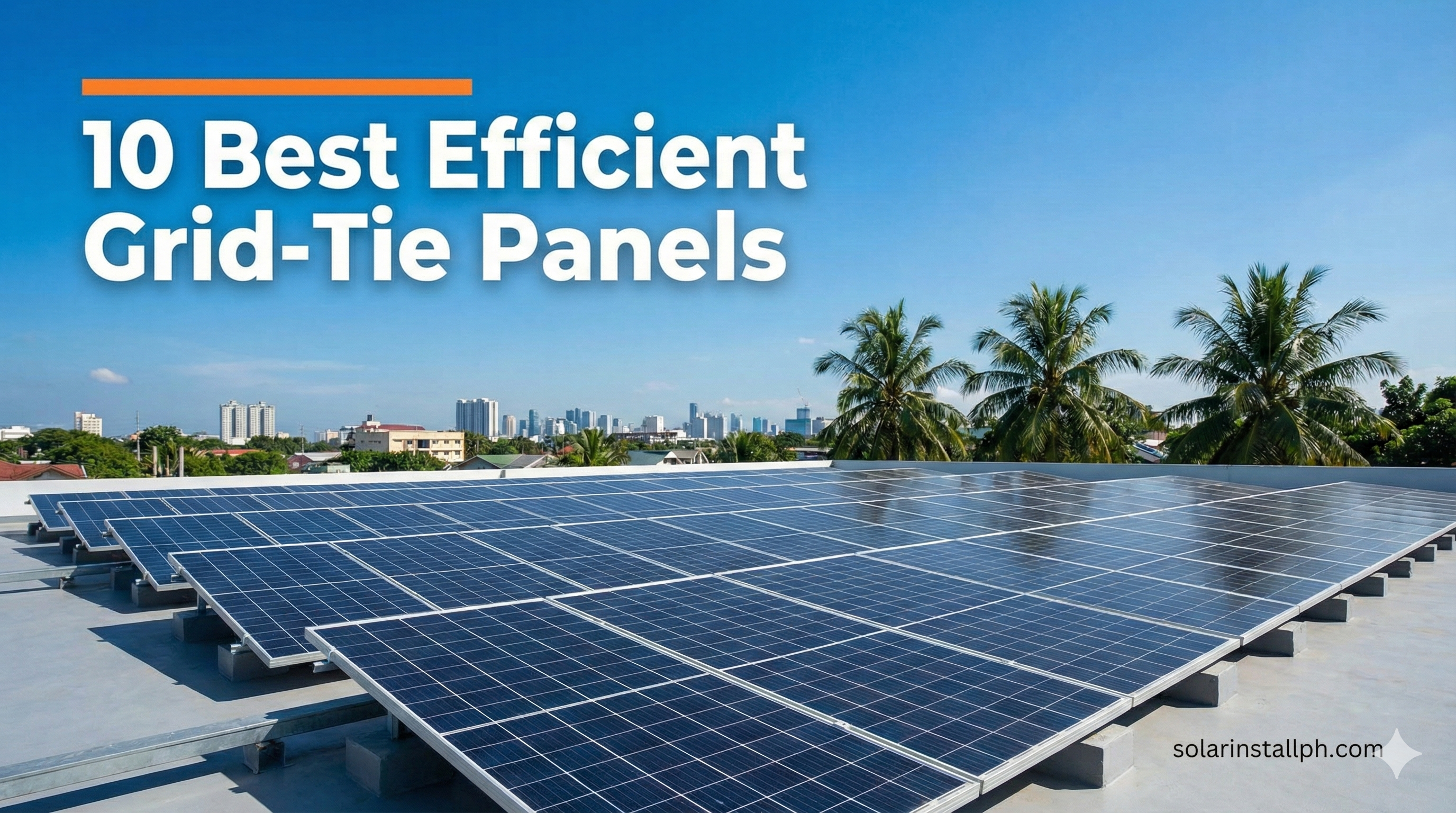
If you are shopping for solar in the Philippines right now, you have probably noticed that the "standard" panel has changed. Two years ago, a 450W panel was considered big. Today, we are seeing 580W, 600W, and even 700W monsters.
But here is the catch: Size is not efficiency.
A giant panel might produce more power simply because it is physically huge. True efficiency is about power density—how much electricity can be squeezed into a single square meter of your roof.
For a homeowner in a Metro Manila townhouse with limited roof space, efficiency is everything. A 23% efficient panel might allow you to fit a 5kW system on a roof that could only hold 3kW with older tech.
Here are the 10 most efficient grid-tie solar panels available in the Philippine market for 2025, categorized by how they fit your specific needs.
The "Ultra-Premium" Tier (Max Efficiency, High Price)
These panels use exotic cell technologies like IBC (Interdigitated Back Contact) or ABC (All Back Contact). They are expensive, but they are the only choice if you need maximum power in minimum space.
1. Aiko Neostar 3P54 (ABC Type)
Efficiency: Up to 24-25%
Technology: N-Type ABC (All Back Contact)
Best For: Tiny roofs where every inch counts.
The Verdict: Aiko is the new efficiency king. By moving all the busbars (the silver lines) to the back of the panel, the front is 100% black glass. It absorbs more light and looks incredible. In 2025, this is arguably the most efficient residential panel you can buy in the Philippines.
2. SunPower Maxeon 6 / 7 (IBC Type)
Efficiency: 22.8% – 24.1%
Technology: Maxeon IBC (Interdigitated Back Contact)
Best For: Homeowners who want the "Rolex" of solar.
The Verdict: SunPower (manufactured largely here in the Philippines) has held the crown for decades. Their Maxeon line is virtually indestructible, with a 40-year warranty. They are significantly more expensive than Chinese brands, but their degradation rate is almost zero.
3. REC Alpha Pure-R
Efficiency: ~22.3%
Technology: HJT (Heterojunction)
Best For: Shade-prone roofs.
The Verdict: HJT technology handles heat better than almost anything else. While hard to find in the Philippines (limited distributors), REC panels are famous for their "Twin Design" which handles partial shading better than standard panels.
The "Smart Standard" Tier (N-Type TOPCon / HPBC)
This is the sweet spot for 2025. These panels have shifted from the old P-Type technology to N-Type, offering higher efficiency and better heat resistance without the insane price tag of the Ultra-Premium tier. You can read more about why this shift matters in our guide to best solar panels in the Philippines for homes.
4. Longi Hi-MO 6 (HPBC)
Efficiency: 23.0% – 24.3%
Technology: HPBC (Hybrid Passivated Back Contact)
Best For: The aesthetic-conscious homeowner.
The Verdict: Longi is ubiquitous in the Philippines for a reason. The Hi-MO 6 uses a unique busbar-free front design (similar to Aiko but cheaper). It performs exceptionally well in low-light conditions (cloudy/rainy days) common in our wet season.
5. Jinko Tiger Neo (N-Type TOPCon)
Efficiency: Up to 23.8%
Technology: N-Type TOPCon
Best For: The safe, high-performance choice.
The Verdict: If you get three quotes today, two of them will likely feature Jinko Tiger Neo. It is the workhorse of the 2025 market. It offers excellent bifacial gains (bonus power from the back) and is proven to handle Philippine heat well.
6. Trina Vertex S+ (Dual Glass)
Efficiency: ~22.5% – 23.3%
Technology: N-Type i-TOPCon
Best For: Coastal areas or typhoons.
The Verdict: Trina’s "S+" series uses double glass (glass on front and back) instead of a plastic backsheet. This makes it heavier but significantly more resistant to salt mist corrosion and micro-cracking during windstorms. A solid choice for beach houses.
7. JA Solar DeepBlue 4.0 Pro
Efficiency: ~22.8%
Technology: Bycium+ N-Type
Best For: Budget-conscious efficiency.
The Verdict: JA Solar often comes in slightly cheaper than Longi or Jinko while offering nearly identical specs. Their DeepBlue 4.0 Pro series uses high-density encapsulation to squeeze 22.8% efficiency out of a standard frame.
The "Commercial Value" Tier
If you have a large roof (warehouse, school, or large residence), you don't need to pay for 24% efficiency. These panels offer great performance (21-22%+) at a lower price point, maximizing your ROI.
8. Canadian Solar TOPHiKu6
Efficiency: ~22.3% – 23.3%
Technology: N-Type TOPCon
Best For: Large residential or commercial projects.
The Verdict: Canadian Solar panels are known for being robust. The TOPHiKu6 is their N-Type answer to the market. It’s reliable, widely available in PH, and offers a great balance of cost vs. output. To understand how panel choice affects your total bill, check our breakdown of solar panel installation costs in the Philippines.
9. Tongwei (TW Solar) TNC G12R
Efficiency: Up to 23.8%
Technology: TNC (Tongwei N-Passivated Contact)
Best For: Aggressive ROI targets.
The Verdict: Tongwei is the world's largest cell manufacturer. They used to just supply Jinko and Trina, but now they make their own panels. They are shaking up the PH market with Tier 1 quality at very aggressive pricing.
10. Risen Titan / Hyper-ion
Efficiency: ~22.5%
Technology: HJT (Hyper-ion series) or PERC/TOPCon
Best For: Tight budgets.
The Verdict: Risen is a solid Tier 1 brand often used in utility projects. If you find a quote using Risen N-Type panels, you are likely getting excellent value for money.
Why "Efficiency" is Tricky in the Philippines
Before you demand the #1 panel on this list, understand the context.
1. Heat Derating Matters More
In our climate, a panel that loses less power when hot is better than a panel with a high "sticker efficiency." This is why N-Type (Jinko Tiger Neo, Trina Vertex N, Canadian Solar TOPHiKu6) is superior to older technologies. They degrade less in the heat.
2. The Bifacial Bonus
Most of the panels listed above (especially Jinko, Trina, and JA) come in "Bifacial" versions. If you have a white-painted roof or a light-colored concrete deck, these panels pick up reflected light from the back. A 22% efficient bifacial panel on a white roof can outperform a 24% monofacial panel. Read our guide to bifacial solar in the Philippines to see if your roof qualifies.
3. Long-Term Degradation
High efficiency is useless if it drops after 5 years. N-Type and ABC panels (like Aiko and Jinko) degrade much slower (0.4% per year) compared to older panels (0.55% per year). Over 25 years, that difference is massive. Always check the degradation chart, or read our explainer on solar panel degradation.
Summary: Which One Should You Buy?
Space is tight (Townhouse/Condo): Go for Aiko Neostar or SunPower Maxeon. You need maximum power per square meter.
Standard Home: Go for Longi Hi-MO 6 or Jinko Tiger Neo. They offer the best balance of high efficiency, modern tech, and reasonable pricing.
Large Roof / Tight Budget: Go for Canadian Solar or Tongwei. You get Tier 1 reliability and N-Type performance without the premium tax.
Remember, the "best" panel is the one that fits your budget and your roof. Don't overspend on efficiency you don't need, but don't cheap out on old tech that will faint in the Philippine heat.
Next Step
Confused about which of these brands offers the best warranty support locally? Would you like me to compare the specific warranty terms (product vs. performance) for Jinko, Longi, and Canadian Solar side-by-side?