
Pinoy Grid-Tied System Costs Revealed
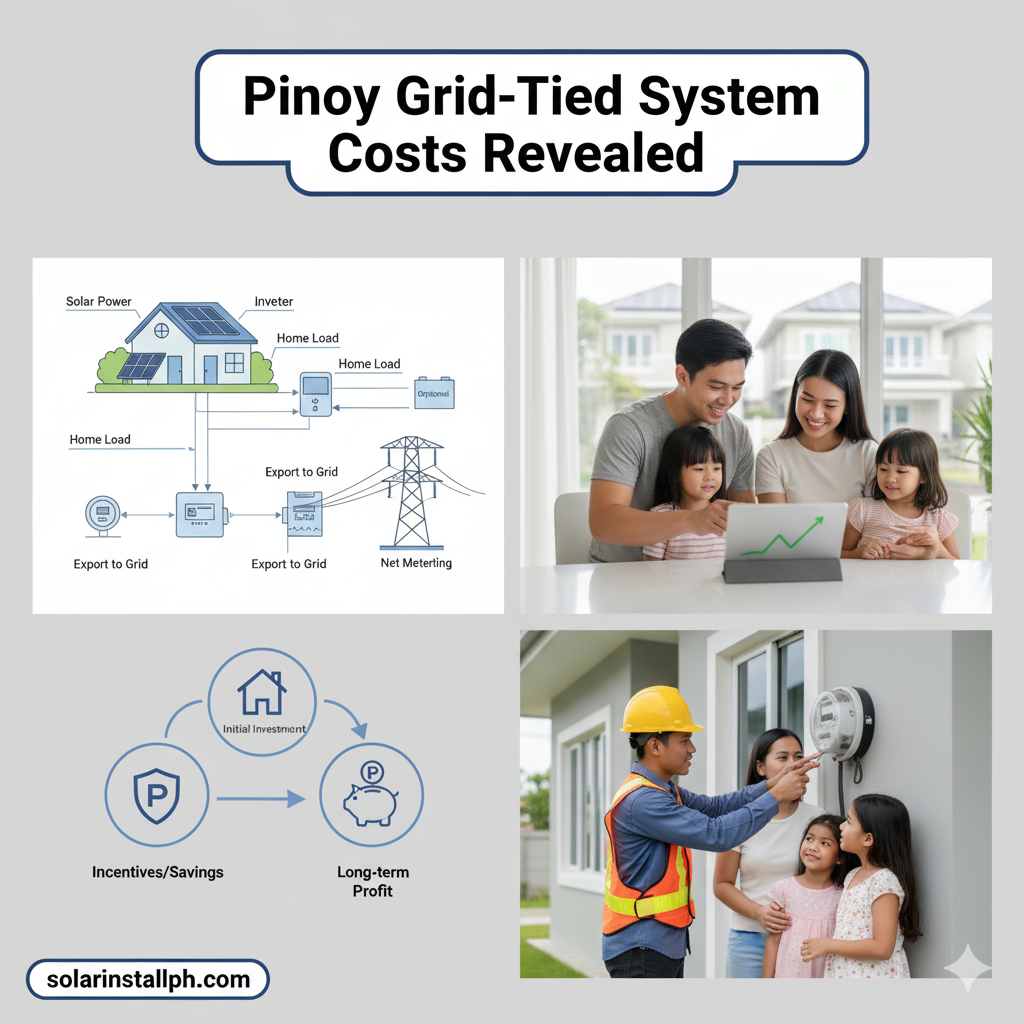
For generations of Filipinos, the monthly electricity bill has been an unwelcome, non-negotiable expense, a constant drain on the household budget that only ever seems to go up. But a quiet revolution is taking place on rooftops across the nation. More and more homeowners are taking control of their energy future by investing in solar power, and one technology is leading the charge: the grid-tied system.
A grid-tied solar setup is the most practical, cost-effective, and popular choice for residential solar in the Philippines. It works in partnership with your existing utility connection, allowing you to generate your own free, clean electricity during the day while still having the grid as a reliable backup at night. It’s the key to unlocking massive savings and achieving a rapid return on your investment.
But what does it actually cost? The internet is filled with confusing numbers, vague estimates, and offers that seem too good to be true. This guide will cut through the noise. We are revealing the real, all-in costs for a professionally installed grid-tied solar system in the Philippines for 2025, giving you the concrete numbers you need to budget for your own energy independence.
Why Grid-Tied is the Pinoy Favorite
Before we dive into the numbers, it’s crucial to understand why the grid-tied system is the default choice for savvy homeowners. Its popularity rests on two pillars: simplicity and financial efficiency.
Unlike more complex off-grid or hybrid systems, a standard grid-tied system does not require a large, expensive bank of batteries. Batteries can add hundreds of thousands of pesos to a project's cost, significantly extending the time it takes to recoup your investment.
Instead, a grid-tied system uses the public utility grid as a giant, shared battery through a government-mandated program called Net Metering. Here’s how it works:
During the day, your solar panels generate electricity that powers your home directly. Your appliances run on free energy from the sun.
On a bright, sunny afternoon, your system might produce more power than your home is using. This excess energy isn't wasted.
It is automatically exported onto the Meralco grid, and a special bidirectional meter tracks every kilowatt-hour you send.
At the end of the month, the value of the energy you exported is credited against the cost of the energy you imported from the grid (at night or on rainy days).
This elegant process, explained in detail in this Meralco Net Metering guide, is what makes a grid-tied system so financially attractive. By eliminating the need for costly batteries, you get the fastest possible payback period.
Deconstructing the All-In Quote
When you receive a quote from a professional solar installer, you are not just buying equipment; you are investing in a complete, turnkey energy solution. Understanding what’s included in the price is the first step to comparing offers intelligently.
Hard Costs (The Equipment): This typically makes up 60-70% of the total cost.
Solar Panels: The workhorses of the system. The price depends on the brand, technology (monocrystalline panels are the modern standard), and wattage.
Inverter: The brain of the system, converting DC power from the panels into usable AC power. A reliable string inverter is the most common and cost-effective choice for residential setups.
Mounting System: The high-quality, corrosion-resistant aluminum racks and clamps that securely anchor the panels to your roof, designed to withstand typhoon-force winds.
Balance of System (BOS): A catch-all for all the other essential hardware, including PV-grade wiring, conduits, safety circuit breakers, and monitoring devices.
Soft Costs (The Professional Service): This accounts for the remaining 30-40% and is what separates a safe, legal installation from a dangerous one.
System Design and Engineering: A Professional Electrical Engineer (PEE) creates a customized plan for your home.
Permitting and Interconnection: The installer handles all the legwork and fees for securing the necessary building and electrical permits from your LGU, and, most importantly, manages the entire multi-step net metering application with your utility.
Installation Labor: The wages for the team of trained and certified technicians who will perform the physical installation safely and correctly.
Workmanship Warranty & Support: The installer's guarantee on the quality of their work, protecting you from issues like roof leaks or wiring faults for years to come.
A detailed breakdown like this is a hallmark of a transparent installer. Be wary of any quote that isn't clear about what is included.
Revealed: Pinoy Grid-Tied System Costs for 2025
Now, for the numbers you’ve been waiting for. Based on current market data for 2025, here are the realistic, all-in budget ranges for a professionally installed grid-tied solar system in the Philippines. These prices are categorized by the homeowner's average monthly electricity bill, making it easy to find where you fit.
1. The Starter System (Entry-Level)
For Monthly Bills of: ₱4,000 – ₱8,000
Recommended System Size: 1.6 kWp – 3.0 kWp
Estimated All-In Cost: ₱100,000 – ₱180,000
Details: This is the perfect entry point into solar. It's powerful enough to offset the daytime consumption of essential appliances like your refrigerator, lights, fans, and home office equipment. It can make a significant dent in your monthly bill and offers an excellent return on investment.
2. The Family System (The Sweet Spot)
For Monthly Bills of: ₱9,000 – ₱15,000
Recommended System Size: 3.0 kWp – 5.0 kWp
Estimated All-In Cost: ₱180,000 – ₱280,000
Details: This is the most popular choice for the average Filipino family home. It can handle a heavier daytime load, including the consistent use of one or two inverter air conditioners, which are often the biggest energy consumers. This system size is designed to maximize savings for a typical household.
3. The Power User System (Large Homes & High Consumption)
For Monthly Bills of: ₱16,000 – ₱25,000+
Recommended System Size: 5.0 kWp – 10.0 kWp
Estimated All-In Cost: ₱270,000 – ₱550,000+
Details: This is tailored for large residences with high energy needs, multiple air conditioning units running simultaneously, or even home-based businesses. The investment is larger, but so are the monthly savings, which can run into the tens of thousands of pesos.
This detailed panel cost guide offers more insight into these price points and the factors that influence them.
The True Value: Calculating Your Payback Period (ROI)
The upfront cost is only one side of the coin. The true financial power of a grid-tied system is revealed by its Return on Investment (ROI), or payback period. This is the time it takes for your accumulated electricity savings to completely pay for the system.
The formula is simple: Total System Cost ÷ Estimated Annual Savings = Payback Period in Years
Let's run a quick example for "The Family System":
System: A 4.0 kWp system.
All-In Cost: ₱220,000.
Estimated Annual Savings: A 4.0 kWp system in the Philippines will generate roughly 5,600 kWh per year. At an average Meralco rate of ₱11/kWh, that's ₱61,600 in savings per year.
Payback Period: ₱220,000 ÷ ₱61,600 = ~3.57 years
In less than four years, the system has paid for itself. For the next 20+ years of its warranted life, the ₱61,600 it saves you annually is pure profit. This is why a solar system is considered one of the best investments you can make in your home. A dedicated solar ROI guide can help you run even more precise calculations.
Making the Investment Manageable
While a cash purchase offers the fastest ROI, the six-figure price tag doesn't have to be paid all at once. The financing market has matured, making solar more accessible than ever. Options include:
In-House Financing: Most installers offer convenient payment plans over 12-36 months.
Bank Loans: Major banks now offer "green loans" specifically for solar.
Financing Companies: Providers like Home Credit can also finance your solar package.
Exploring these solar loans in the PH can help you find a monthly payment plan that fits your budget, often allowing you to start saving more on electricity than you're paying in amortization.
Conclusion: A Clear Path to Energy Freedom
The costs of a grid-tied solar system in the Philippines are no longer a mystery. They are a predictable, transparent, and powerful investment in your financial future. By understanding the all-in costs, matching a system size to your actual electricity bill, and calculating the rapid return on investment, you can see that going solar is not an expense—it's a high-yield asset.
The journey starts with knowledge, and your most important partner on this journey is a professional you can trust. Learning how to choose a solar company with a reputation for quality engineering and transparent pricing is the final, crucial step. Get a quote based on your Meralco bill, and take the first real step towards a future of lower bills and energy independence. For a complete overview of the process from start to finish, consult this comprehensive solar installation guide.