
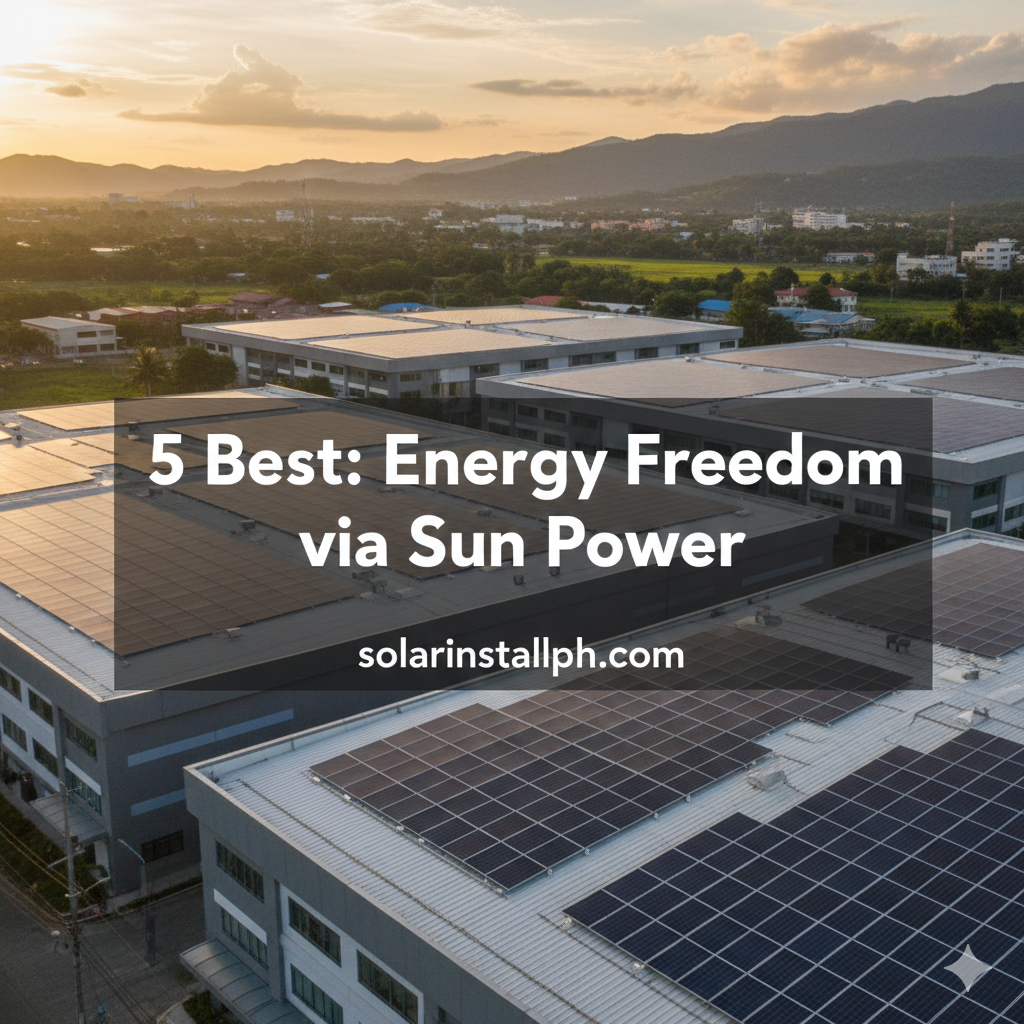
5 Best: Energy Freedom via Sun Power
In the Philippines, the start of 2026 has brought a familiar sting: the summer billing cycle. With residential electricity rates often hovering between 12 to 15 pesos per kilowatt-hour, the "Republic's Power" is increasingly being generated on private rooftops rather than massive coal plants. Energy freedom is no longer a niche environmental statement; it is a financial survival strategy.
Achieving true independence from the grid’s volatility requires more than just buying the cheapest panels you find online. It requires a technically sound approach to hardware, policy, and long-term maintenance. Here are the five best strategies to secure your energy freedom using sun power in the current Philippine landscape.
1. Prioritize High-Efficiency N-Type Technology
The Philippine climate is a paradox for solar. While we have world-class irradiation levels, the extreme heat actually reduces the efficiency of standard solar cells. For 2026, the gold standard for achieving energy freedom is N-type TOPCon or Heterojunction (HJT) technology.
Unlike older P-type modules, these high-efficiency cells have a superior temperature coefficient. This means that as your roof temperature soars to 60°C in the noon sun, N-type panels lose significantly less power than budget alternatives. When you are looking for long-term reliability, it pays to compare top solar panel brands available locally to see which ones offer the best performance in tropical heat. High-efficiency modules also allow you to generate more power from a smaller roof area, which is critical for urban homes in Metro Manila or Cebu.
2. Lock in ROI with a Meralco Net Metering Agreement
True energy freedom in a grid-tied setting is defined by your relationship with your Distribution Utility (DU). Without a legal Net Metering agreement, any excess power your system produces during the day is essentially "donated" to the grid.
Under the Renewable Energy Act (RA 9513), the Net Metering program allows you to sell that excess power back to Meralco or your local cooperative at a credit that offsets your evening consumption. For most residential systems, this is the difference between a 10-year payback and a 5-year payback. Navigating the bureaucracy can be daunting, but mastering the Meralco net metering application is the most important administrative step you will take. A system that isn't officially recognized is a system that isn't working at its full financial potential.
3. Invest in Smart Hybrid Storage for Grid Resilience
If you live in a province prone to "red alerts" or frequent brownouts, a simple grid-tied system won't keep your lights on when the utility goes down. For 2026, the shift toward Hybrid Systems—which combine solar panels with a battery bank—is the ultimate path to independence.
Hybrid systems allow you to store energy during the day and use it during the peak evening hours (6:00 PM to 9:00 PM) when grid rates are often at their highest. More importantly, they provide an "island" of power during outages. When choosing your storage, ensure you are selecting the right solar battery for your specific load requirements. Lithium Iron Phosphate (LiFePO4) remains the preferred chemistry in the Philippines due to its safety and ability to handle high-cycling in hot weather without degrading as quickly as older lead-acid batteries.
4. Ensure Typhoon-Rated Mounting and Engineering
A solar system is a 25-year investment, but that timeline is meaningless if the panels fly off during the first super typhoon. In the Philippines, wind load is the single greatest physical risk to your energy freedom.
Standard rails and clips used in less volatile climates will not suffice in areas like Cagayan or Bicol. You must insist on mounting systems rated for at least 250 kph to 300 kph. This involves more than just stronger bolts; it requires a structural assessment of your roof’s purlins and rafters. Because this is a life-safety issue, you should only work with a certified DOE accredited installer who can provide signed and sealed electrical and structural plans. Proper engineering ensures that your path to freedom doesn't become a liability for your neighbors.
5. Focus on Realistic Sizing and Maintenance
The final key to energy freedom is honesty about your consumption. Many homeowners over-invest in massive systems that produce more power than they can legally credit, or under-invest and wonder why their bill hasn't dropped.
A well-sized system typically targets 50% to 70% of your daytime load. Beyond the initial size, your "freedom" depends on maintenance. In urban areas, soot and dust can reduce output by 15% in just a few months. Regular cleaning and annual checks on your inverter’s cooling fans are essential. If you are just starting your journey, understanding residential solar costs and the maintenance they require will help you set a realistic budget and avoid the "cheap" trap that plagues the local market.
FAQ
Is it possible to go 100% off-grid in the city? Technically yes, but it is rarely cost-effective. The amount of battery storage needed to cover 3-4 days of rain without any grid backup is massive. Most urban users find that a Hybrid system offers the best balance of safety and ROI.
What happens to my solar panels during a typhoon? If installed correctly with typhoon-rated mounting, the panels should stay attached. Modern Tier 1 panels are designed to withstand high wind pressure and impacts from small debris. The real danger is usually the roof structure itself or flying debris from other properties.
How do I know if an installer is legitimate? Check the Department of Energy (DOE) list of accredited RE developers. Always ask for a portfolio of local projects and ensure they have a Professional Electrical Engineer (PEE) on staff to handle the permitting and safety certifications.
Achieving energy freedom is a process of moving from being a passive consumer to an active "prosumer." In a country blessed with some of the best solar resources in Asia, the sun is the most reliable partner you can have for your long-term financial independence.