
Filipinos Review Inverters: Your Power Choices
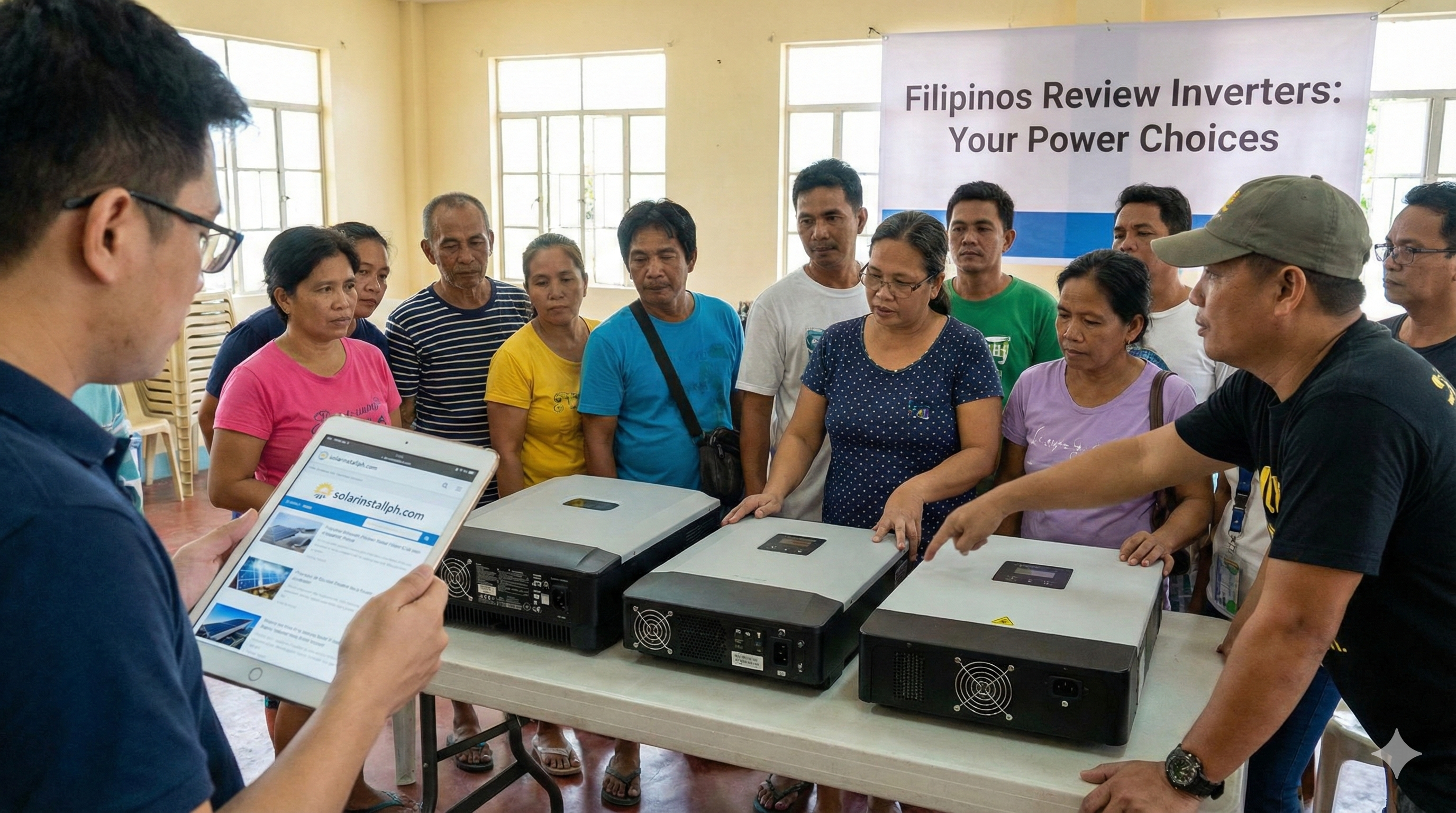
The solar panel gets the glory, but the inverter does the heavy lifting. It is the hardworking translator that turns raw sunlight into the electricity that powers your aircon, charges your phone, and spins your meter backward.
In the Philippines, the inverter is also the component most likely to fail.
Our environment is hostile to power electronics. We have punishing humidity, salt air (even in Metro Manila), ambient temperatures that hit 38°C in the shade, and a grid that fluctuates wildly. If you buy the wrong inverter, you aren't buying an asset; you’re buying a future headache.
I’ve spent years listening to Filipino homeowners and installers debate the merits of different "boxes." Here is a candid look at what Filipinos are actually saying about the top inverter brands available locally—the good, the bad, and the noisy.
The Philippine Context: Why Inverters Die Here
Before we look at brands, understand the battlefield. In Europe or the US, inverters often live in cool basements or mild climates. In the Philippines, they usually live in a garage or on an exterior wall.
Heat vs. Electronics: Electronics hate heat. A "98% efficient" inverter might drop to 90% efficiency when it hits 40°C ambient temperature. If it gets too hot, it "derates" (throttles down) to save itself.
The Meralco "Wobble": Our grid voltage isn't always 230V. In some areas, it swings from 210V to 250V. Cheap inverters can’t handle this; they constantly error out or blow capacitors.
The "Support" Gap: A warranty is only as good as the local office. If you buy a grey-market unit from an unauthorized Shopee seller, you have zero warranty.
Category 1: The "Toyota Vios" of Inverters (Growatt, Solis)
If you drive around any subdivision in Cavite or Bulacan, you will see a lot of Growatt and Solis units. These are the mass-market favorites.
The Verdict: They work, they are affordable, and parts are generally available.
Growatt: It is arguably the most common brand in the Philippines for residential installs. Homeowners love the price point. The complaint? The fans on larger models can be loud—like a small vacuum cleaner running in your garage. Also, because they are so common, support lines can be clogged.
Solis: Often cited as the reliable workhorse for pure grid-tie systems. It’s simple and rugged. It doesn't have the fancy AI features of premium brands, but it does the job.
Best For: Budget-conscious homeowners who want a standard grid-tie system and don’t mind a bit of fan noise.
For a deeper dive into the most popular mass-market option, read our specific breakdown of Growatt inverter options.
Category 2: The "Swiss Army Knife" (Deye)
If you go to any Philippine solar Facebook group and ask "What hybrid inverter should I buy?", 8 out of 10 people will say Deye.
The Verdict: The king of flexibility, but with a few quirks.
Filipinos love Deye for one main reason: Freedom. Unlike other brands that force you to buy their expensive batteries, Deye works with almost any 48V battery—from premium server rack batteries to DIY setups.
Pros: It can handle "unbalanced loads" (crucial for our specific grid setup), has a generator input, and is IP65 rated. It is a true all-in-one machine.
Cons: The app (Solarman) is often criticized for being clunky and slow to update compared to others. The fans can be quite aggressive because the unit runs warm.
The Risk: Because it's so popular, there are "grey market" units floating around. Ensure your installer buys from an authorized PH distributor, or you’ll have no support when a relay fails.
If you are considering a battery setup, you must understand the difference between these hybrid systems and standard ones. Check our guide on hybrid inverter and battery configurations.
Category 3: The Tech Giants (Huawei, Sungrow)
These are the "smartphones" of the inverter world. They are sleek, screenless (you use the app), and packed with tech.
The Verdict: Premium feel, silent operation, but restrictive ecosystems.
Huawei: This is a favorite for premium residential installs. The biggest plus? Silence. Huawei units use passive cooling (heatsinks, no fans) for their residential line, so they are dead quiet. The app is polished and gives you incredible data.
The Catch: If you want to go hybrid later, you are locked into Huawei’s own LUNA batteries, which are significantly more expensive than generic options. You cannot just hook up a cheap lead-acid bank.
Best For: Homeowners who value silence, aesthetics, and high-tech monitoring, and who have the budget for a matching premium battery later.
Is the premium price worth it? We analyze the pros and cons in our Huawei inverter review.
Category 4: The Gold Standard (Fronius, SMA)
These are the European legends. Fronius (Austrian) and SMA (German) are what you buy if you plan to live in your house for 20 years and never want to worry.
The Verdict: Expensive, bulletproof, but sometimes "too honest."
Fronius: Known for its "active cooling" (yes, it has a fan, and it’s proud of it). Fronius argues that keeping electronics cool extends life, even if it makes noise.
The "Grid Error" Issue: These European inverters have very strict safety tolerances. Sometimes, they are too strict for the Philippines. If Meralco’s voltage wobbles slightly, a Fronius might refuse to connect to "protect" the grid, while a cheaper Chinese inverter might just keep running. You often need an installer who knows how to adjust the "grid profile" settings for PH conditions.
See where these legends rank in the current market in our list of top inverter brands for 2025.
The Reality of "Service" in the Philippines
This is the most critical part of this review. A spec sheet doesn't tell you what happens when your inverter dies on a Tuesday before Holy Week.
In the Philippines, "Warranty" is a loose term.
Distributor vs. Manufacturer: Most brands don’t have a direct office here; they have "authorized distributors." If that distributor closes shop, your warranty might be in limbo.
Parts vs. Labor: A "10-year warranty" usually means 5 years full coverage and 5 years parts only. You will still pay the installer a "mobilization fee" to come out and swap the unit.
I have seen homeowners wait 3 months for a replacement board for a niche brand. Stick to the big names simply because they have stock in Manila warehouses.
Read the fine print on what you are actually getting in our guide to inverter warranty support.
Summary: Which One fits You?
The "I just want to save on my bill" owner: Go with Growatt or Solis. They are cost-effective and proven.
The "I hate brownouts" owner: Go with Deye. The battery flexibility is unbeatable for the price.
The "Tech & Aesthetics" owner: Go with Huawei. It looks great, it’s silent, and the app is top-tier.
The "Buy it for life" owner: Go with Fronius. It will likely outlast the other appliances in your house.
Final Tip
Don't just review the brand; review the installer's relationship with that brand. Ask them: "If this breaks, do you have a spare service unit I can borrow while we wait for the replacement?"
The answer to that question matters more than any efficiency rating on a spec sheet.