
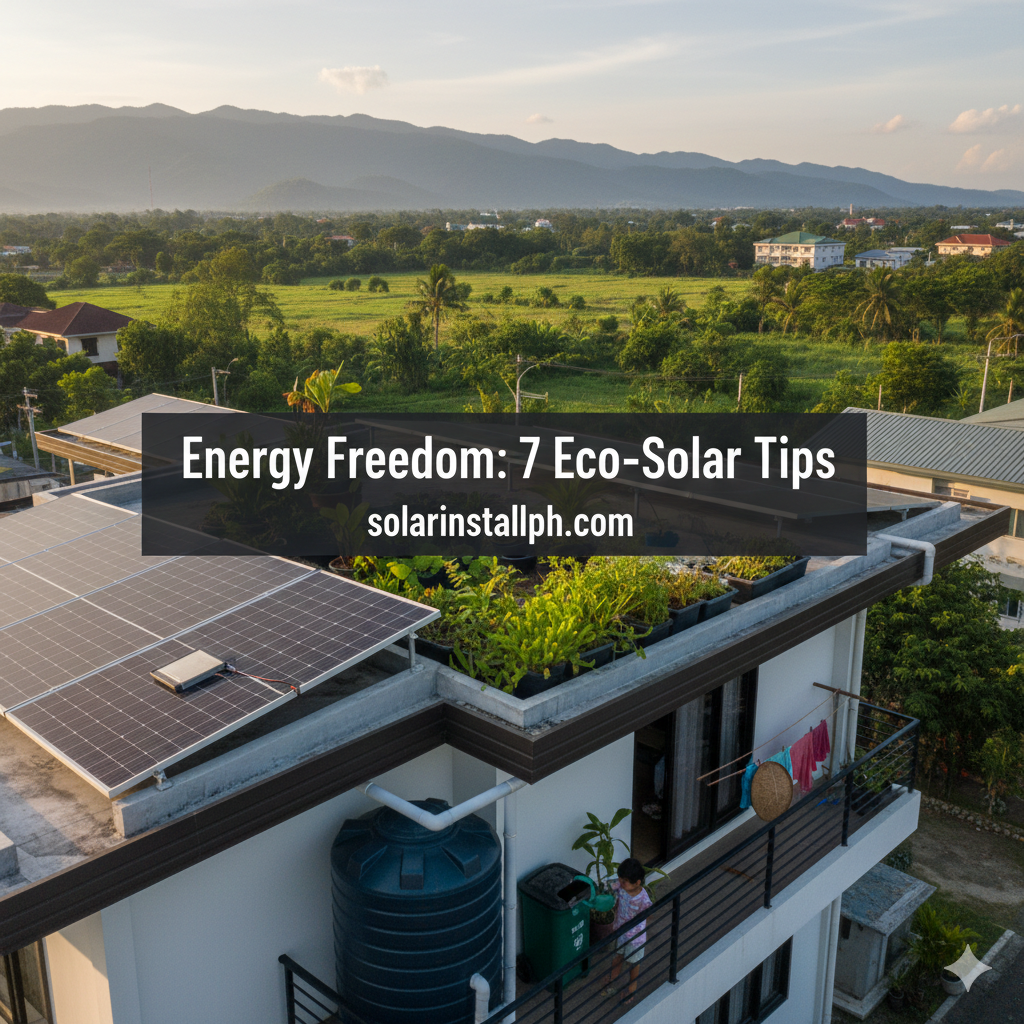
Energy Freedom: 7 Eco-Solar Tips
In 2026, the Philippine energy landscape is at a critical juncture. For homeowners in Metro Manila, Cebu, and Davao, electricity rates continue to climb while the reliability of the national grid faces persistent challenges during the peak summer months. Energy freedom is no longer a luxury; it is a practical strategy for financial and operational resilience. Achieving this freedom through solar power requires more than just installing panels. It demands a holistic, "eco-solar" approach that balances high-efficiency technology with sustainable habits and local regulatory compliance.
The crossover point where rooftop solar becomes cheaper than grid power for the average Filipino household has already arrived for most provinces. However, a poorly planned system can lead to wasted energy and extended payback periods. By following these seven eco-solar tips, you can maximize your investment while contributing to a cleaner, more stable Philippine energy republic.
1. Prioritize Energy Efficiency Before Installation
One of the most common mistakes in the Philippines is trying to "solarize" an inefficient home. If your house has old, non-inverter air conditioning units or incandescent bulbs, you will need a much larger (and more expensive) solar array to cover your load. Energy freedom begins with reducing your baseline consumption.
Start by conducting a basic home energy audit. Switching to LED lighting and upgrading to inverter-grade appliances can reduce your total electricity demand by 30% or more. In the context of the Philippines' high electricity costs, every watt saved is significantly more valuable than a watt generated. By lowering your demand first, you can opt for a smaller, more affordable solar system. If you are concerned about the initial investment, you can review our guide on residential solar costs to understand how system sizing directly impacts your budget.
2. Choose High-Efficiency N-Type Cell Technology
Not all solar panels are created equal. In 2026, N-type TOPCon (Tunnel Oxide Passivated Contact) cells have become the industry standard in the Philippines, replacing older P-type modules. These panels offer higher efficiency—often exceeding 22%—and, more importantly for our climate, a better temperature coefficient.
In the tropical heat of the Philippines, solar panels can reach surface temperatures of over 60°C. Standard panels lose a significant portion of their output as they heat up. N-type cells are more resilient to this heat degradation, ensuring that your system produces more power during the hottest parts of the day when your air conditioning load is at its peak. Investing in premium, high-efficiency modules might have a slightly higher upfront cost, but the increased energy yield over 25 years ensures a much better return on investment.
3. Implement Typhoon-Resilient Mounting Systems
The Philippines faces an average of 20 typhoons per year. For a solar system to provide true energy freedom, it must stay on your roof during extreme weather. Standard mounting rails used in other countries are often insufficient for the wind loads found in provinces like Cagayan, Aurora, or Bicol.
Eco-solar planning means ensuring your installation is structurally sound. This involves using high-quality aluminum rails, stainless steel fasteners, and specialized roof attachments that penetrate the rafters or purlins rather than just the thin metal sheets. A system that is blown off during a storm is not only a financial loss but an environmental hazard. We strongly recommend securing your panels with typhoon-rated mounting solutions that meet the latest Philippine Structural Code requirements for wind speeds of up to 250–300 km/h.
4. Maximize Savings Through Net Metering
Energy freedom does not necessarily mean going completely off-grid. In the Philippines, the Net Metering program under RA 9513 is the most effective way to reach a 4-to-6-year payback. This program allows you to sell excess electricity generated during the day back to the utility grid (like Meralco or your local cooperative) in exchange for credits on your monthly bill.
Without Net Metering, any solar energy you don't use immediately is essentially wasted unless you have expensive batteries. By participating in this program, you turn the grid into a "virtual battery." This is particularly beneficial for Filipino families where the house is empty during school and work hours. To get the most out of your system, you should prioritize navigating the Meralco net metering process or coordinating with your regional electric cooperative early in the installation phase.
5. Integrate Smart Hybrid Storage
While grid-tied systems are the most common, hybrid systems are surging in popularity in 2026 due to the declining cost of Lithium Iron Phosphate (LiFePO4) batteries. A hybrid system combines the cost-saving benefits of Net Metering with the security of backup power during brownouts.
For many Filipinos, energy freedom is defined by the ability to keep the refrigerator running and the lights on when the local grid fails. Modern hybrid inverters allow you to prioritize how your energy is used:
Self-Consumption Mode: Uses solar first, then battery, then grid.
Backup Mode: Keeps the battery at 100% in case of a scheduled power interruption.
Time-of-Use Mode: Discharges the battery during peak tariff hours (usually 6:00 PM to 9:00 PM) to avoid the most expensive grid rates.
When selecting a storage solution, it is vital to perform a side-by-side comparison. You can find more details by comparing top solar battery brands currently available in the Philippine market to ensure compatibility with your inverter.
6. Establish a Regular Maintenance and Cleaning Schedule
The Philippines' tropical environment presents unique maintenance challenges. Dust, bird droppings, and salt air (if you live near the coast) can create a film on your panels that reduces output by 10% to 15% over just a few months.
Eco-solar independence requires proactive care. You should clean your panels at least once every three months, or more frequently during the dry season. Use plain water and a soft brush; avoid harsh chemicals that can damage the anti-reflective coating on the glass. Additionally, annual inspections of your wiring and inverter performance are crucial. Salt air corrosion can silently eat away at exposed electrical connections in coastal areas, leading to potential fire hazards or system failure. A clean system is an efficient system, ensuring you get every kilowatt-hour the sun provides.
7. Plan for the Circular Economy and Recycling
The final step in energy freedom is considering the end-of-life impact of your solar system. While modern panels are rated to last 25 to 30 years, they will eventually need to be replaced. In 2026, the Philippines is beginning to implement stricter guidelines for electronic waste, including solar modules and batteries.
True sustainability means choosing brands that have established take-back programs or working with installers who follow sustainable solar recycling practices. Solar panels contain valuable materials like silver, silicon, and aluminum, as well as trace amounts of lead. Dumping them in a standard landfill is not an option. By planning for recycling today, you ensure that your transition to clean energy does not create a waste problem for the next generation of Filipinos.
Why Energy Freedom is Non-Negotiable in 2026
The Philippine energy sector remains vulnerable to global fuel price shocks. Because we still rely heavily on imported coal and liquefied natural gas (LNG), our electricity bills are at the mercy of international markets. Solar power is the only way for a typical household to "lock in" their electricity price for the next two decades.
By treating solar installation as an eco-conscious engineering project rather than just a hardware purchase, you secure a more resilient future. The goal is to reach a state where your monthly bill is minimal, your essential appliances are protected from outages, and your carbon footprint is drastically reduced.
FAQ
Is solar really worth it during the rainy season?
Yes. While production drops during heavy rain, the Philippines still receives significant diffuse light even on cloudy days. Furthermore, our peak sun hours are high enough during the dry season (March to June) that the annual average production remains very strong, typically ranging from 4.5 to 5.0 $kWh/kWp/day$.
How long does it take for a solar system to pay for itself?
With current Meralco rates and proper Net Metering, most residential systems pay for themselves in 4.5 to 6 years. With the 25-year lifespan of panels, this means you get nearly 20 years of essentially free electricity.
Can I run my entire house on solar without the grid?
Technically, yes, but it is very expensive. A 100% off-grid system requires a massive battery bank to account for three or four consecutive days of rain. For most Filipinos, a hybrid system (grid-connected with backup batteries) offers the best balance of cost and reliability.