
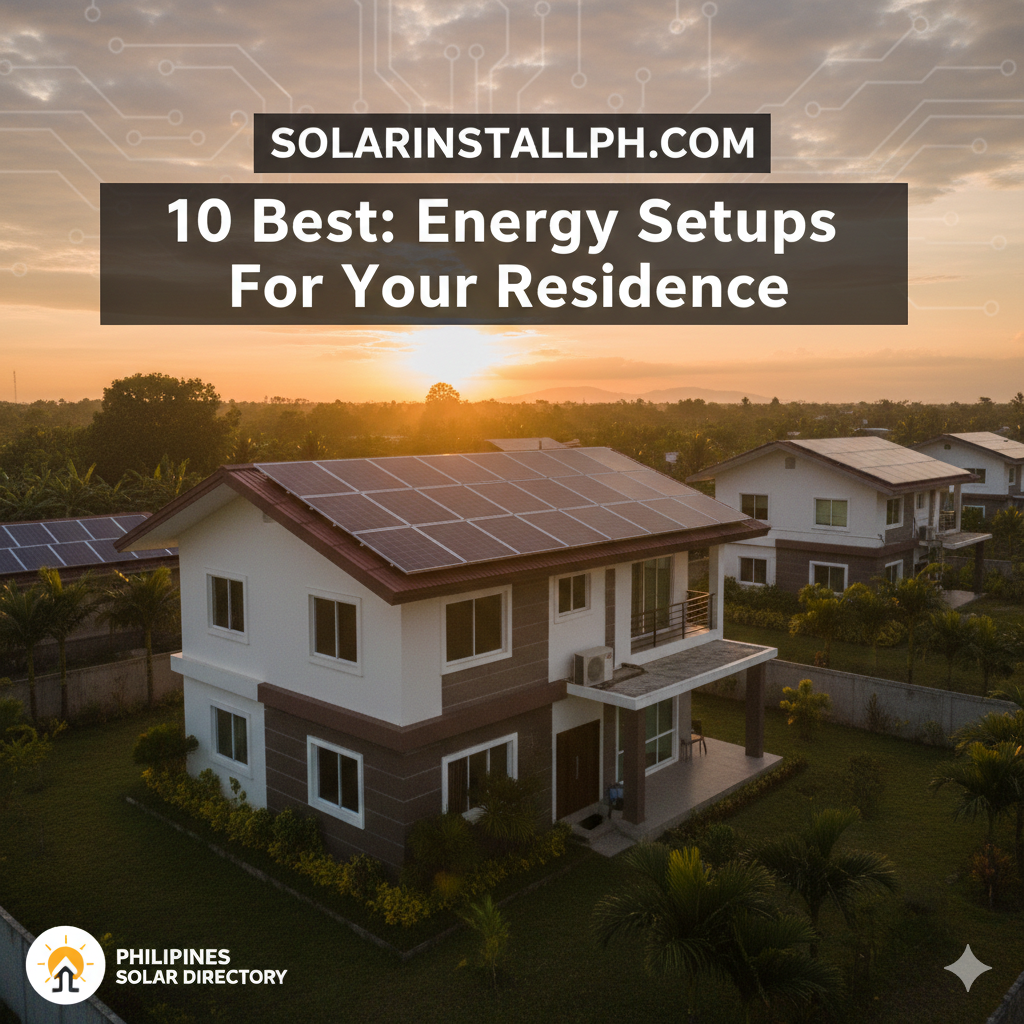
DIY Solar Power Setup Philippines: Complete Guide 2026
In the Philippines, choosing the right residential energy setup is a financial strategy. Here are the 10 best configurations for Filipino homes in 2026.
1. The Urban Savings King (Grid-Tied)
Most common for urban homes with stable grid (Meralco, VECO).
- Cost: ₱30,000-₱50,000 per kW
- ROI: 3-5 years
- Best for: Reducing electricity bills
2. The Net Metering Powerhouse
Perfect for those away at work during the day.
- Setup: 5kWp grid-tied + Net Metering agreement
- Benefit: Export surplus for bill credits
- Grid acts as "free battery"
3. The Typhoon-Ready Hybrid
For areas with frequent brownouts (Bicol, Eastern Visayas).
- Features: Grid connectivity + battery bank
- Benefit: Instant switch to battery during outages
- Cost: ₱70,000-₱100,000 per kW
4. The Apartment Balcony Kit (Portable)
For condo dwellers and renters.
- Setup: Portable power station + foldable panels
- Limitation: Won't power whole house
- Use case: Emergency charging, small appliances
5. The Off-Grid Provincial Sanctuary
For remote areas without grid connection.
- Setup: 100% battery-dependent
- Cost: ₱120,000-₱200,000 per kW (4-5x grid-tied)
- Best for: Islands, remote farms
6. The Smart Microinverter Array
For complex roofs with partial shading.
- How it works: Small inverter behind each panel
- Benefit: If one panel is shaded, rest continue at full capacity
- Premium: 20-30% higher cost
7. The Coastal-Grade Setup
For seaside towns (Dumaguete, La Union).
- Requirements: IP68-rated panels, corrosion-resistant mounting
- Non-negotiable: Stainless steel fasteners, typhoon-rated mounting
8. The "Zero Export" Residential Grid-Tie
For those who don't want to feed back to grid.
- Setup: Smart sensor prevents export
- Benefit: Avoids Net Metering paperwork
- Note: System must be sized to use all solar energy
9. The High-Efficiency N-Type System
For luxury homes with limited roof space.
- Technology: N-type monocrystalline panels (23%+ efficiency)
- Benefit: Better performance in Philippine heat
- Premium: Higher upfront cost, higher 30-year output
10. The DC-Coupled Battery Storage System
For tech-savvy homeowners maximizing self-consumption.
- How it works: Panels charge batteries directly (DC)
- Benefit: Bypasses conversion loss
- Use case: Real-time energy management via apps
2026 Cost Comparison
| Setup Type | Cost per kW | Primary Benefit | ROI Period |
|---|---|---|---|
| Grid-Tied | ₱30,000-₱50,000 | Maximum Savings | 3-5 Years |
| Hybrid | ₱70,000-₱100,000 | Backup + Savings | 7-10 Years |
| Off-Grid | ₱120,000-₱200,000 | Total Independence | 12+ Years |
Pre-Installation Checklist
- Roof Orientation: True South, 10-20° tilt (Metro Manila)
- LGU Permits: Building + Electrical permits (now 3-day fast track)
- Installer: Choose DOE-accredited with after-sales support
FAQ
Can I install solar myself? Technical DIY is possible but not recommended. Permits, grid interconnection, and safety require licensed professionals.
What's the cheapest option? Grid-tied (₱30,000-₱50,000/kW)
Which is best for typhoon areas? Hybrid system with battery backup