
Why Battery Prices Vary So Much?
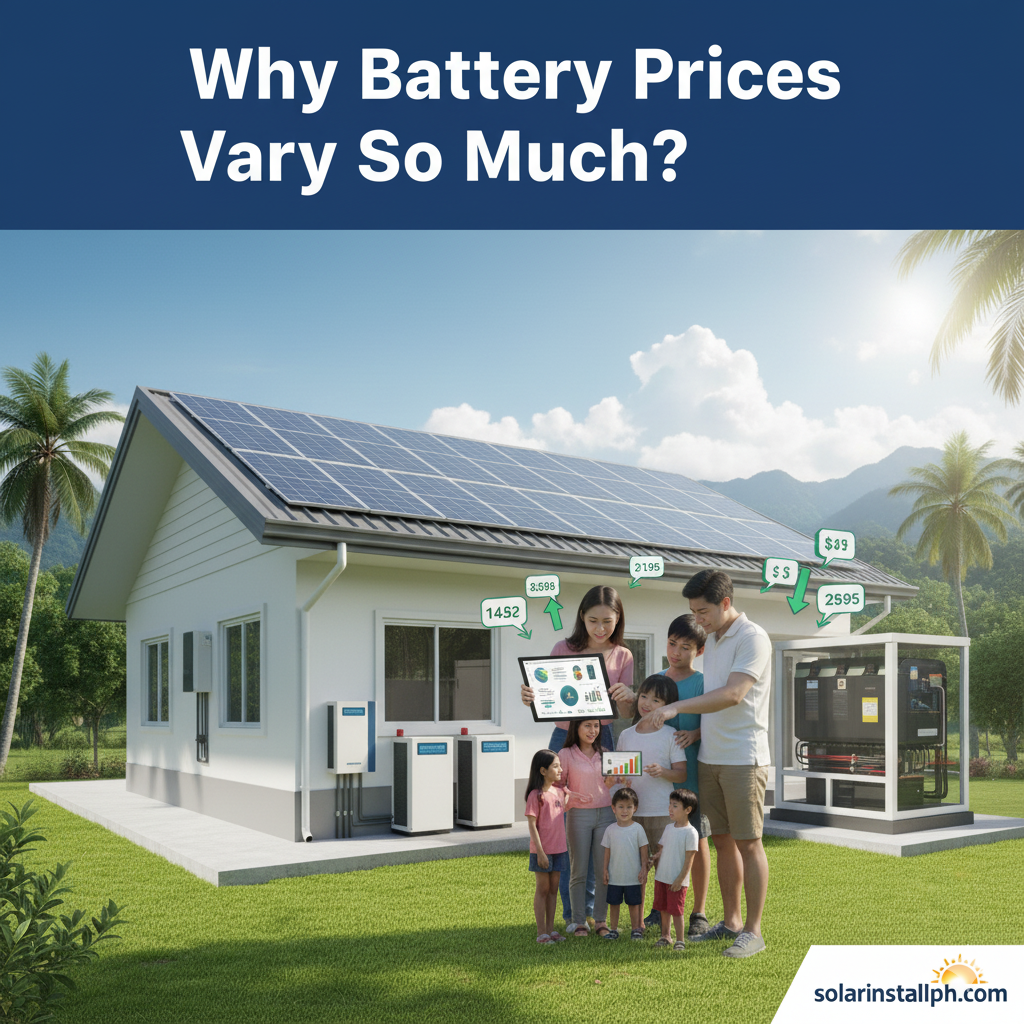
Battery backups have become a household necessity and a hot topic in the Philippines, with prices swinging wildly from budget to bank-breaking. This price gap perplexes many homeowners and business owners alike, prompting the inevitable question: what’s truly at play behind these price tags? Diving beneath the surface, a complex landscape emerges—one shaped by technology, supply chains, regulations, and even local installer wisdom.
A Quick Landscape: Filipino Battery Choices
Walking into a hardware store or browsing Shopee and Lazada, Filipinos encounter battery price ranges that can be as broad as the archipelago itself. Lead-acid batteries—long a favorite for basic backups—can go for less than ₱10,000 per unit, while high-tech lithium-ion storage systems for solar installations easily push past ₱150,000 or more for a 5–10kWh package.
For a detailed breakdown of battery options built for Philippine conditions, check out the solar battery guide.
Main Drivers of Battery Pricing
Technology Type: The Chemistry Factor
Battery chemistry is the biggest price driver. Older technology, like flooded lead-acid batteries, costs a fraction of modern lithium iron phosphate (LiFePO4) packs. Lithium batteries are much pricier upfront, often costing three to four times more than comparable lead-acid units. But with higher capacity, longer lifespans (often up to a decade), and substantially lower total cost of ownership, lithium is fast becoming the Philippine standard for solar and backup needs.
Read more on this at the in-depth solar battery technology comparison.
Capacity and Performance
Not all batteries are created equal. Larger capacity isn’t just about storing more juice—it means more cells, expensive materials, and higher manufacturing precision. Filipino solar buyers often compare batteries by price-per-kilowatt-hour (kWh), with premium brands offering modular units, built-in smart monitoring, and safer chemistry.
For a precise explainer on sizing and the economics of capacity for Philippine homes, the battery capacity guide covers common pitfalls and best practices.
Brand and Build Quality
Top-tier global brands like Huawei, Growatt, and Alpha-ESS have established local presences, providing warranties and robust aftersales. These companies offer quality assurance, safety certifications, and support networks, which add to price—but also peace of mind. Smaller brands, local remanufacturers, and generic imports often have much lower prices, but come with trade-offs in cycle life, safety, and reliability.
Comparisons of brand pros and cons are considered in the solar battery brand review.
Raw Material and Exchange Rates
Filipinos pay global rates for core battery ingredients: lithium, nickel, cobalt, and other minerals. This means local battery prices move with the world market, which can fluctuate sharply depending on mining output, political events, and even environmental incidents. The surging demand from electric vehicles and global renewable energy projects often pushes prices higher in the short term.
Exchange rate volatility adds another layer. A weak peso against the dollar or yuan instantly bumps up the landed cost, especially for batteries sourced from China, Korea, or Europe.
Import, Shipping, and Taxes
Most home storage batteries in the Philippines are imported. Shipping costs, customs duties, and local taxes can represent 10–20% of a battery’s sticker price. Bulk importers smooth out costs by buying in volume, but smaller shipments often see big price jumps due to handling fees and variable tariffs.
Supply Chain Complexities
The Filipino battery supply chain has grown more streamlined but still faces challenges like port congestion, typhoon season delays, and fluctuations in international logistics. Small disruptions can snowball, affecting local inventories and prices. During global shortages or pandemic-related slowdowns, the market sees temporary price spikes and diminished availability.
Installers who keep trusted suppliers and stock in-country can offer more stable pricing. Guidance on choosing your installer wisely is available at the solar installer directory.
Installation Complexity and Site Prep
A battery’s price is not just about the hardware—installation work can add a substantial amount, especially if complex electrical rewiring or major upgrades are needed. In homes with older electrical systems, additional safety gear, new panels, or professional labor will push the final bill higher. Rooftop systems, humidity-proofing, fire safety features, and backup integration are often necessary for Philippine homes, further raising cost.
Local best-practices for battery install are captured in the solar battery install guide.
Warranty, Aftercare, and Maintenance
Extended warranties and solid aftersales support add value but also cost. Batteries sold with only a short-term or dealer-only warranty often carry a risk for buyers, as repairs and replacements later are usually on your peso. Well-established installers bundle maintenance in their packages and often have direct access to parts, diagnostics, and manufacturers—a feature worth considering for long-term savings.
Learn the essentials of battery aftercare, warranties, and what to expect at the solar warranty blog.
Policy, Incentives, and Taxes
The Renewable Energy Act and subsequent ERC policies have paved the way for more affordable green technology through incentives, net metering, and occasional tax holidays. Still, tax on imported battery components fluctuates, depending on updated DOF and BIR policies. More aggressive incentives can slash costs by up to 15% for compliant installations, but the paperwork and eligibility rules are strict—always consult with installers who understand these processes.
Counterfeit and Subpar Batteries: The Hidden Risk
Desperate to save, some buyers turn to ultra-cheap or secondhand batteries, risking fake products, poor quality, and outright safety hazards. The Department of Energy and local governments promote consumer awareness, but the market remains awash with non-certified goods. These may work for a few months but can fail, sometimes dangerously, leading to loss of investment and potential harm.
Groups regularly warn against uncertified battery imports. Choose a reputable installer and always demand legitimate documentation. For red flag detection, the local solar review standards guide tells you what to watch for.
How Filipino Households Can Shop Smart
Given recent price trends, here are actionable tips for Filipino homeowners:
Compare brands, chemistry, and warranty—don’t just chase low upfront cost, but look at total price over 5–10 years.
Prioritize aftercare and local service. If a battery fails outside Manila, having a local support team is gold.
Leverage incentives and net metering to reduce the real cost of ownership.
Buy only from certified installers who can explain pricing transparently and provide proof of compliance with Philippine safety standards.
Price Evolution and the 2025 Outlook
Manufacturing advances—especially in modular, recyclable lithium designs—promise further price drops. The Philippine government’s solar push, regional demand, and wider adoption are increasing imports, boosting competition, and incentivizing more local assembly. This suggests steady declines in the cost per kWh, with premium batteries and turnkey installs moving within reach for middle-income households.
Nonetheless, global shocks or raw material surges (as seen with lithium spikes recently) can disrupt the curve, so buyers should check latest market conditions or consult trusted solar blogs before purchasing.
Battery prices in the Philippines are shaped by complex forces—technology, supply chain, global events, policy, and installer quality. By understanding these levers and making savvy decisions, Filipino consumers can avoid risky bargains and secure energy resilience for years to come.