
Why Inverter Maintenance Matters
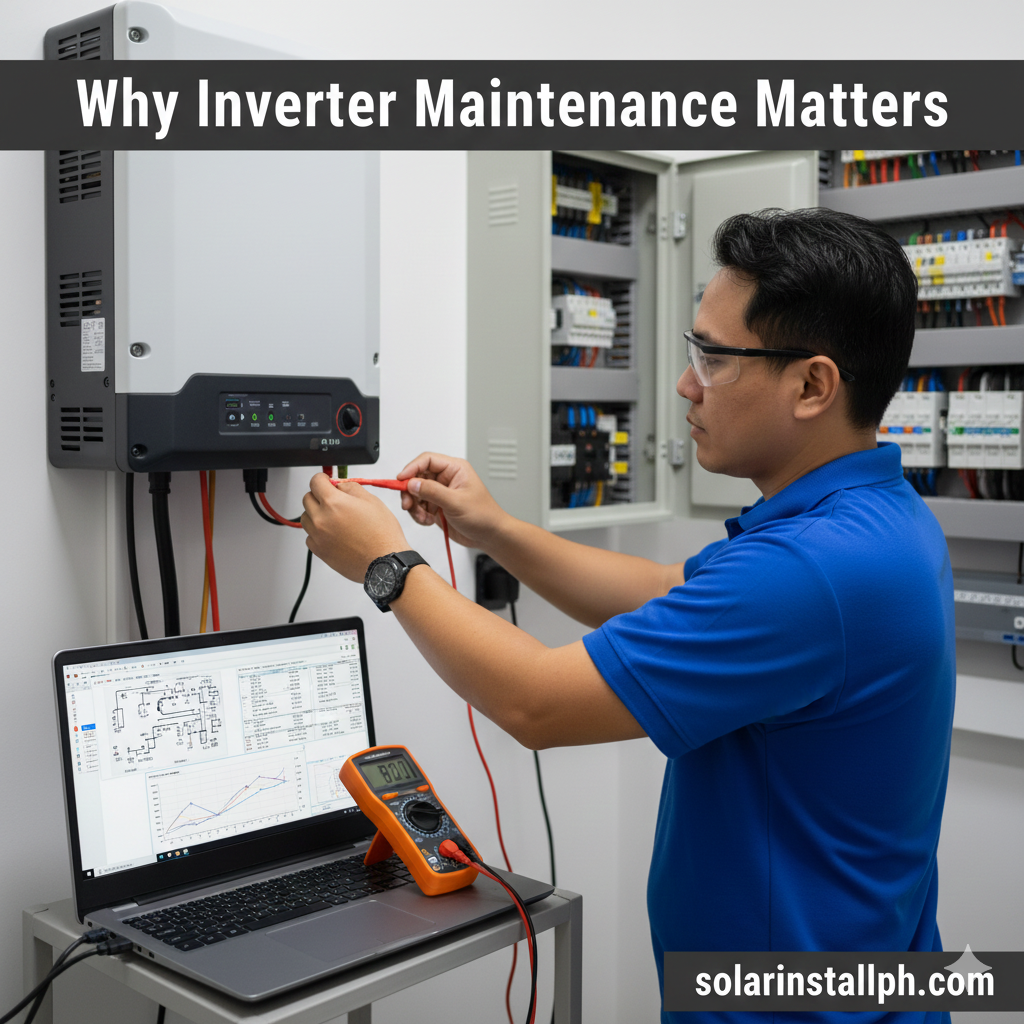
If solar panels are the brawn of your solar energy system, the inverter is the brain. And just like the human brain, it is complex, sensitive, and absolutely critical for operation.
Most Filipino homeowners who install solar focus heavily on the panels. They ask about Tier 1 brands, warranties, and aesthetics. This is understandable—panels are the most visible part of the investment. However, statistically, the solar inverter is the component most likely to fail first.
While solar panels can easily last 25 years with minimal fuss, a solar inverter typically has a lifespan of 10 to 12 years. In the harsh tropical environment of the Philippines, this lifespan can be cut significantly shorter if the unit is neglected.
This guide explains why inverter maintenance is not just an optional "add-on" but a financial necessity for protecting your ROI.
The Hardest Working Component
To understand why maintenance matters, you must understand what the inverter endures.
Your solar panels produce Direct Current (DC) electricity. Your home and the Meralco grid run on Alternating Current (AC). The inverter’s job is to convert high-voltage DC into usable AC, thousands of times a second, all day long.
It is constantly managing voltage fluctuations, synchronizing with the grid frequency, and maximizing power harvest through MPPT (Maximum Power Point Tracking). It does all this while generating significant internal heat.
If a solar panel breaks, you lose the production of one panel. If the inverter breaks, your entire system stops. You go back to paying 100% of your electricity bill immediately.
The "Philippine Stress Test"
Inverters in Germany or the US have it relatively easy. In the Philippines, your equipment faces a unique "torture test" of environmental factors that accelerates wear and tear.
1. The Heat Factor
Electronics hate heat. The chemical electrolyte in capacitors—key components inside your inverter—evaporates faster at high temperatures.
Derating: When an inverter gets too hot (usually above 45°C or 50°C), it enters "derating" mode. It intentionally throttles your power production to cool itself down.
The Maintenance Link: If your inverter’s cooling fins are clogged with dust or the internal fans are stuck, it will reach this temperature threshold much earlier in the day. You might be losing 10% to 20% of your harvest during the peak noon sun simply because the inverter cannot breathe.
2. The "Butiki" (Gecko) Threat
This is a uniquely tropical problem. Geckos (butiki) are cold-blooded and seek warmth. A running inverter is a cozy, warm box.
The Short Circuit: If a lizard crawls through a ventilation slot and touches two live contact points on the circuit board, it causes an immediate short circuit. This often results in a loud "pop," a puff of smoke, and a destroyed motherboard.
Prevention: Maintenance involves checking and cleaning the mesh screens (lizard guards) that protect the intake vents. If these screens are torn or missing, your expensive equipment becomes a lizard graveyard.
3. Humidity and Salt Air
If you live in coastal areas like Cavite, Batangas, or Cebu, salt spray is a silent killer. Even if you are inland, the high humidity in Metro Manila can lead to corrosion on terminal blocks.
Corrosion: Over time, oxidation can increase electrical resistance at connection points. This creates heat—sometimes enough to melt the wire insulation or cause a fire.
Signs Your Inverter Is Struggling
You do not always need a technician to know something is wrong. There are visible (and audible) signs that your inverter needs attention.
Noise: A grid-tied inverter should be relatively quiet. A loud buzzing or grinding sound usually indicates a failing fan bearing. If the fan dies, the inverter will overheat and shut down.
Red Lights: A solid red LED is a universal sign of failure.
Error Codes: Modern inverters display alphanumeric codes. These are not random; they tell you exactly what is wrong, from "Grid Voltage High" to "Isolation Fault." Understanding these codes is key to troubleshooting solar inverter issues before they become permanent failures.
The Danger of "Drift" and Loose Connections
One of the most critical parts of professional maintenance is the "torque check."
Solar systems undergo thermal cycling. During the day, components heat up and expand. At night, they cool down and contract. Over hundreds of cycles, this movement can cause the screws clamping your electrical wires to loosen slightly.
A loose electrical connection is dangerous. It creates a gap that electricity must jump across, causing "arcing." This generates intense heat (thousands of degrees) and is a primary cause of solar fires.
Regular maintenance ensures every screw and terminal is tightened to the manufacturer’s specified torque settings, strictly adhering to solar electrical safety standards.
Protecting Your Warranty
Most homeowners assume their 5-year or 10-year warranty covers everything. This is a dangerous assumption.
Warranty terms usually contain a clause regarding "proper use and maintenance." Modern inverters have internal data logs that record temperature and performance history.
The Scenario: Your inverter dies after 3 years. You claim warranty. The manufacturer pulls the logs and sees that the unit ran at 70°C every day for the last year because the fans were clogged with dust.
The Result: They may deny your claim, citing negligence.
Regular maintenance provides a paper trail. If you have records of cleaning and checkups, you have proof that you cared for the unit, making inverter warranty support claims much smoother.
The Grid vs. Your Inverter
The Philippine grid is not known for its stability. Voltage fluctuations are common. Your inverter has built-in protection components called MOVs (Metal Oxide Varistors) that act as surge protectors.
Every time there is a voltage spike (common during thunderstorms or grid switching), these MOVs take a "hit" to protect the sensitive electronics behind them. They are sacrificial components. Eventually, they degrade and stop working.
During a maintenance visit, technicians can check the status of these protection devices. If they are worn out, they can sometimes be replaced cheaply, saving the whole inverter from the next big surge. Ignoring this can shorten the overall solar system lifespan.
DIY vs. Professional Maintenance
Can you maintain the inverter yourself? Partially.
What You Can Do (DIY):
External Cleaning: Use a dry cloth to wipe dust off the casing.
Airflow Check: Ensure no boxes or debris are piled up around the inverter. It needs at least 30cm of clearance on all sides.
Visual Inspection: Look for lizard droppings near vents or spiderwebs clogging the fans.
Screen Check: Read the LCD screen for warnings. Learn to interpret inverter error codes so you can alert your installer early.
What You Should NOT Do:
Open the Case: Never unscrew the cover. The capacitors inside can hold a lethal charge even after the system is turned off.
Tighten Internal Wires: Without insulated tools and training, this is a shock hazard.
Conclusion
The inverter is the gateway between your solar panels and your savings. If it stops, your savings stop.
Think of inverter maintenance like an oil change for your car. You wouldn't drive a car for 5 years without changing the oil and expect it to run perfectly. Your solar inverter works harder than your car, processing high-voltage electricity every single day.
For most Filipino homes, a professional electrical inspection once a year is sufficient. It costs a fraction of the price of a new inverter (which can range from ₱50,000 to over ₱100,000 depending on size).
Don't wait for the red light to blink. Keep the fans spinning, the vents clear, and the connections tight. Your wallet will thank you.