
Top Off-Grid Power Solutions: User Reviews
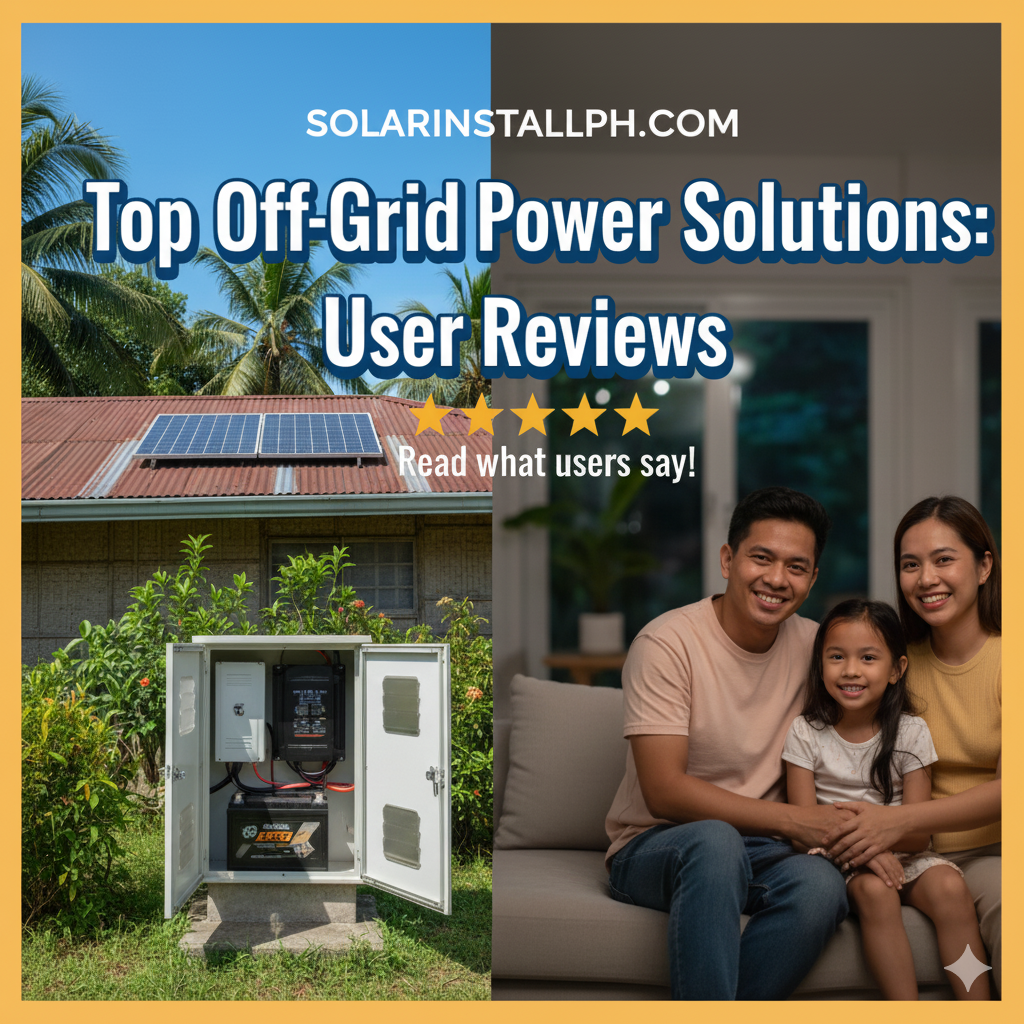
In an archipelago of over 7,000 islands, energy independence isn't just a buzzword; it's a practical necessity. For countless Filipinos living in areas with unreliable grid access or those simply seeking a "comeback" of self-sufficiency, off-grid power solutions are the answer. This movement goes beyond simple backup power; it's about creating a resilient, independent lifestyle.
But with a flood of new products on the market, how do you choose the right one? To cut through the noise, we've gathered reviews and feedback from real users across the Philippines—from remote farmers in the provinces to tech-savvy urban dwellers. Their hands-on experiences provide the most valuable insights into what works, what doesn't, and what solutions truly deliver on their promise of reliable, off-grid power.
For the "Always Ready" Urbanite: The Portable Power Station
For many city dwellers, the primary concern is surviving the frequent brownouts that can disrupt work and daily life. The ideal solution needs to be compact, user-friendly, and powerful enough to keep essential devices running. This is where portable power stations have become a game-changer.
User Profile: Maria, a freelance writer based in Quezon City, experiences several short power interruptions a month, which used to cripple her productivity. She needed a solution that was plug-and-play, required no complex installation, and was safe for her apartment.
Her Solution & Review: Maria opted for a 1000Wh portable power station from a well-known brand. "It's been a lifesaver," she reports. "When the power goes out, my internet router and laptop don't even flicker. The switchover is instant." During a recent 8-hour outage, she was able to power her router, laptop, a 15W LED lamp, and an electric fan without issue. "The LCD screen is clear and shows me exactly how much power I'm using and how many hours I have left. I recharge it by plugging it into the wall when power is on, but I also got a 100W foldable solar panel for it, which is great for longer outages." Maria's experience highlights the key advantages for urban users: silent operation (unlike a noisy generator), ease of use, and enough capacity for essential work-from-home devices. The investment provides not just power, but peace of mind and uninterrupted productivity.
For the Weekend Homesteader: The DIY Solar Setup
For those with a bit more space and a desire to get their hands dirty, a small, DIY off-grid solar system offers a rewarding path to energy independence. These systems are perfect for powering a small rest house, a remote workstation, or an outdoor entertainment area.
User Profile: Carlos, an engineer from Laguna, has a small "bahay kubo" on a family lot that he visits on weekends. There's no grid connection, and he wanted to power lights, a television, and charge phones without the hassle and noise of a generator.
His Solution & Review: Carlos built his own system piece by piece. His setup consists of two 300W solar panels, a 40A MPPT charge controller, two 12V 100Ah deep-cycle lead-acid batteries wired in series for a 24V system, and a 1500W pure sine wave inverter. "The planning was the hardest part," he admits. "You really have to do your homework and calculate your loads. Under-sizing is a common mistake." The key, he found, was investing in quality components, especially the inverter. "Don't cheap out on the inverter. A pure sine wave model is essential to protect your sensitive appliances."
His system now comfortably powers his weekend retreat. "It's an amazing feeling to be completely self-sufficient. We have lights, music, and can even watch movies at night, all powered by the sun." The key takeaway from Carlos's experience is the importance of research and quality. A successful DIY build requires a solid understanding of how the solar components work together. He emphasizes that while the initial solar sizing and setup can be challenging, the reward of creating your own power source is immense.
For the Off-Grid Family: The Full-Scale Hybrid System
For families living entirely off-grid or those in areas with extremely unreliable power, a more robust solution is required. This often means a full-scale solar installation with a significant battery bank, often configured as a hybrid system.
User Profile: The Reyes family lives in a coastal town in the Bicol region, an area frequently hit by typhoons that can knock out power for days or even weeks. For them, energy security is not a luxury, but a critical part of their resilience strategy.
Their Solution & Review: After years of relying on a generator, the Reyes family invested in a 5kW hybrid solar system. This system functions as a full off-grid setup but also has the capability to connect to the grid if and when it becomes available and stable. The system features 10 high-efficiency 550W solar panels, a powerful 5kW hybrid inverter, and a modular 10kWh lithium-ion battery bank. "The upfront cost was significant," Mr. Reyes concedes, "but the peace of mind is priceless. After the last typhoon, we were the only house in our barangay with lights on."
The hybrid inverter is the star of their system. It intelligently manages power from the solar panels, the battery, and the grid (when available), prioritizing solar to power the home and charge the batteries. "The best part is that it's completely automatic. We don't have to do anything." The family can run their refrigerator, lights, fans, television, and water pump, all from their solar and battery storage. Their experience shows that for those serious about long-term energy independence, especially in typhoon-prone areas like Bicol where off-grid solutions are becoming more common, a professional-grade hybrid system is the most reliable and effective solution. The choice of a quality battery with solid solar warranties was a crucial part of their decision, ensuring their investment would last for many years.
The verdict from the ground
The message from users across the Philippines is clear: off-grid power is achievable and transformative. Whether it's a compact power station for urban convenience, a hands-on DIY project for the enthusiast, or a full-scale system for total energy security, the solutions are here. The key to success lies in matching the solution to your specific needs, investing in quality components, and understanding the capabilities and limitations of your system.
For those considering the leap, the journey begins with a thorough solar assessment of your power needs. From there, you can explore the diverse range of products and solutions available, confident that you are on a path to greater energy independence and resilience.