
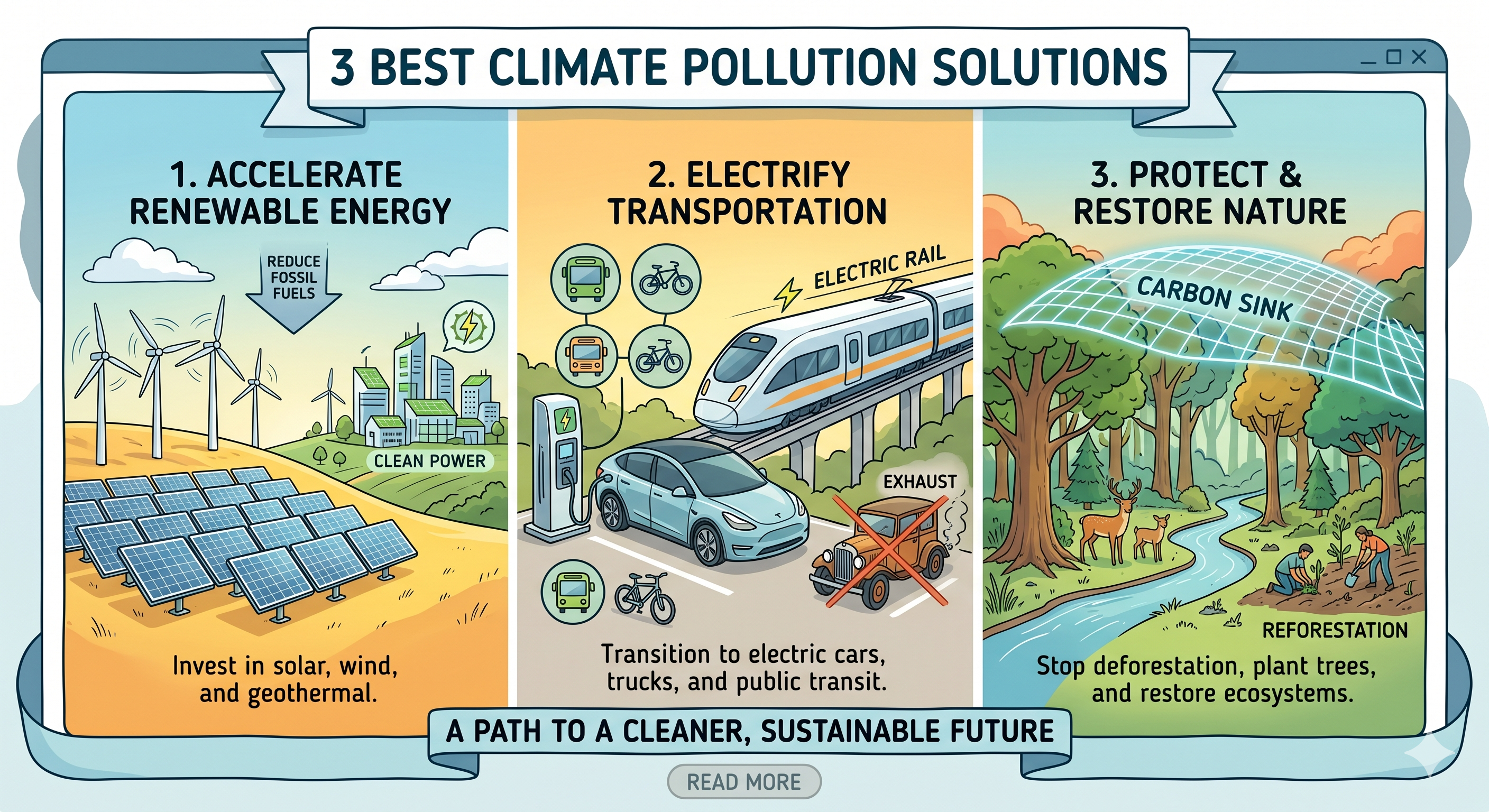
3 Best Climate Pollution Solutions
As we navigate 2026, the Philippines is facing a pivotal moment in its environmental history. While we have dropped in some global climate performance rankings, the push for local resilience has never been stronger. The nation’s electricity generation still relies heavily on coal—accounting for over 60% of our power as of 2025—which remains a primary driver of both climate pollution and high electricity costs.
For Filipino homeowners and business owners, the "climate crisis" isn't just a headline; it's the ₱14 per kWh bill and the increasing intensity of typhoons. Addressing climate pollution requires a shift from fossil-fuel dependency to localized, sustainable systems.
Here are the three most effective climate pollution solutions for the Philippine setting in 2026.
1. Accelerated Adoption of Rooftop Solar
The most direct way to combat climate pollution in the Philippines is by decarbonizing the residential and commercial sectors. Electricity generation accounts for 89% of the country’s total greenhouse gas emissions. By shifting to rooftop solar, consumers directly reduce the demand for coal-fired power.
The Philippines has a massive potential of approximately 1,200 gigawatts for solar and wind energy, yet we have only tapped into a small fraction of this capacity. For a typical Filipino household, investing in solar is no longer just "green"—it's a financial safeguard. Most systems now achieve a 5-year solar payback period due to the rising costs of traditional grid power and the declining prices of solar hardware.
Why Rooftop Solar is a Top Priority:
Direct Emission Reduction: Every kilowatt-hour generated by your roof is a kilowatt-hour that doesn't need to be produced by burning coal.
Energy Independence: Localized generation reduces the 6.1% of GDP currently spent on importing fossil fuels.
Grid Stability: Decentralized power reduces the strain on the national grid during peak dry season months when demand for cooling spikes.
To ensure your transition is effective, it is critical to verify installer credentials to avoid substandard hardware that might fail under Philippine weather conditions.
2. Transitioning to Electric Mobility (EVs)
The transportation sector is a significant contributor to urban air pollution and carbon emissions in the Philippines. In 2026, the Philippine electric vehicle market is seeing a surge, projected to grow at a rate of nearly 20% annually through 2034.
The government has instituted a robust framework of fiscal and regulatory incentives, including tariff exemptions and the Public Utility Vehicle (PUV) Modernization Program, to accelerate this shift. For businesses, switching to electric delivery fleets or commercial vehicles significantly lowers the "carbon footprint" of their logistics.
The Impact of EV Solutions:
Improved Public Health: Transitioning away from internal combustion engines reduces tailpipe emissions, leading to cleaner air in dense urban centers like Metro Manila and Cebu.
Sustainable Infrastructure: The expansion of public charging stations, guided by the Department of Energy’s long-term targets, is making EV ownership more practical.
Synergy with Solar: When an EV is charged using a home solar system, the "pollution" associated with travel drops to near zero.
For those interested in how these systems interact with existing grid rules, our guide on Meralco net metering explains how you can manage your home energy to support both your appliances and your electric vehicle.
3. Integrated Waste-to-Energy and Circular Economy
Waste management is a growing climate challenge in the Philippines. Traditional landfills contribute significantly to methane emissions, a greenhouse gas far more potent than CO2. In response, the country is seeing its first large-scale waste-to-energy (WTE) facilities, such as the ₱4-billion project in New Clark City.
These facilities can reduce waste volume by up to 90% through controlled thermal treatment, turning municipal solid waste into clean electricity for the grid. Beyond large-scale infrastructure, individual households and SMEs are encouraged to participate in the "circular economy" by reducing single-use plastics and embracing the Extended Producer Responsibility (EPR) Law.
Key Benefits of WTE and Circular Solutions:
Methane Mitigation: Diverting organic waste from landfills prevents the release of methane into the atmosphere.
Resource Recovery: Modern WTE technology captures energy from materials that would otherwise be discarded, supporting national energy security.
Policy Support: New regulations on forest carbon credits and sustainability reporting for companies are creating a market where "going green" is rewarded.
For larger commercial entities, navigating these regulations often requires understanding GEOP vs. Net Metering to see which green energy procurement strategy fits their operational scale and sustainability goals.
Moving Toward a Greener Philippines
Addressing climate pollution in the Philippines requires a "whole-of-society" approach. Whether it's through the net metering application process for your home or advocating for larger WTE facilities in your city, every step toward decentralization and efficiency helps.
FAQ
What is the most cost-effective first step for a homeowner?
Starting with energy efficiency (LED lighting, inverter appliances) followed by a grid-tied solar system is usually the fastest way to reduce both your bill and your carbon footprint.
Are there government incentives for businesses to go green?
Yes. Aside from the Green Energy Option Program (GEOP), businesses can benefit from the EPR Law incentives and the Department of Finance's push for green and climate finance.
How do I know if a solar system will survive a typhoon?
It is vital to choose mounting systems rated for at least 250 kph winds. You can read more about solar mounting for different roof types to ensure your climate solution doesn't become a safety hazard during a storm.