
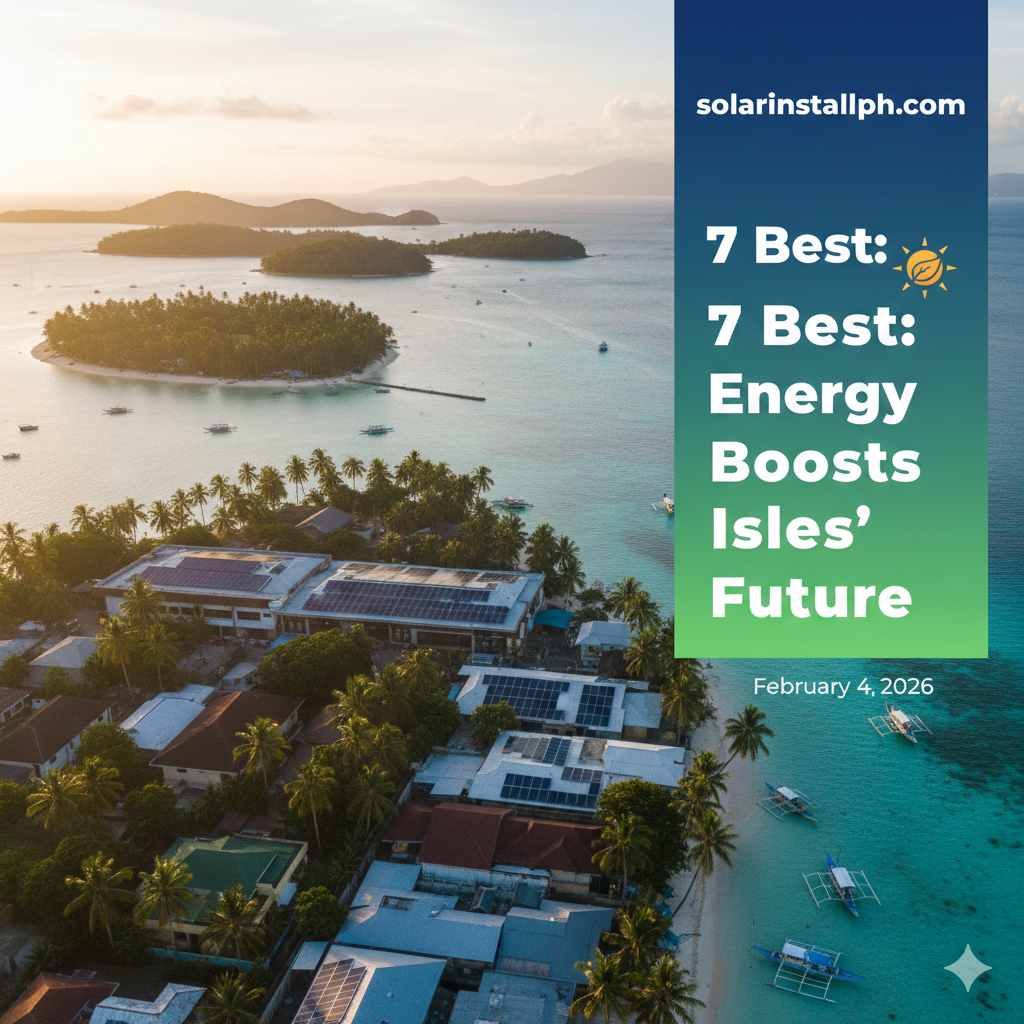
7 Best: Green Energy Boosts Isles' Future
For the 2.8 million Filipinos living across off-grid islands, the reality of daily life has long been tied to the hum of expensive, polluting diesel generators. In 2026, electricity rates in these remote areas can reach a staggering ₱16–₱25 per kWh—far exceeding the rates in Metro Manila.
However, a massive shift is underway. The Department of Energy (DOE) is currently executing an ambitious plan to reach near-total electrification by 2026, pivoting away from diesel dependence toward localized, sustainable energy. By leveraging the Philippines' abundant natural resources, these seven green energy technologies are transforming the future of our archipelagic nation.
1. Solar-Hybrid Microgrids
The most effective solution for island electrification is the solar-hybrid microgrid. These systems combine high-efficiency solar panels with battery storage and a limited diesel backup to ensure 24/7 power.
Reliability: By displacing up to 80% of diesel use, these hybrids provide a stable power supply even when fuel shipments are delayed.
Cost Savings: Transitioning to these systems can reduce local tariffs by ₱2–₱3 per kWh, saving billions annually in government subsidies.
Scalability: Projects like the 1-MW solar-battery system on Lubang Island serve as templates for future island-wide expansion.
2. Bifacial Solar Technology
Not all solar panels are created equal, especially in the coastal environments of the Philippines. Newer projects are now utilizing bifacial solar panels, which collect sunlight from both the front and the back.
Increased Output: These panels can boost total power generation by approximately 25% by capturing light reflected off the sand or water.
Efficiency: This is particularly valuable for small islands with limited land space, as it maximizes the energy yield per square meter.
3. Battery Energy Storage Systems (BESS)
The intermittency of sun and wind is the biggest challenge for off-grid areas. Modern energy storage innovations, particularly Lithium-ion and solid-state batteries, are now the backbone of island energy security.
Stability: BESS units store excess midday energy to power homes throughout the night, preventing the "brownouts" common in old diesel grids.
Durability: High-quality systems from a reputable solar company are designed to withstand the humidity and salt air of Mindanao and the Visayas.
4. Offshore and Coastal Wind Energy
With long coastlines and consistent wind speeds exceeding 6 meters per second, the Philippines is a "sleeping giant" for wind power.
Complementary Power: Wind energy often peaks at night or during the rainy season, perfectly balancing the daytime peak of solar energy.
Future Potential: Estimates suggest the country could harness 21 GW of offshore wind by 2040, significantly bolstering the solar system lifespan of the broader national energy mix.
5. Biomass from Agricultural Waste
For agricultural islands, biomass turns "trash" into treasure. Farm waste like rice husks, coconut shells, and sugarcane bagasse are converted into clean, usable power.
Circular Economy: This technology supports local farmers while providing a "firm" (constant) energy source that does not depend on the weather.
Practicality: It is an ideal solution for remote areas where solar land acquisition may be slow or complex.
6. Small-Scale Hydropower
In the mountainous interiors of larger islands like Mindanao, small "run-of-river" hydro projects are providing life-saving power to health centers and schools.
Environmental Impact: Unlike large dams, these micro-hydro systems use the natural flow of water, preserving the local ecosystem.
Low Maintenance: Once installed, hydro offers a very predictable energy output, helping to lower the long-term residential solar cost equivalent for rural cooperatives.
7. Portable Power Stations
For the most remote households or those in the early stages of electrification, the portable power station has become a essential tool.
Immediate Access: These "all-in-one" units can be charged via small solar blankets and are used to power essential lights, medical devices, and communication tools during calamities.
Resilience: Because they are mobile, they are easily protected from storm surges or typhoons, ensuring energy remains available when the main infrastructure is damaged.
The Path Forward: Policy and Investment
The Philippine government has paved the way for these technologies through landmark reforms. The Microgrid Systems Act now allows private developers to bypass traditional franchise hurdles to serve "unserved" areas. Furthermore, the move to allow 100% foreign ownership in the RE sector has triggered a surge in investments from global leaders.
When evaluating your own island energy needs, it is crucial to consider the solar payback factors specific to off-grid living. While the upfront capital is higher than in the city, the elimination of monthly electric bills and diesel fuel costs often leads to a full return on investment in just 3 to 5 years.
The future of the Philippine isles is no longer dark or diesel-dependent. It is powered by the sun, the wind, and the resilience of green technology.