
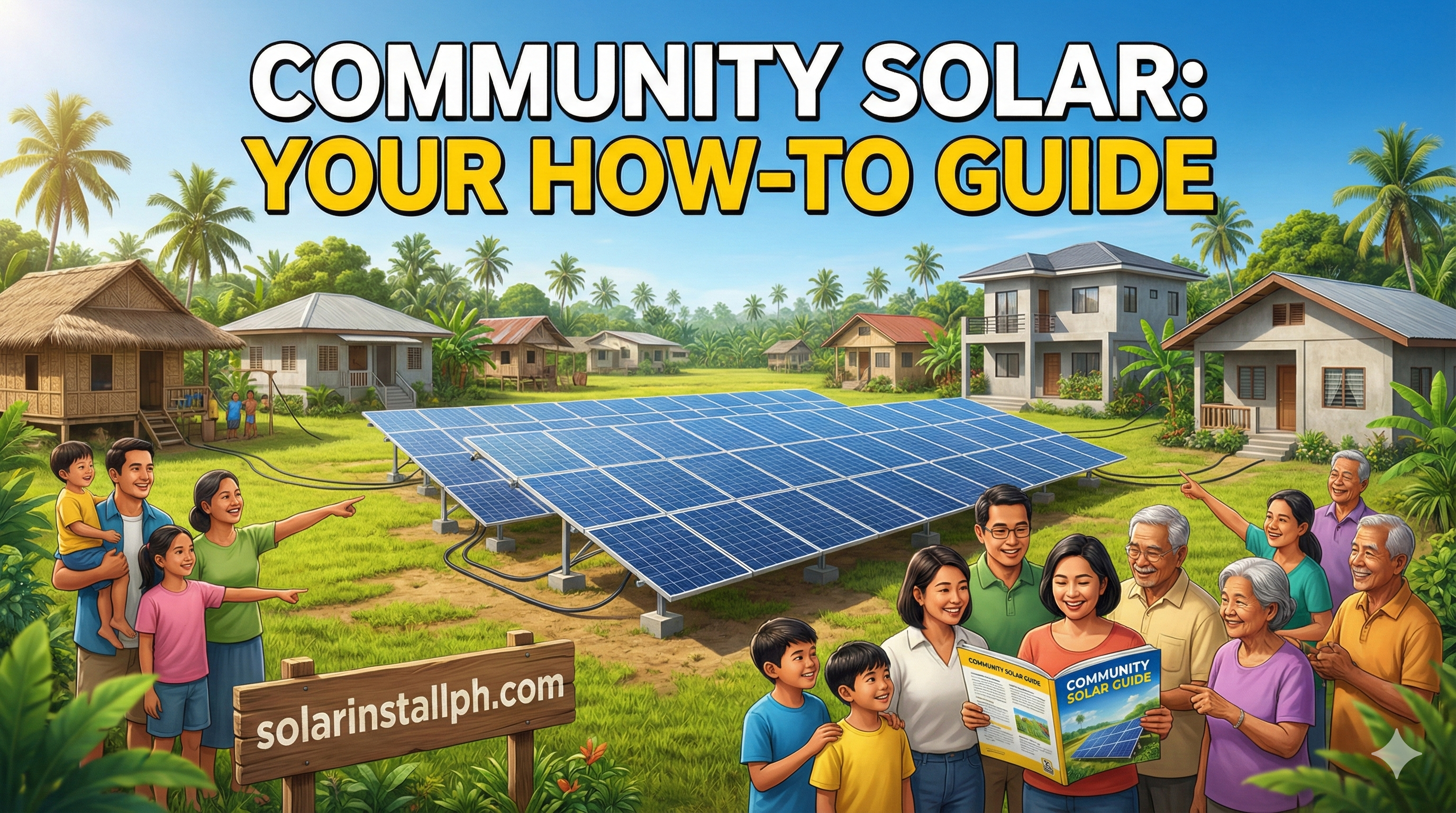
Benefits of Community Solar in the Philippines: 2026 Guide
Community solar in the Philippines has evolved dramatically. With the 2026 DOE net metering reforms, Filipino homeowners and businesses can now access solar benefits without installing panels on their own roofs—through multi-site and aggregate net metering.
What is Community Solar?
Community solar (also called "virtual net metering" or "aggregated net metering") allows multiple consumers to share solar energy generated from a central solar farm. Instead of installing panels on your roof, you subscribe to a portion of a community solar project's capacity and receive credits on your electricity bill for your share of the energy produced.
How It Works in the Philippines (2026):
- A solar developer builds a large solar farm in your area
- You subscribe to a portion of the system's capacity (e.g., 1 kW)
- The solar farm generates electricity during daylight hours
- You receive bill credits proportional to your subscription
- Excess credits can be bankrolled to future months
Key Benefits for Filipinos
1. No Rooftop Required
- Perfect for renters, condo dwellers, and those with unsuitable roofs
- No structural modifications or home ownership needed
- Ideal for apartment dwellers in Metro Manila high-rises
2. Lower Electricity Bills
- Credits directly offset your Meralco/VECO bill
- 2026 rates: ₱13.50+/kWh (commercial ₱13-18/kWh)
- Typical savings: 15-30% on monthly bills
3. 2026 Regulatory Updates Make It Easier
- Multi-site net metering: Now you can offset multiple accounts (e.g., home + business) from one solar subscription
- Aggregate net metering: Share credits across family members or business locations within the same utility
- REC ownership: You now own the Renewable Energy Certificates (RECs) and can sell them
4. No Upfront Installation Costs
- No panels, inverters, or mounting equipment to purchase
- No maintenance headaches for subscribers
- Developer handles all operations
5. Environmental Impact
- Reduce your carbon footprint without personal installation
- Support local renewable energy growth
- Contribute to Philippines' 35% RE target by 2030
2026 Updates: What's New
| Feature | Old Rules | 2026 Rules |
|---|---|---|
| Capacity Limit | 100 kW | 1 MW |
| Processing Time | Months | 20 days (streamlined) |
| Multi-site | Not allowed | Allowed (2026) |
| Credit Banking | Expired yearly | Rolls over monthly |
| REC Ownership | Not available | Available (2026) |
Who Should Consider Community Solar?
Best For:
- Renters who can't modify their living spaces
- Condo/unit owners with shared rooftop access
- Businesses wanting solar without rooftop installations
- Low-income households wanting solar benefits without big upfront costs
- Those with shaded roofs unsuitable for panels
Consider Alternatives If:
- You own your property with suitable rooftop space
- You want maximum ROI (direct ownership typically pays back faster)
- You have high daytime consumption (direct consumption beats credit economics)
How to Subscribe in 2026
Step 1: Check Availability
- Contact your distribution utility (Meralco, VECO, DLPC)
- Ask about aggregated/net metering programs
Step 2: Find a Community Solar Provider
- Look for DOE-accredited solar developers
- Verify their registration and project capacity
Step 3: Determine Your Subscription Size
- Calculate your average monthly kWh consumption
- Subscribe to match 50-100% of your usage
Step 4: Sign Up and Start Saving
- Fill out utility application forms
- Credits typically begin within 20 business days
Community Solar vs. Rooftop Solar
| Factor | Community Solar | Rooftop Solar |
|---|---|---|
| Upfront Cost | ₱0 - ₱50,000 deposit | ₱200,000 - ₱500,000 |
| Ownership | None (subscription) | Full ownership |
| Maintenance | Provider responsibility | Homeowner responsibility |
| ROI | Immediate (credits) | 4-7 years payback |
| Best For | Renters, condos | Homeowners |
Conclusion
Community solar in the Philippines has matured significantly in 2026. With the new multi-site net metering rules, aggregated crediting, and REC ownership, it's now a viable option for Filipinos who can't install panels on their own roofs.
Whether you're a renter in Makati, a small business in Cebu, or living in a condo without rooftop access, community solar offers a path to lower electricity bills and contribute to the country's renewable energy future.
FAQ
Can I subscribe to community solar if I rent? Yes! Community solar doesn't require rooftop access or property ownership. As long as you're the account holder on your electricity bill, you can subscribe.
How much can I save with community solar? Typical savings range from 15-30% on your electricity bill, depending on your subscription size and utility rates.
Is community solar available nationwide? Availability depends on your distribution utility and local solar developers. Check with Meralco, VECO, or your local electric cooperative for available programs.