
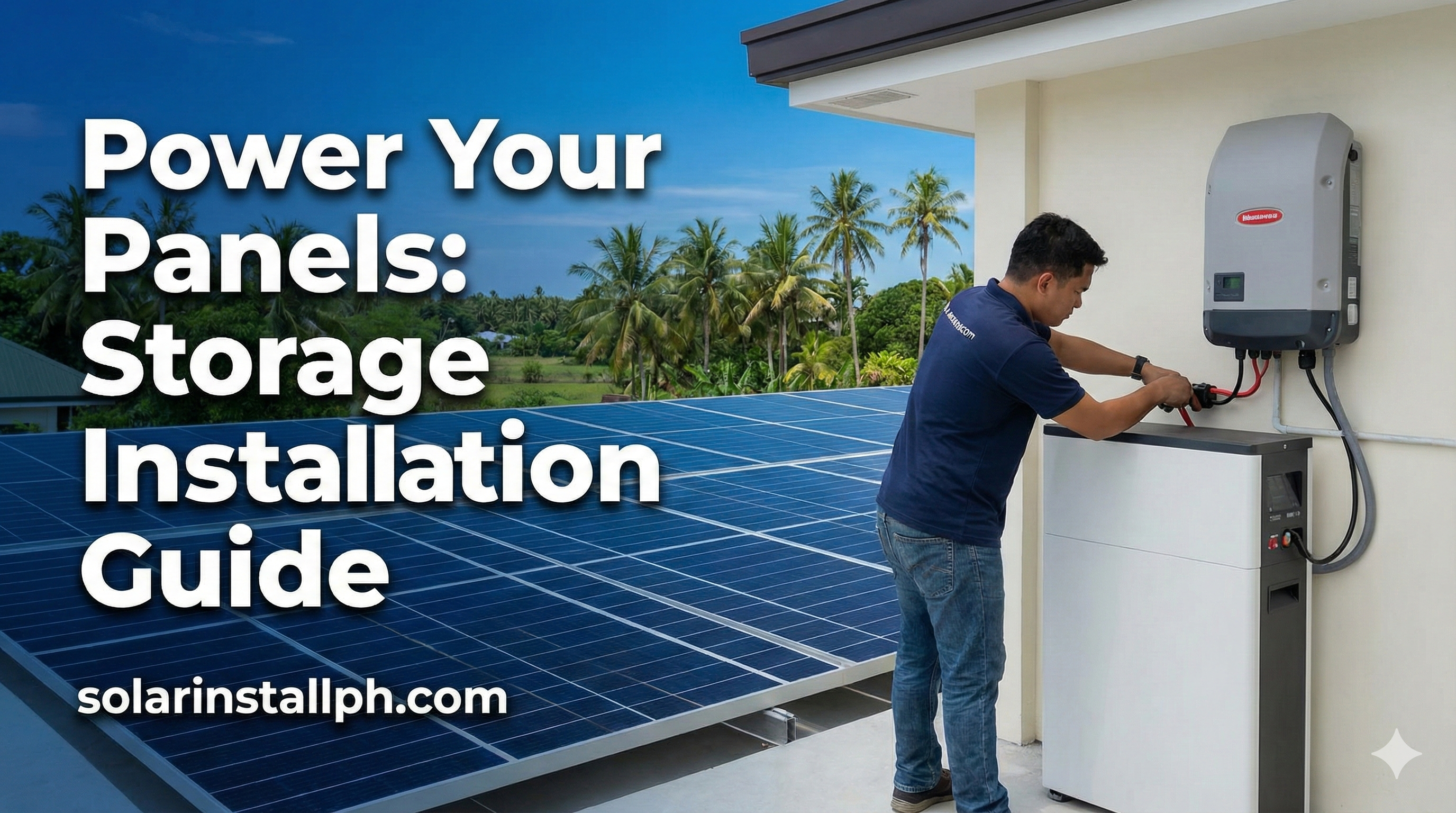
Power Your Panels: Storage Installation Guide
In the Philippines, solar energy has evolved from a high-end luxury to a practical necessity for many homeowners. With electricity rates reaching approximately ₱13.47 per kWh in late 2025 and frequent brownouts remaining a reality, the focus is shifting from simply "going solar" to "staying powered" through storage.
Adding batteries to your system is no longer just about energy independence; it is a strategic move to secure your home’s energy resilience against grid instability. This guide breaks down the essential steps to successfully integrating energy storage into your Philippine home.
1. Choosing the Right Battery Technology
The first step is deciding which chemistry will live in your garage or utility room. In 2026, the market is dominated by two main contenders:
Lithium Iron Phosphate (LiFePO4)
For most modern Filipino homes, Lithium Iron Phosphate (LFP) is the clear market leader. These batteries offer a high depth of discharge (DoD), often allowing you to use 80% to 90% of the stored energy safely. They typically last between 10 to 15 years (up to 6,000 cycles) and are highly resistant to "thermal runaway," making them safer for our tropical climate.
Lead-Acid (AGM/GEL)
While cheaper upfront, lead-acid batteries are increasingly discouraged for primary home use. They can only be discharged by 50% without sustaining damage and usually require replacement every 3 to 5 years. They are best reserved for remote off-grid cabins where usage is only occasional.
For a deeper dive into which hardware suits your setup, consult our review of top solar batteries for 2025.
2. Sizing Your Storage for "Brownout Resilience"
To size your battery correctly, you must decide what stays on when the grid goes down.
Critical Load Only: A 5kWh to 10kWh battery can typically power lights, fans, internet routers, and a refrigerator for a few hours.
Whole-Home Backup: For air conditioning and heavy appliances, you will likely need a system in the 20kWh to 60kWh range.
A common rule of thumb is to match your battery capacity to your daily solar production. For example, a 5kWp solar array producing roughly 20kWh a day pairs effectively with a 10kWh or 15kWh battery bank. You can find more detail on these specific setups in our residential solar cost breakdown.
3. Installation Requirements and Safety
Safety is paramount in storage installation. As of early 2026, the Philippines has adopted stricter national safety frameworks for energy storage systems to minimize fire and electrical hazards.
Location: The "gold standard" is an indoor installation in a garage or utility room. This protects the unit from our harsh salt air and keeps temperatures stable, which maintains peak performance.
Fireproof Mounting: Batteries weighing 250+ pounds should be mounted on concrete or masonry walls using heavy-duty brackets.
Clearance: Maintain at least 30 inches of clearance on all sides for ventilation and heat dissipation.
If you are retrofitting an existing system, you will likely need to upgrade to a hybrid inverter. This device acts as the "brain," managing power between your panels, the grid, and your new batteries. For help choosing the right model, check our guide on top inverter brands for 2025.
4. Navigating the Legal Framework
Storage installation is now governed by the Energy Storage Systems (ESS) Act (House Bill 6676), passed in early 2026. This framework streamlines licensing and permitting, ensuring that systems meet national safety standards.
While your installer will typically handle the paperwork, you should ensure they are applying for the necessary electrical permits and utility interconnection agreements. For a full list of reputable providers, you can view the DOE solar directory.
5. Estimating Your Investment and ROI
While battery cells have dropped in price by nearly 75% over the last decade, storage still represents a significant portion of your total system cost.
10kWh LiFePO4 unit: Suggested retail around ₱90,000 to ₱135,000.
Total Hybrid 5kW Setup: Expect to invest between ₱320,000 and ₱450,000 for a full battery-integrated system.
The ROI is driven by "energy arbitrage"—using stored solar energy during expensive evening peak hours instead of buying it from Meralco. For most Philippine households, adding storage extends the payback period slightly compared to grid-tied systems but provides invaluable peace of mind during the "forced outages" common in provincial grids. You can track these savings using our comprehensive solar ROI guide.
FAQ
Can I add batteries to my existing solar system?
Yes. This is called an AC-coupled retrofit. It involves adding a separate battery inverter that works alongside your existing one.
How long will my battery last in the heat of the Philippines?
Modern LFP batteries are designed for higher temperatures, but keeping them in a shaded, ventilated area like a garage can help them reach their full 10–15 year lifespan.
Is it illegal to install batteries without a permit?
While physical installation is possible, the ESS Act and utility regulations require permits for any system connected to the grid to ensure safety and prevent electrical back-feeds that could harm line workers.